

You have a licence to scroll
As you scroll through the content below you'll find: rare images; 3D projection mapping of iconic 007 footage; extensive detail (including custom animations) on Q’s gadgets, and a look into the studio of their designer, Sir Ken Adam. You’ll explore special interviews with key members of the team that make the magic happen, and close with a video montage spanning over 50 years of Bond and his beloved DB5.
 THUNDERBALL © 1965 Danjaq, LLC and Metro-Goldwyn-Mayer Studios Inc. All Rights Reserved.
 SKYFALL © 2012 Danjaq, LLC and Metro-Goldwyn-Mayer Studios Inc. All Rights Reserved.
 SKYFALL © 2012 Danjaq, LLC and Metro-Goldwyn-Mayer Studios Inc. All Rights Reserved.
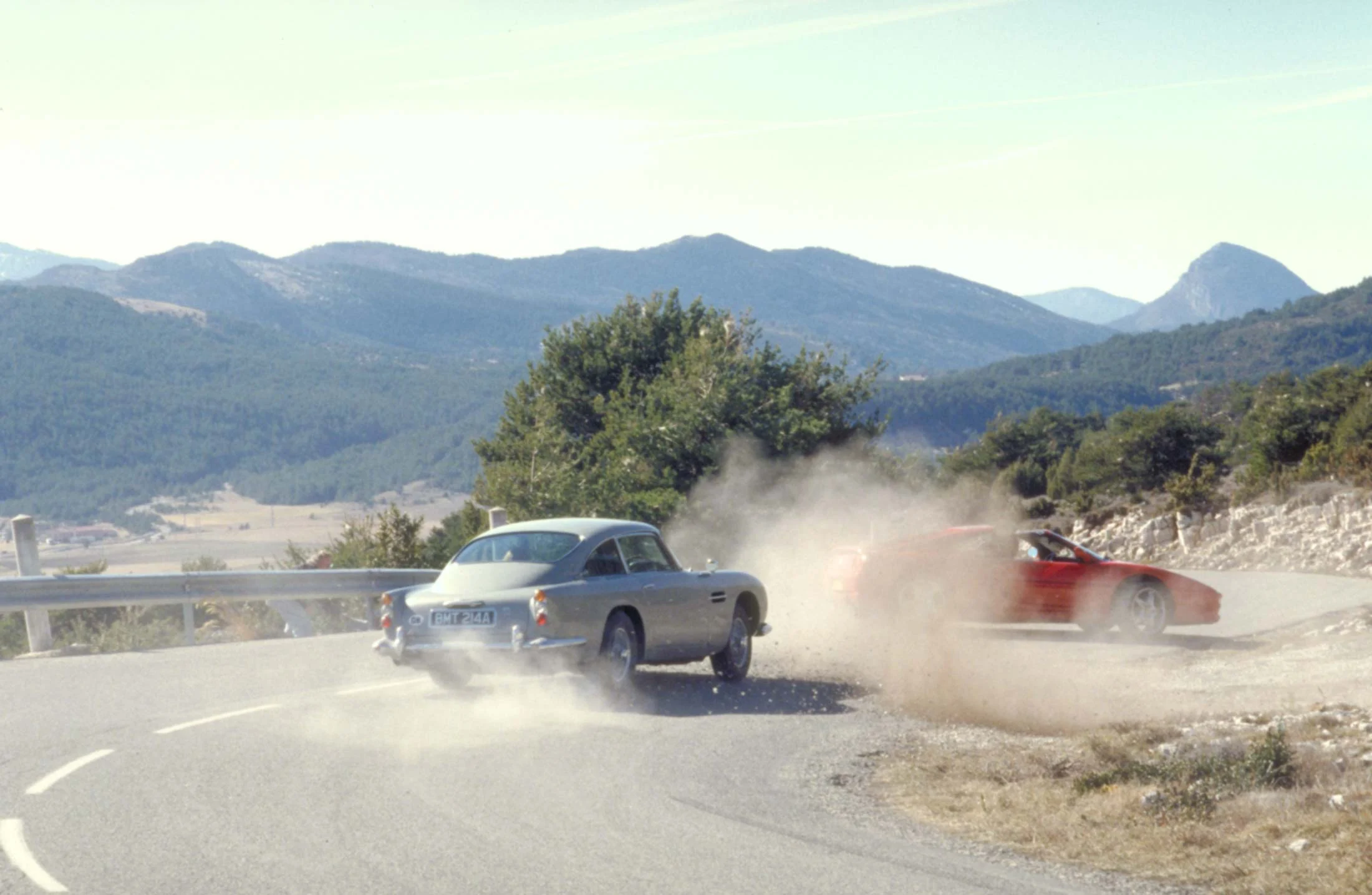 GOLDENEYE © 1995 Danjaq, LLC and Seventeen Leasing Corporation. All Rights Reserved.
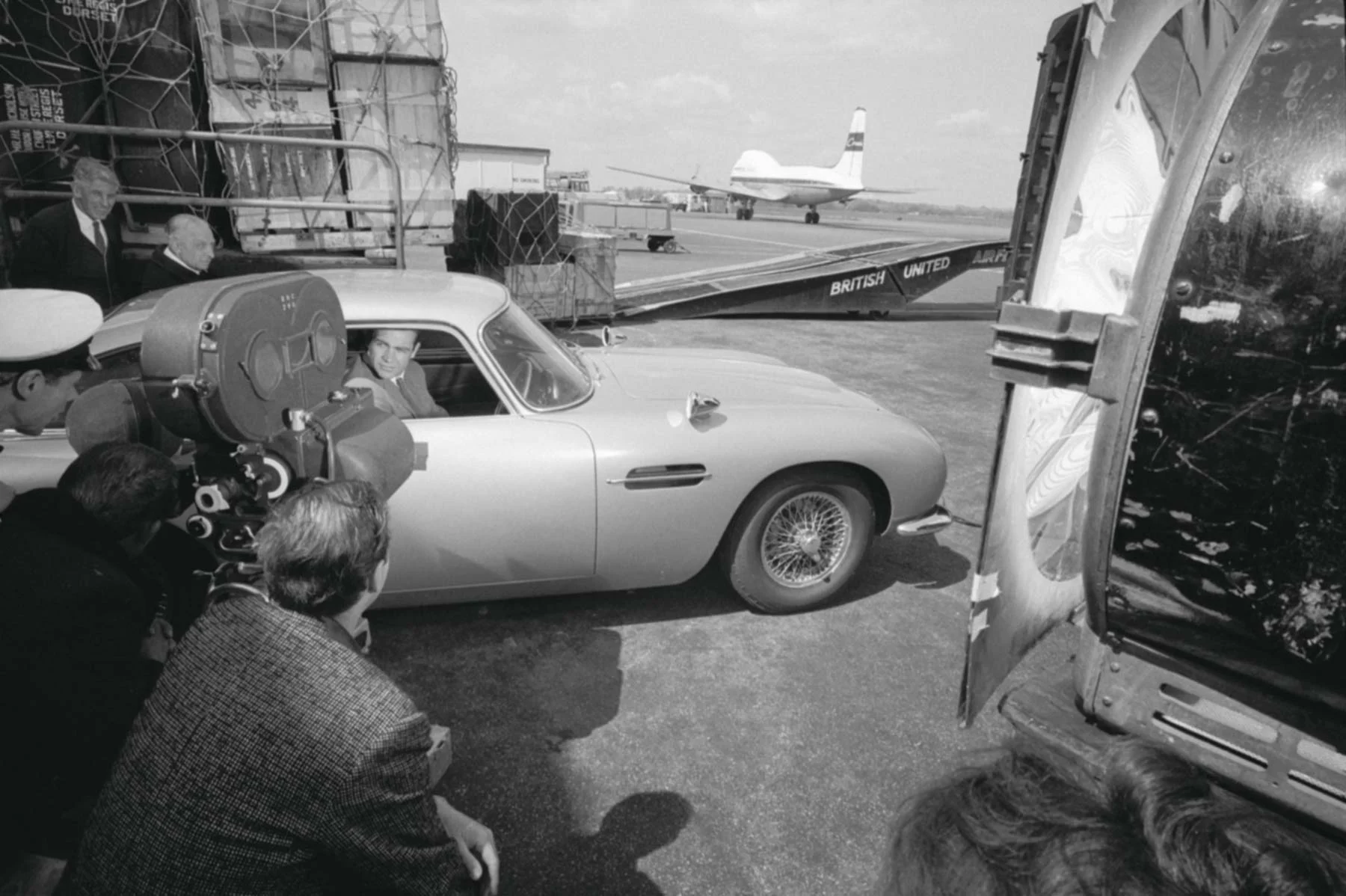 GOLDFINGER © 1964 Danjaq, LLC and Metro-Goldwyn-Mayer Studios Inc.
Introduction
This rich media experience presents 007 from a different perspective - exploring the creative process behind the movies, while revealing the secrets of James Bond’s iconic Aston Martin DB5. You will investigate gadgets in Q’s lab, examine original concept art in Oscar®-winning production designer Sir Ken Adam’s studio, and discover some of the filmmaking craft behind Skyfall’s explosive finale.
IMMERSION
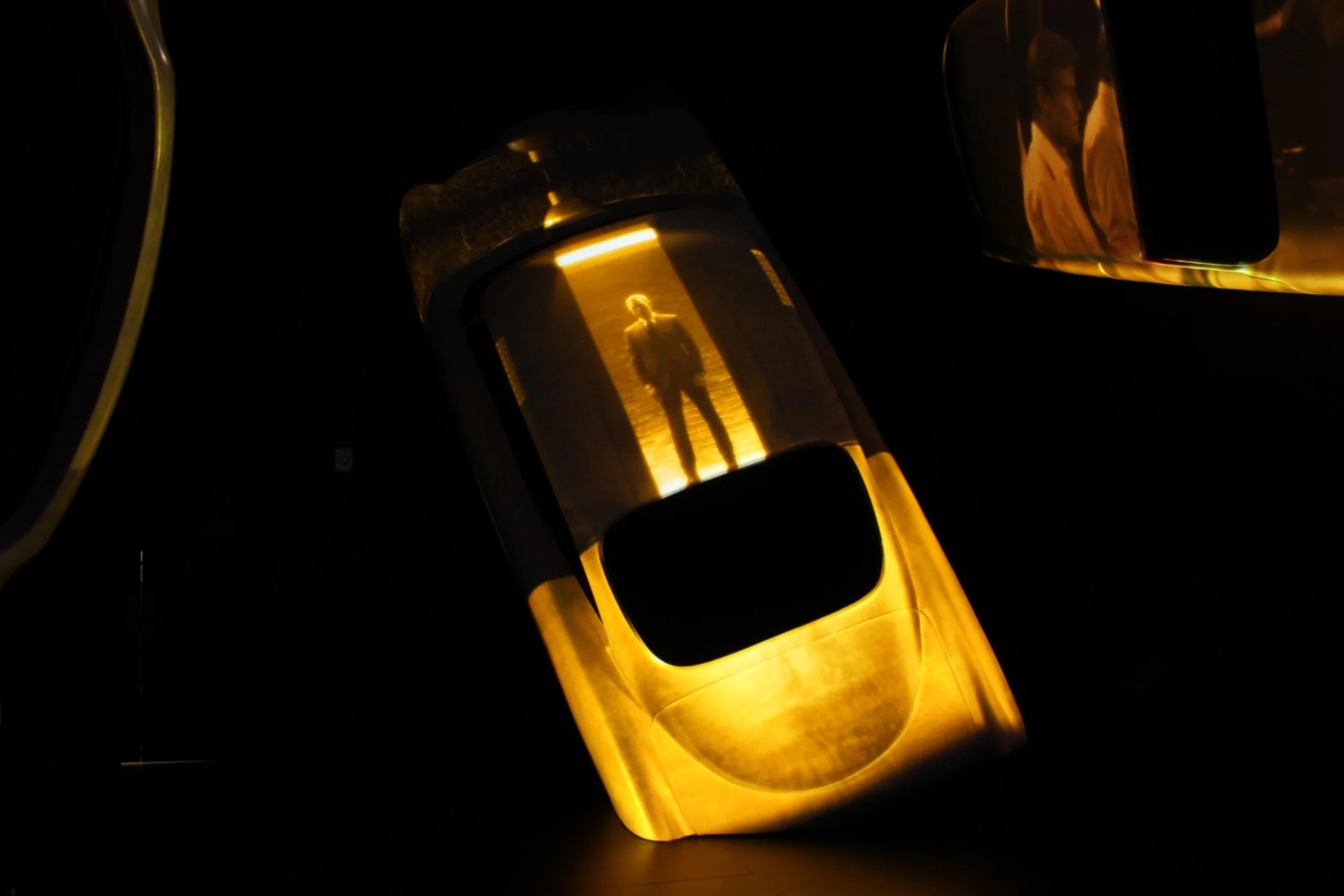
This section is dominated by the chassis of three Aston Martin DB5s, blown up to 150% of their normal size. These become a striking canvas for overlapping 3D projections which unite seminal Bond moments featuring all six Bond actors.
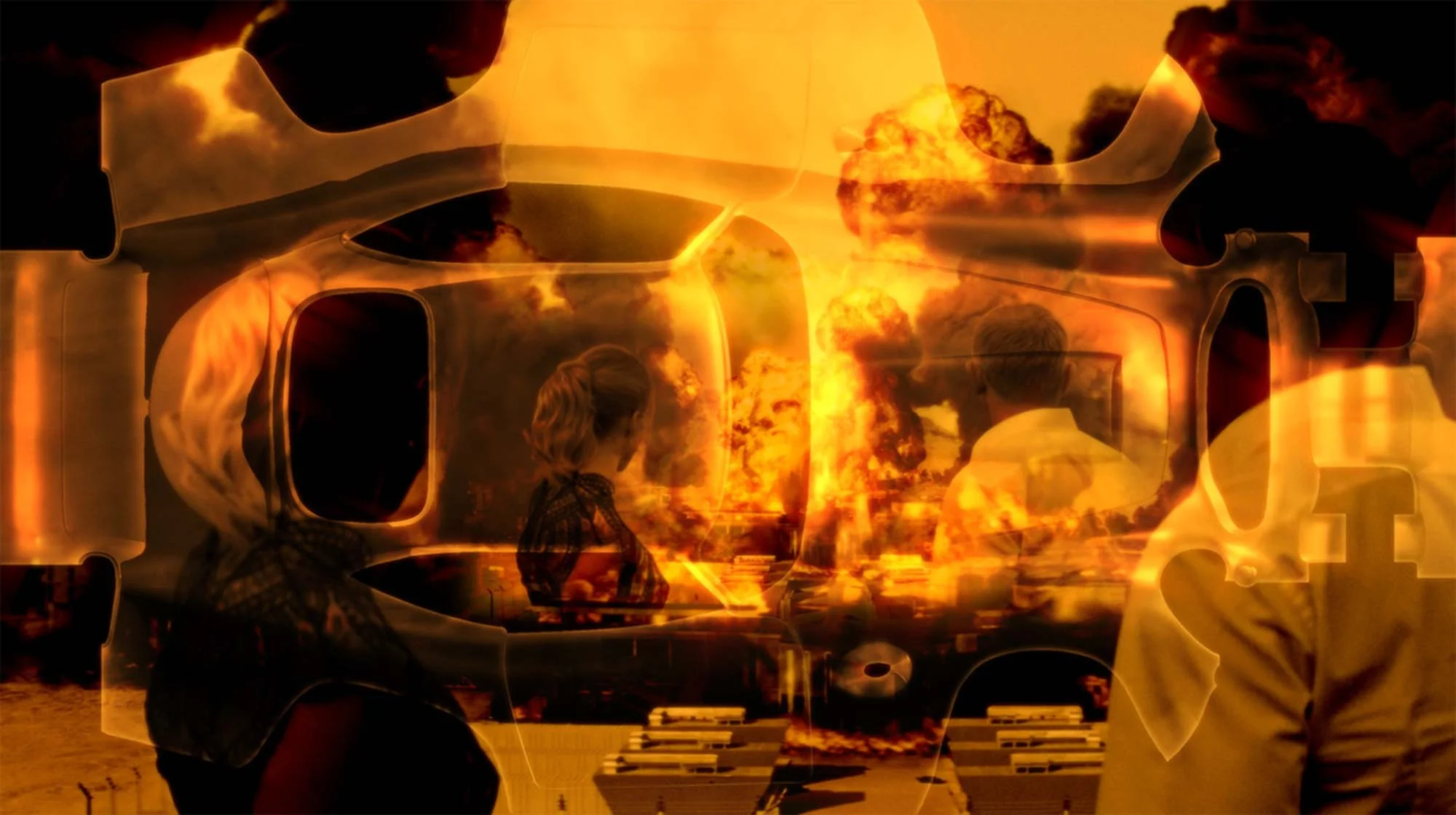

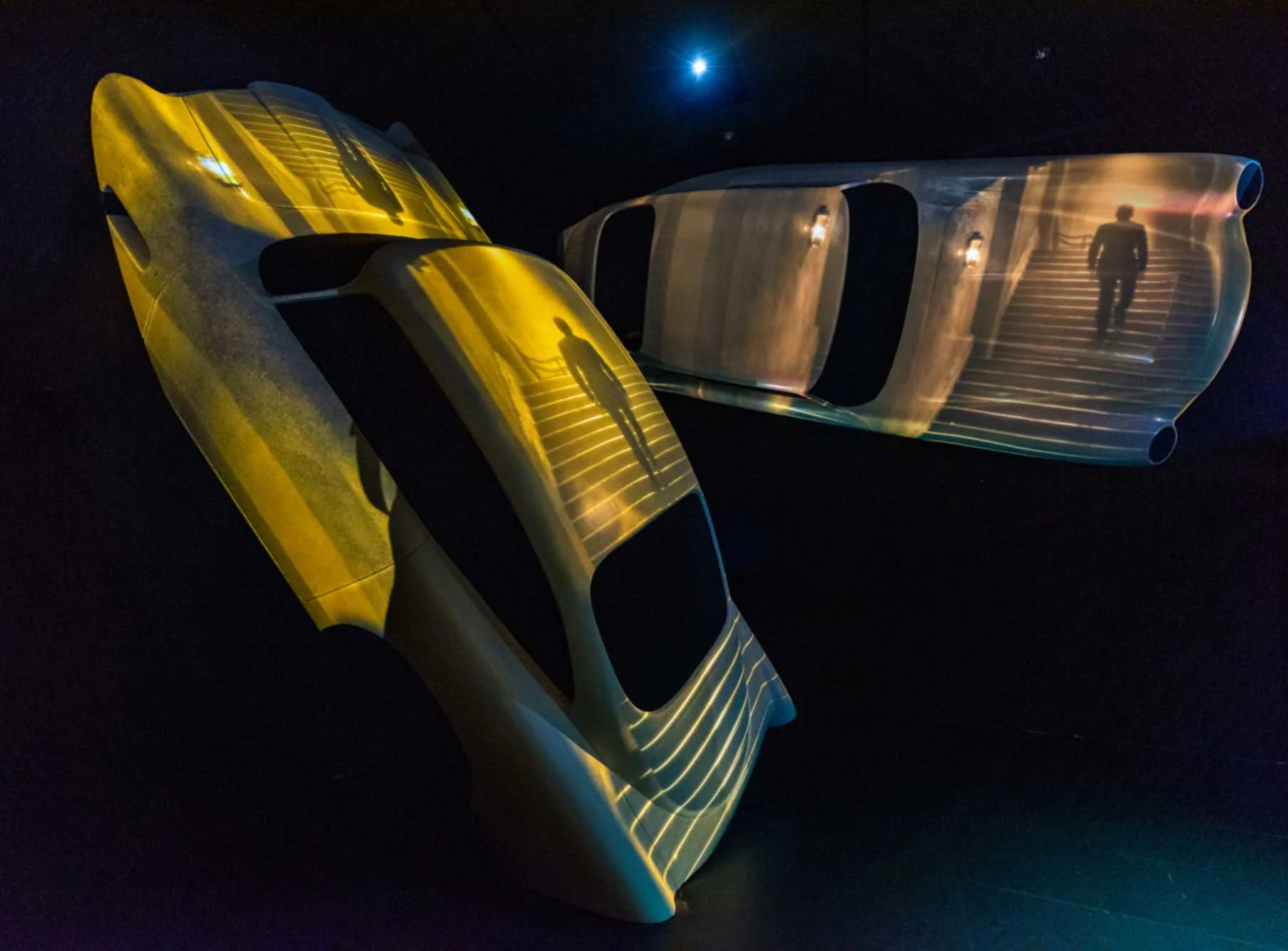
In order to achieve the dramatic effect of mapping the film footage to the curved and undulating surfaces of the car, and avoid appearing distorted when projected onto the 3D forms, the footage needed to be adapted precisely by sophisticated 3D computer software. Seven projectors, positioned with pinpoint accuracy, bring the images to life and create the effect of these over-scaled cars emerging from the darkness.
Q’S BRIEFING
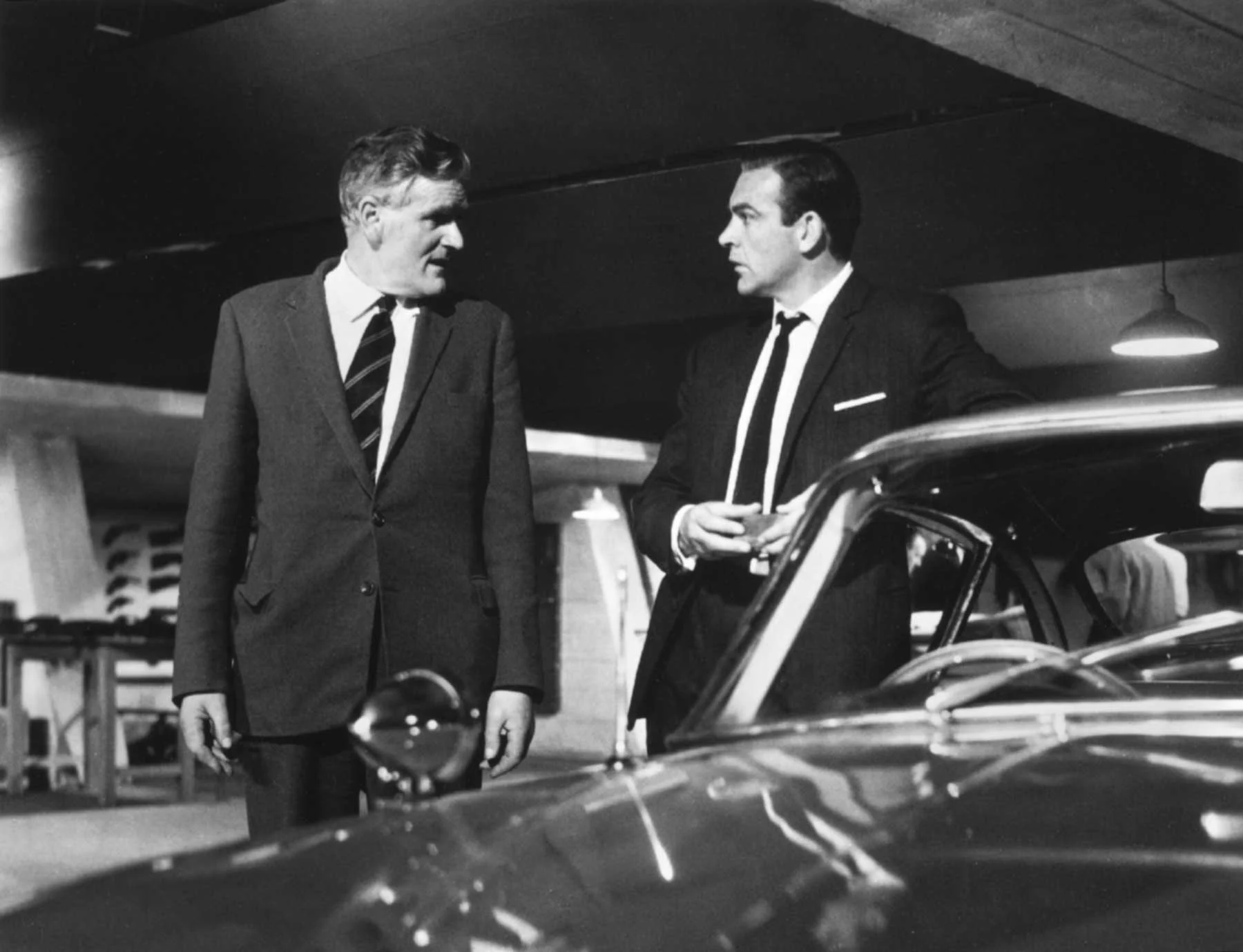
The memorable scene in Goldfinger (1964) in which Sean Connery’s James Bond is first presented with his modified DB5 by Desmond Llewelyn’s Q delighted audiences.
The origins of Q go back much further, to the writer of the James Bond books, Ian Fleming, and his experiences in British Intelligence during World War II. The character of Q was based, to an extent, on a man named Charles Fraser-Smith who built ‘Q-devices’ for the operatives tasked with going behind enemy lines.
His inventions included hidden micro cameras in shaving brushes and steel shoelaces which could be used as garrotes. Many of these original ‘Q-devices’ feature within the SPYSCAPE collection.
Another inspiration for Q was an armaments expert called Geoffrey Boothroyd. He was a fan of Fleming’s books and wrote to him with advice on which guns certain characters would be likely to use. A ‘Major Boothroyd’ appears as a named character in later books, and in Bond films Q is sometimes referred to by name as Major Boothroyd.
Q’s workshop
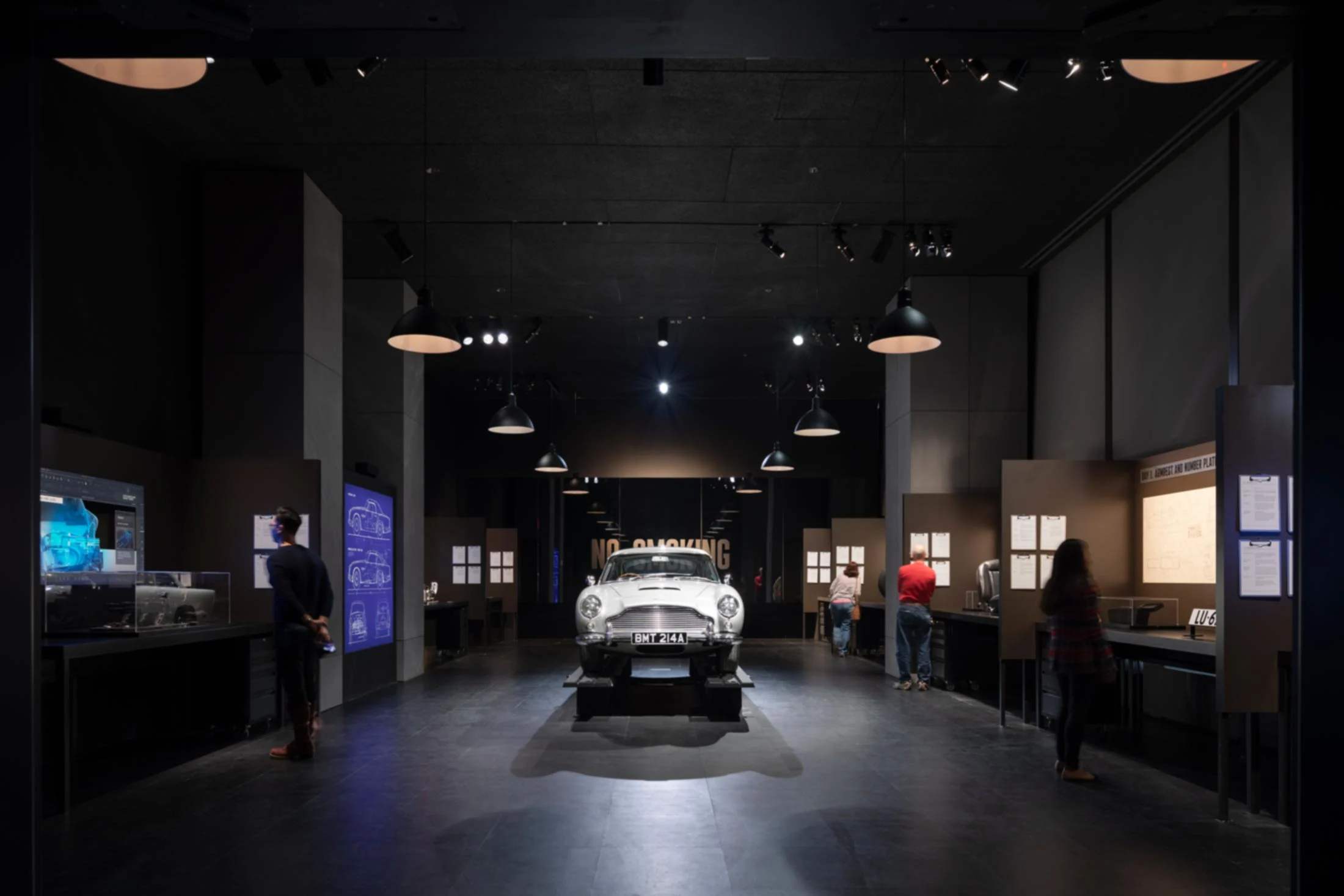
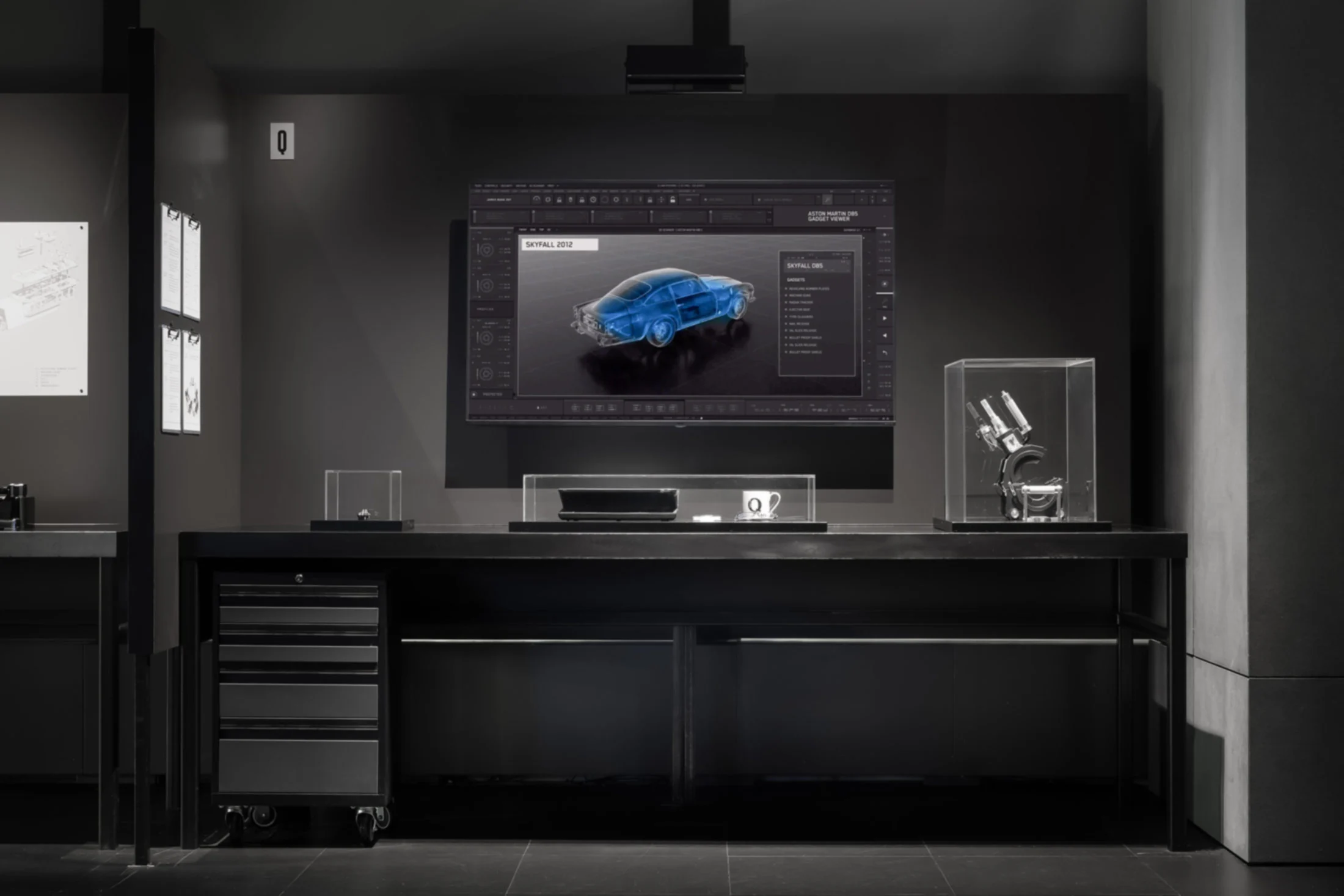
Since the early 1960s, Bond films have brought little known, cutting-edge technological developments to a broad audience, often via Q’s workshop. This section explores the wide range of gadgets the DB5 has enjoyed right up to the present day.
In an environment inspired by Q’s workshop, the magnificent DB5 from SPYSCAPE’s collection, used in the filming of GoldenEye (1995), is surrounded by props used in the making of Bond films and specially commissioned reproductions of the original gadgets.
Aston
Martin
DB5
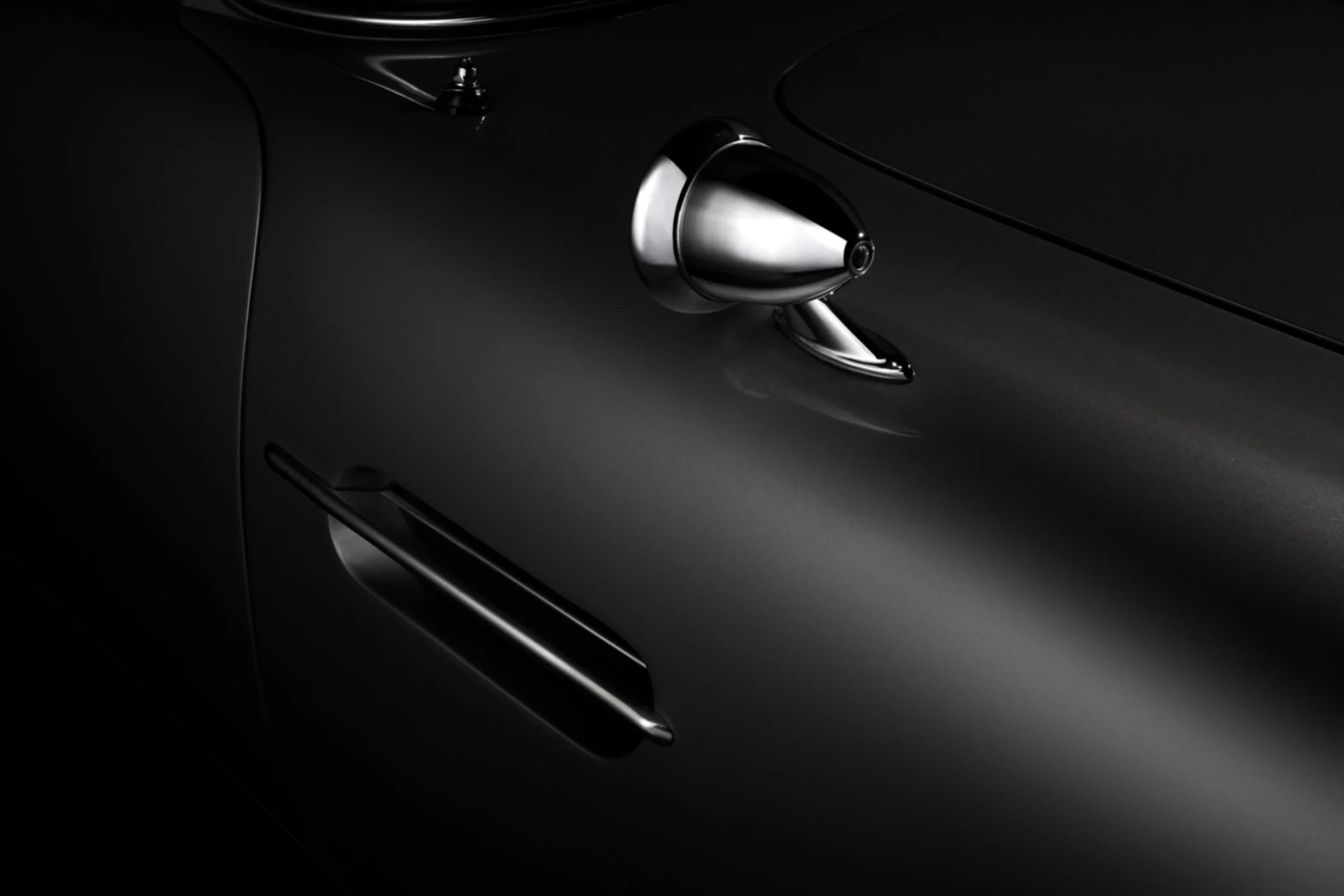
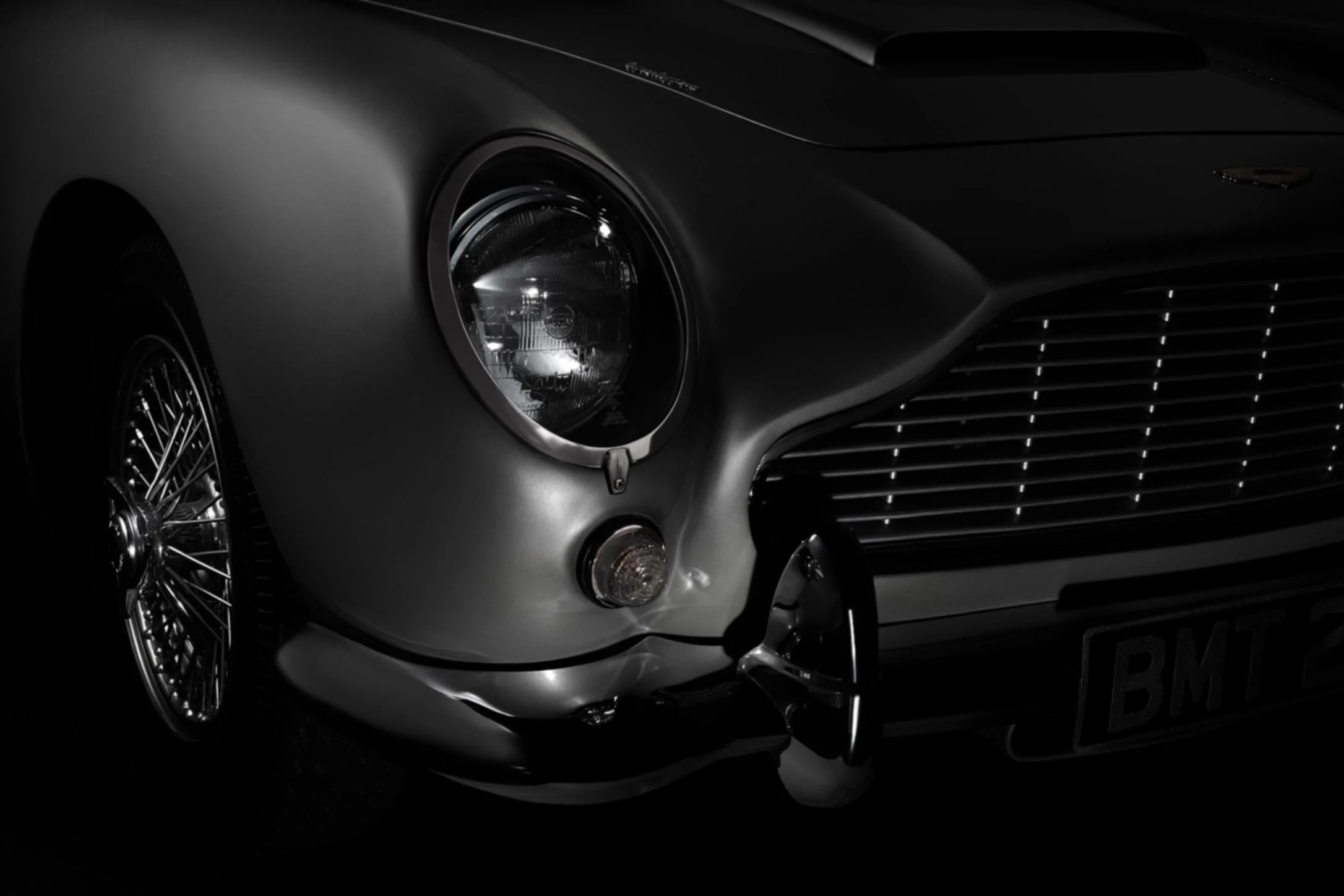
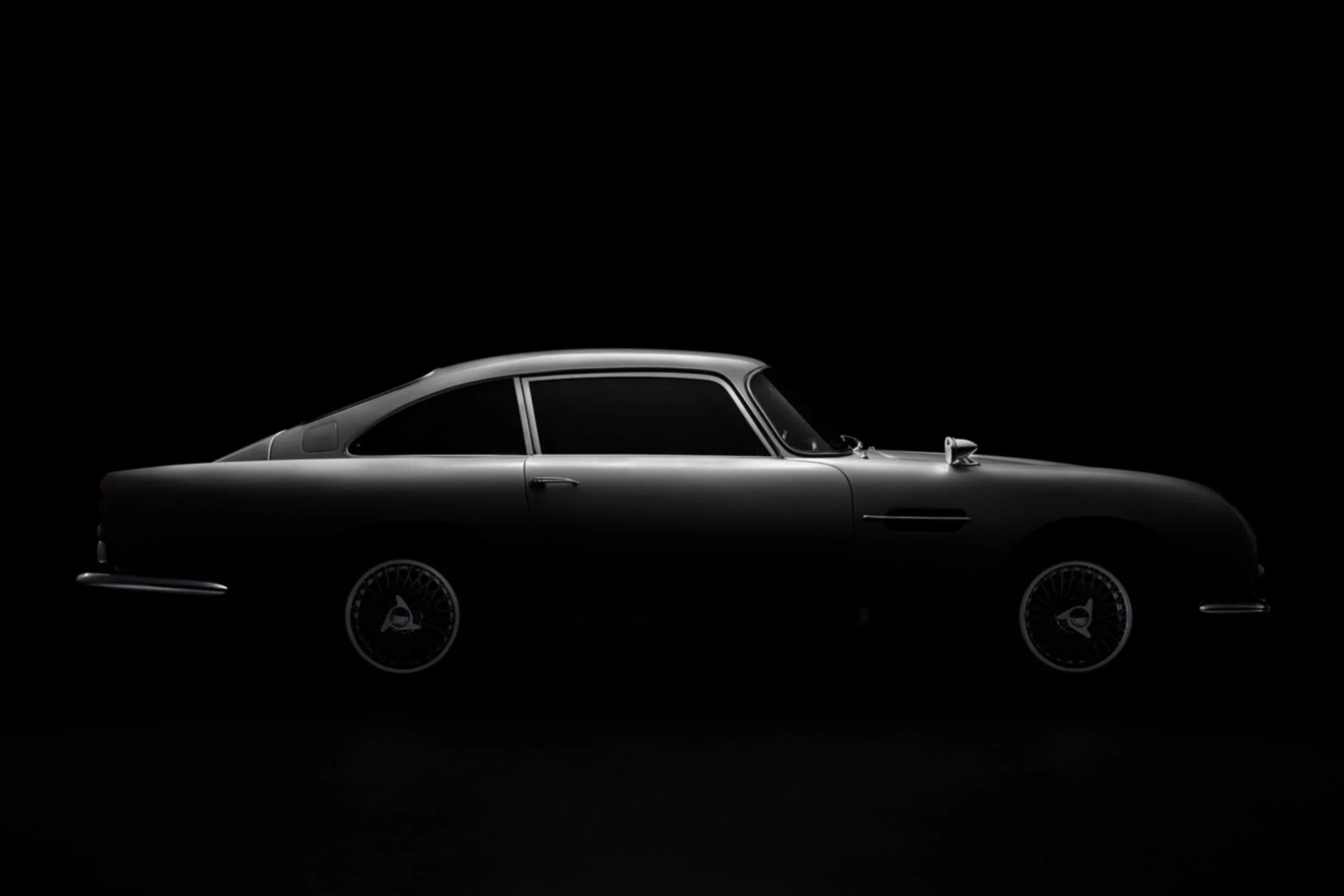
The Aston Martin DB5 is synonymous with James Bond. Fans first saw the two together in Goldfinger (1964), and the car quickly became a much-loved character in its own right. Much of the car’s iconic status can be attributed to its gadgets which often play a starring role.
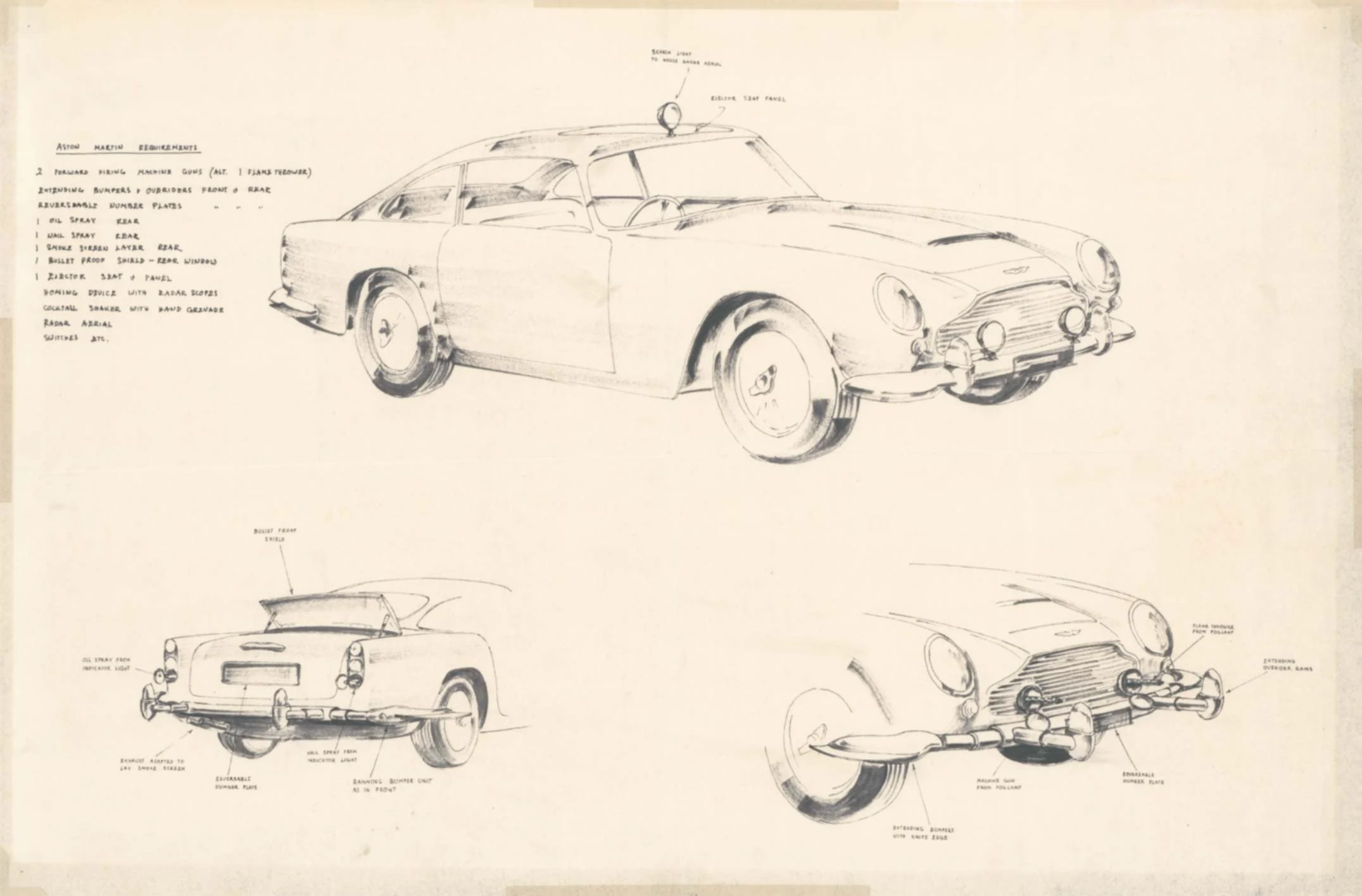
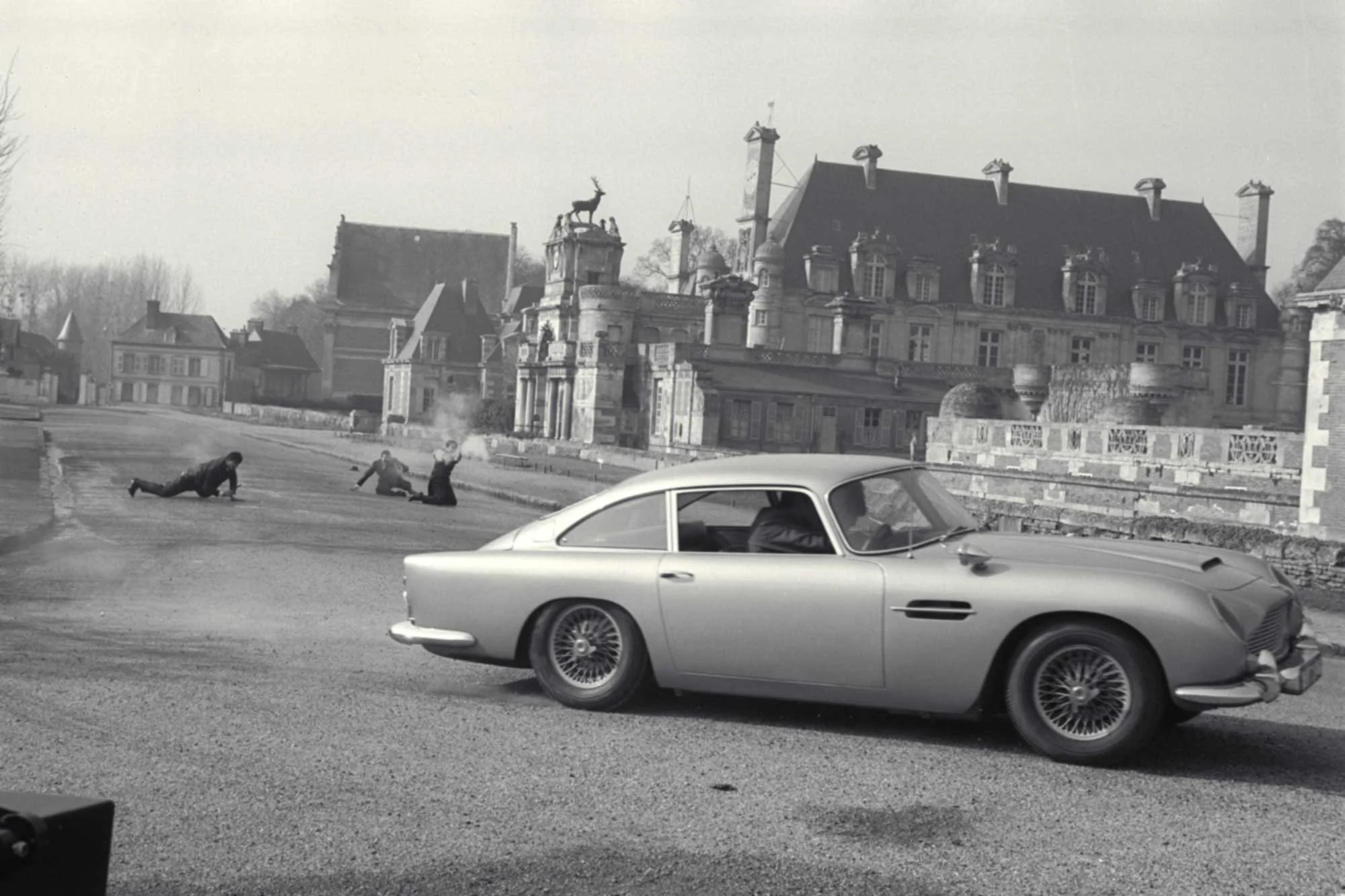
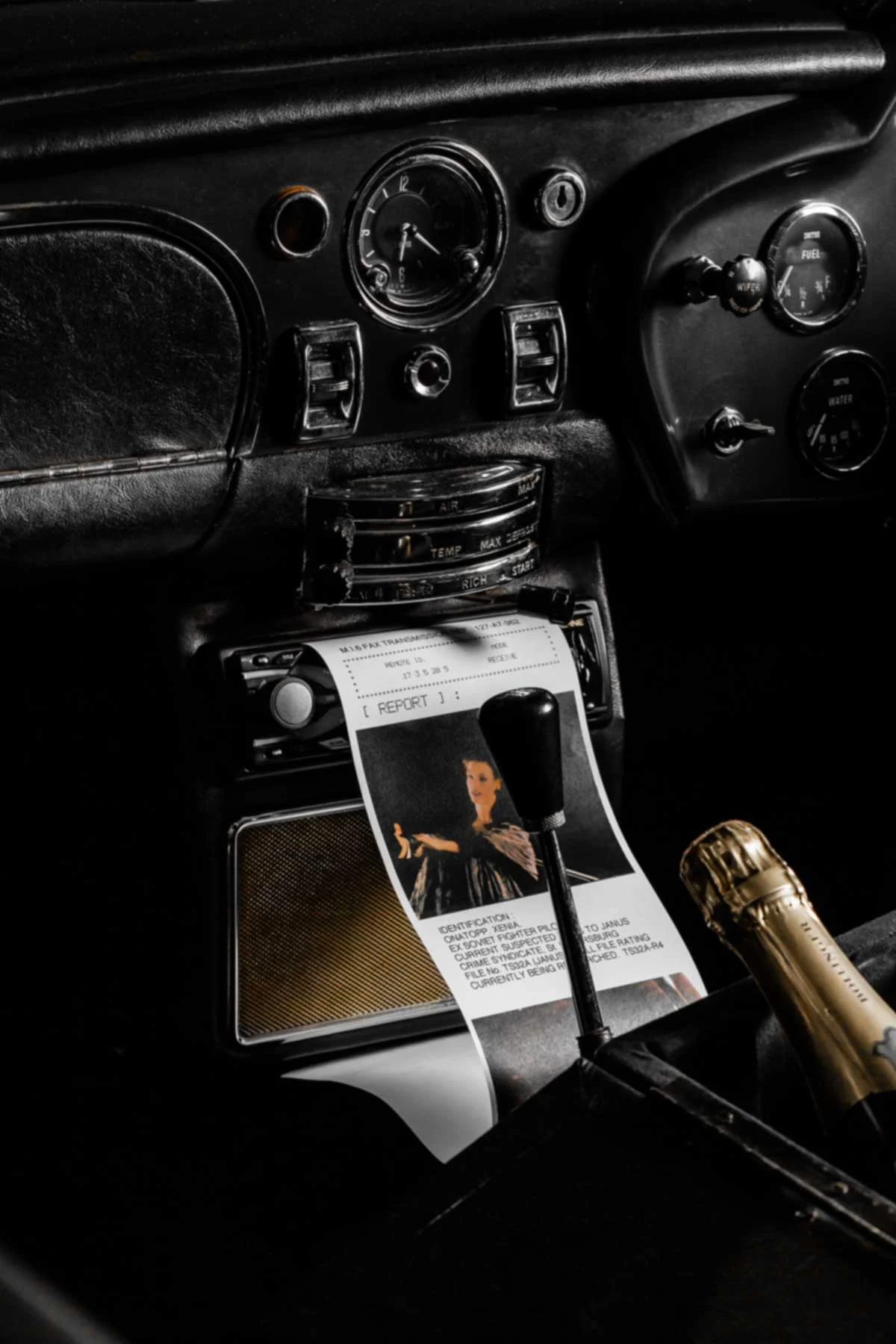
In Goldfinger (1964) the list of extras includes revolving number plates, machine guns, a radar tracker, ejector seat, tyre-slashers, a nail and oil slick release, a smoke screen, a shield and overriders. In Thunderball (1965) the car returns complete with this same suite of gadgets and additional rear water cannons. When it reappears in GoldenEye (1995) it is kitted out for personal use with a champagne cooler in the armrest and a fax machine in the dashboard.
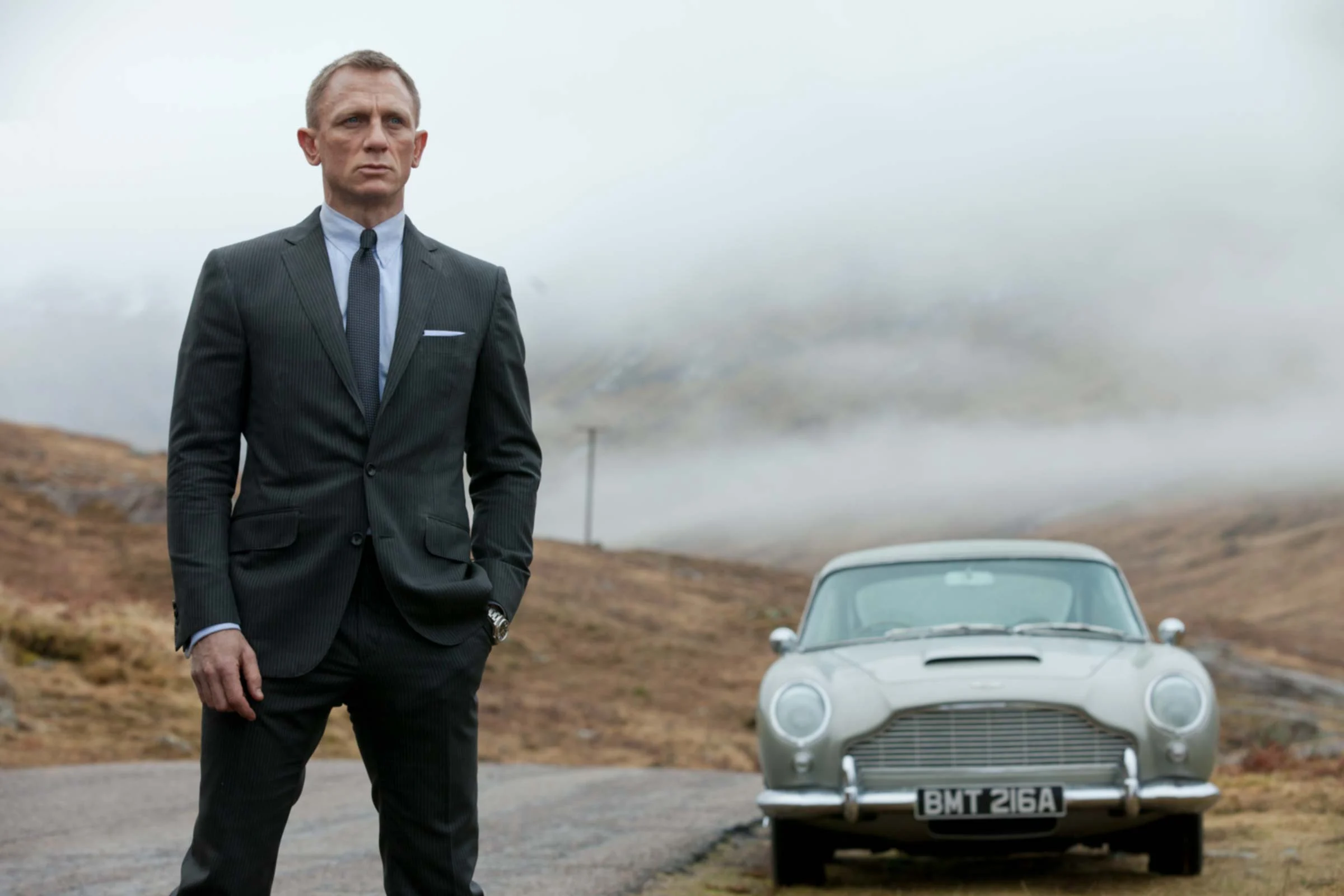
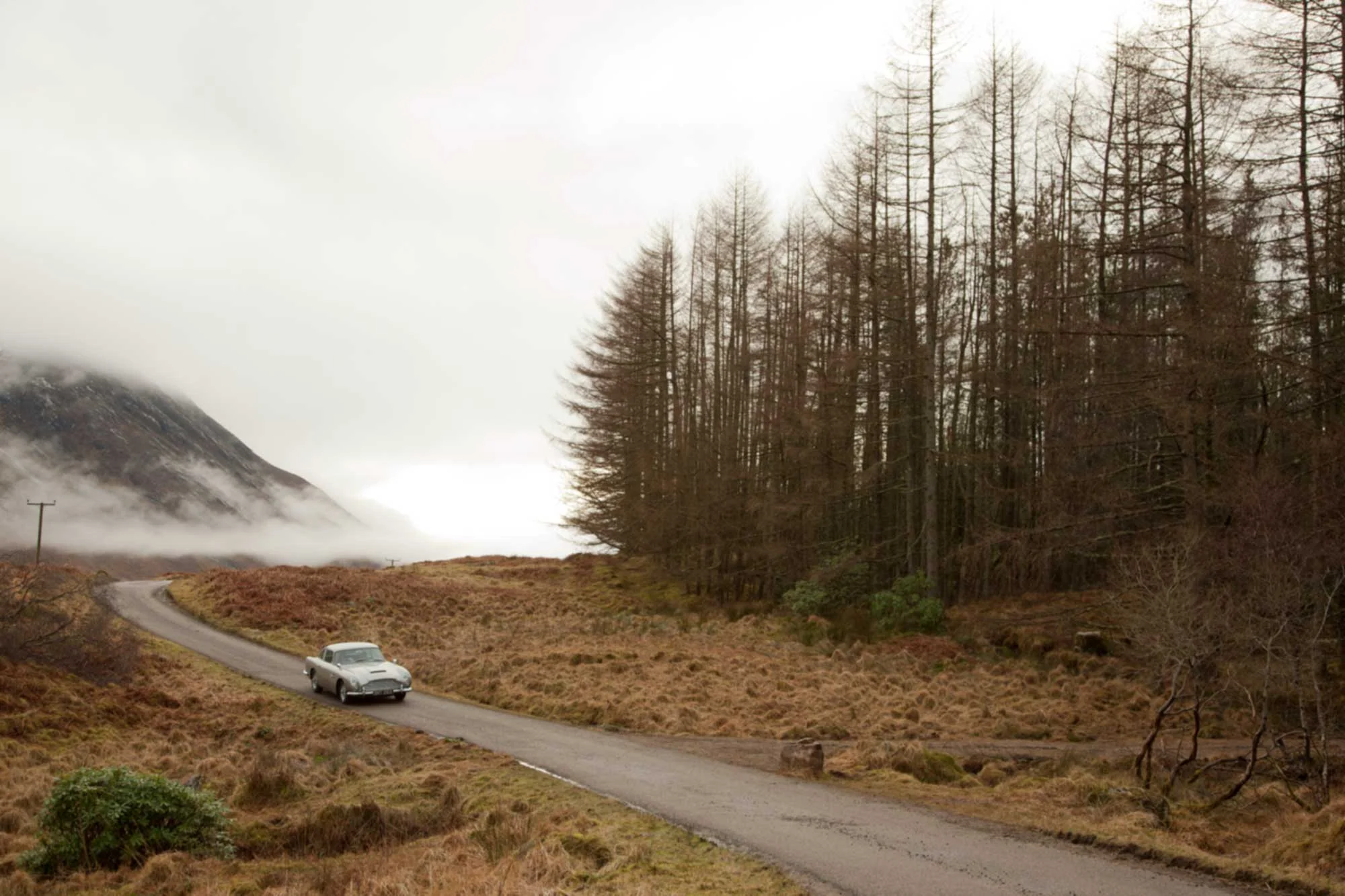
In Casino Royale (2006) Bond wins a DB5 in a game of poker. The car is stored in Bond’s lock up in Skyfall (2012) until Bond drives M to his ancestral home in Scotland. It is now complete with its full complement of gadgets including machine guns and ejector seat. However, the car is virtually destroyed during the Siege of Skyfall Lodge in the final scenes of the film. The DB5 is lovingly resurrected in Q’s workshop in Spectre (2015) and Bond drives away with Dr Madeleine Swann in the final shot of the film.
 1/9
 2/9
 3/9
 4/9
 5/9
 6/9
 7/9
 8/9
 9/9
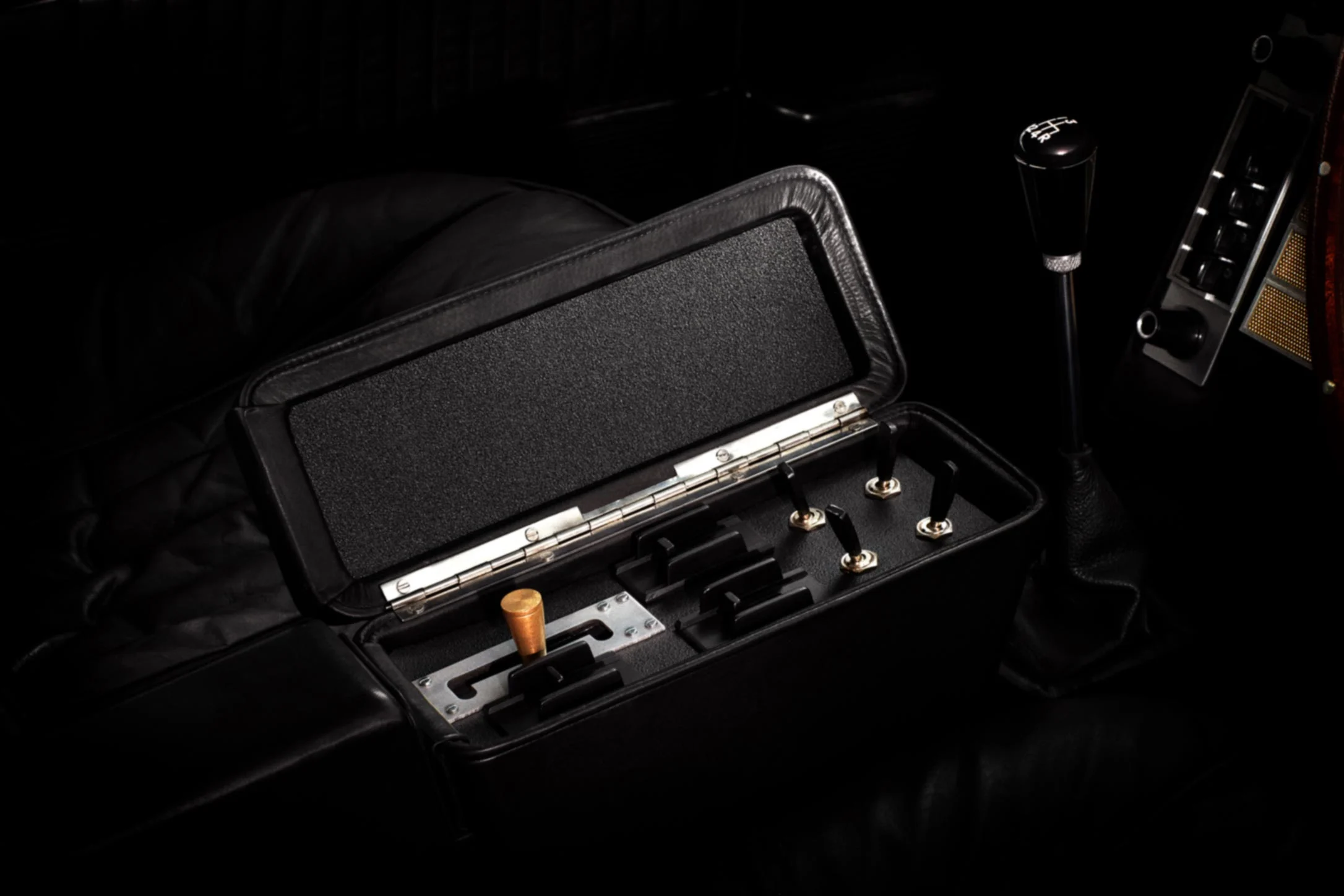
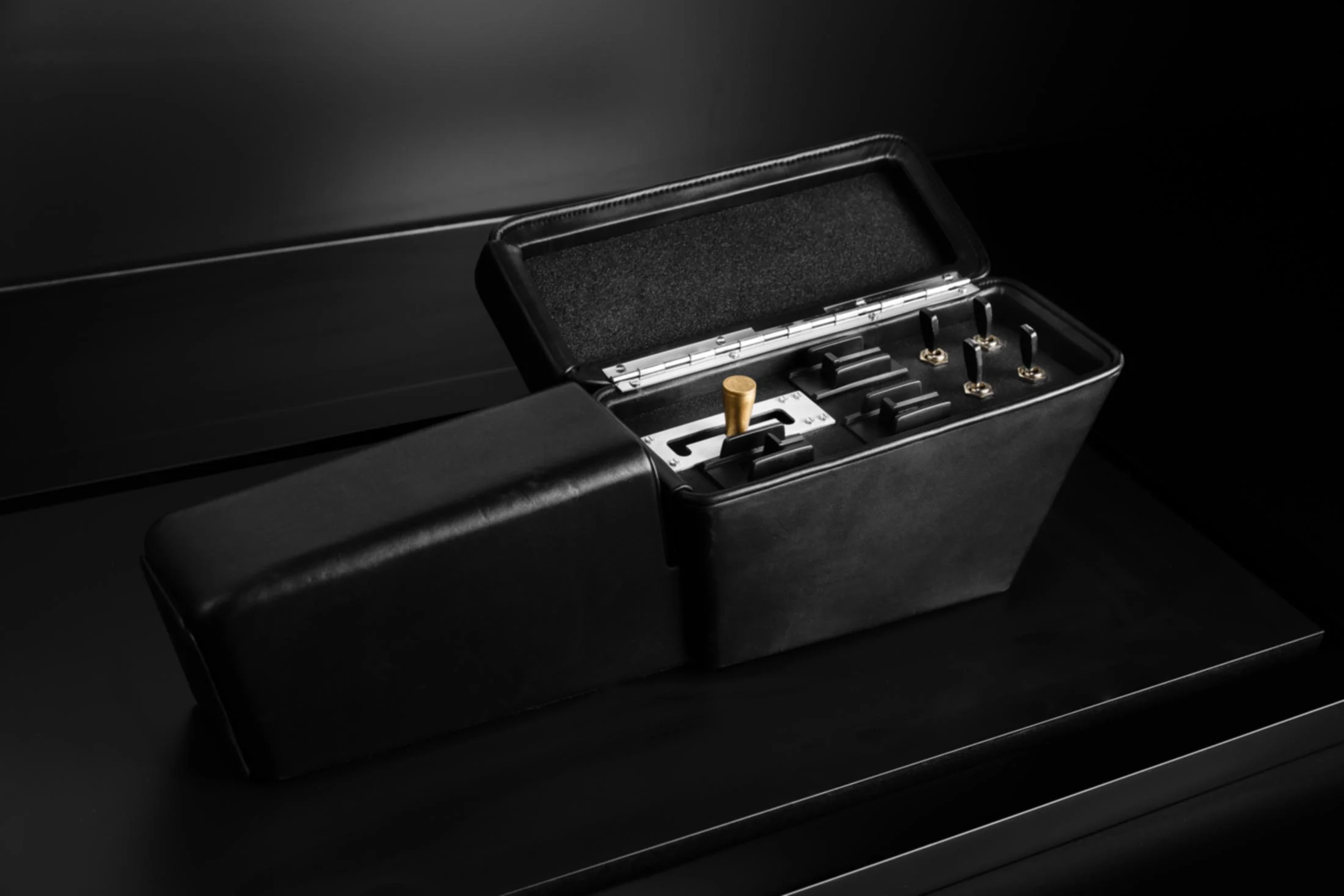
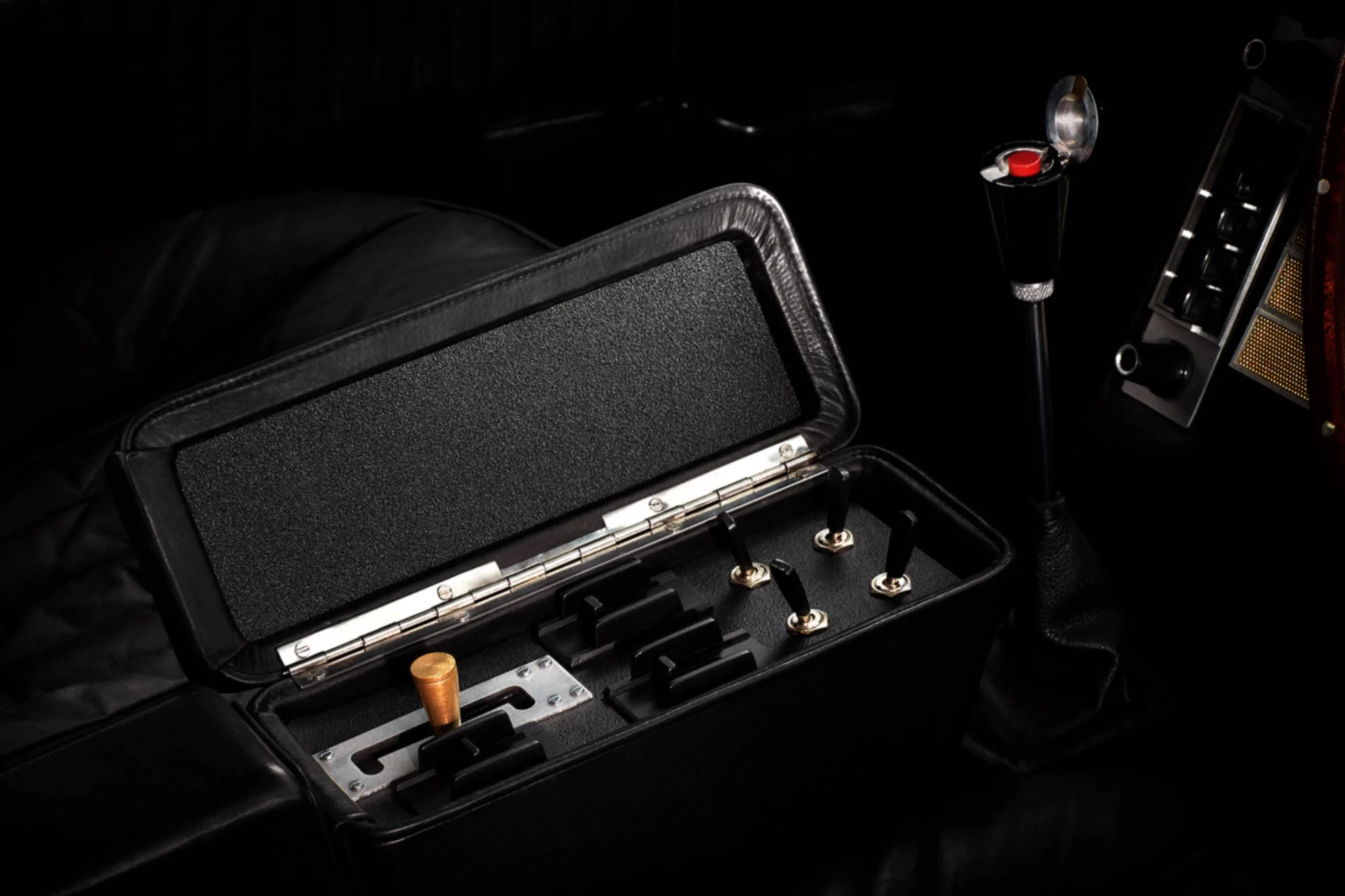
ARMREST
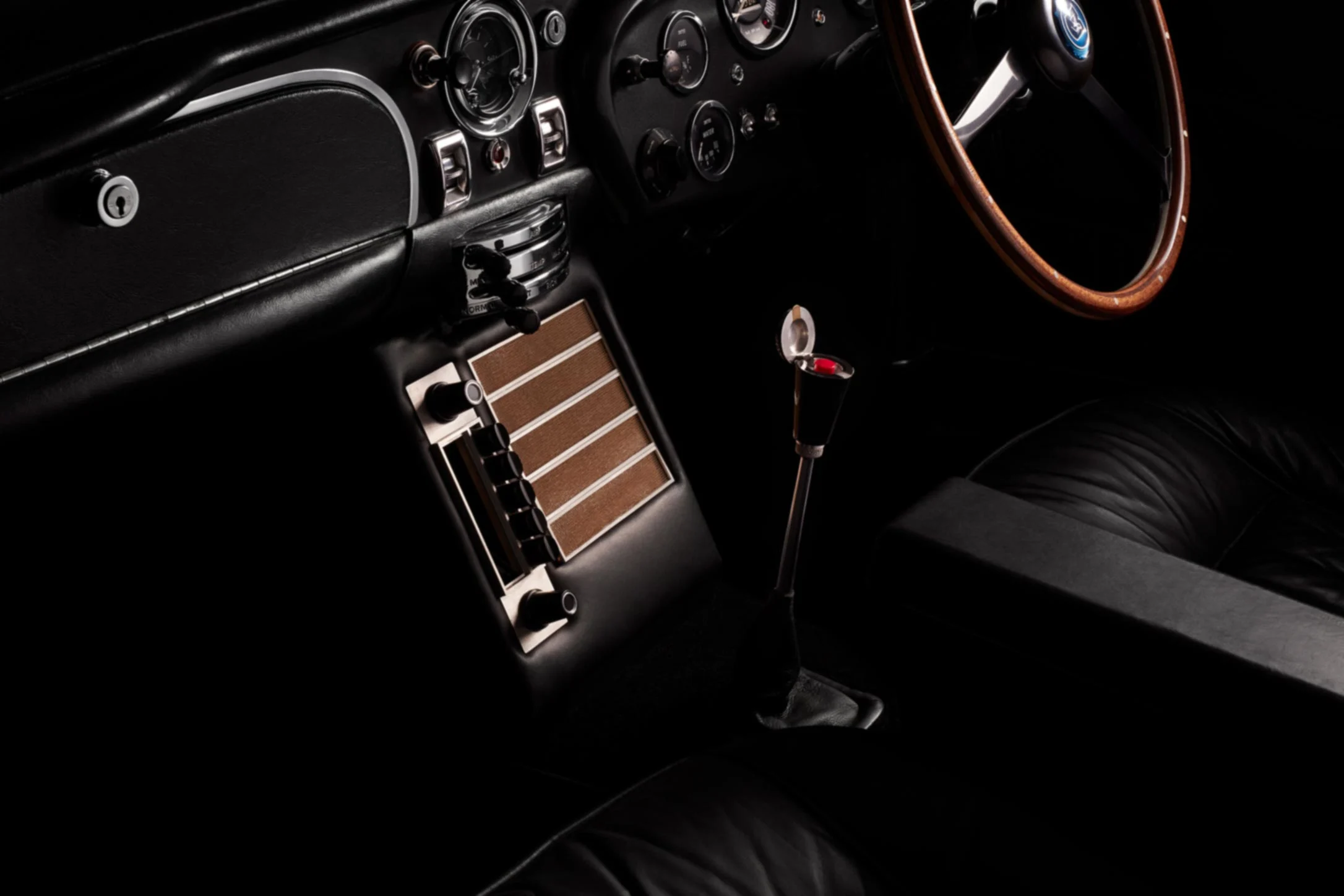
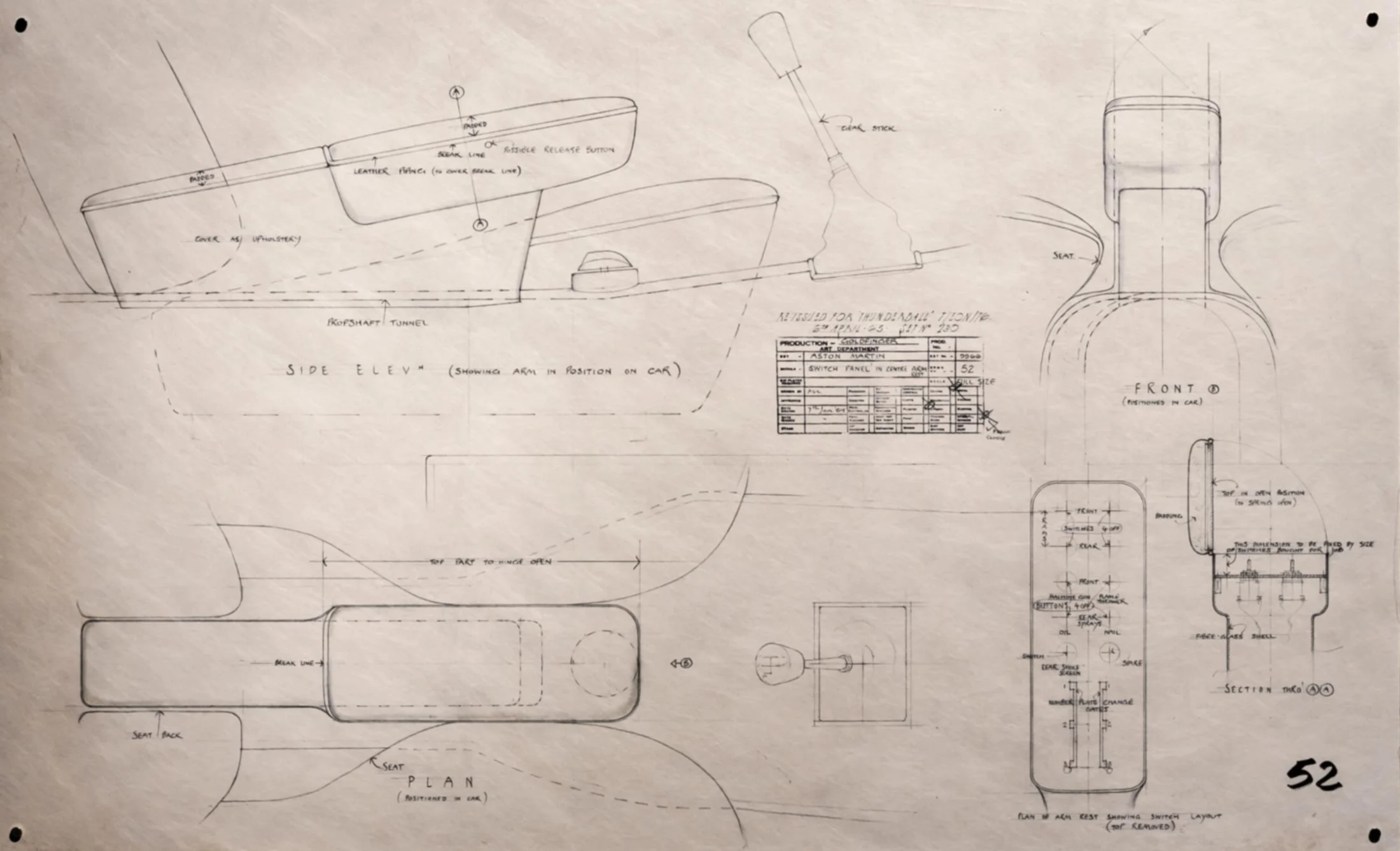
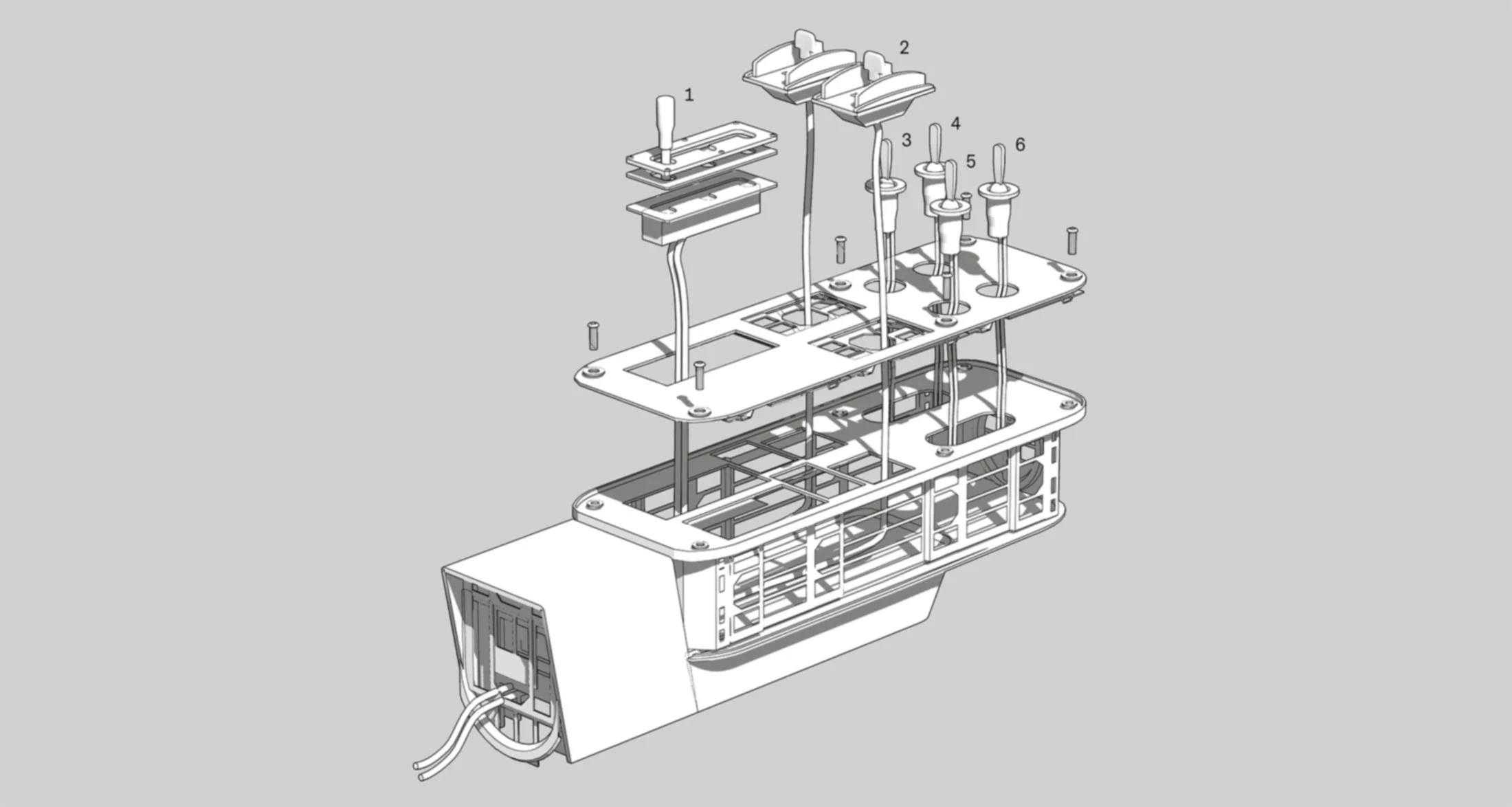
The DB5’s gadgets were controlled via a hidden panel in the car’s armrest. This armrest was used in the filming of Skyfall (2012). It was recreated from technical drawings used to produce the gadgets for the DB5 in Goldfinger (1964). In both cases the controls really worked to activate gadgets within the car.
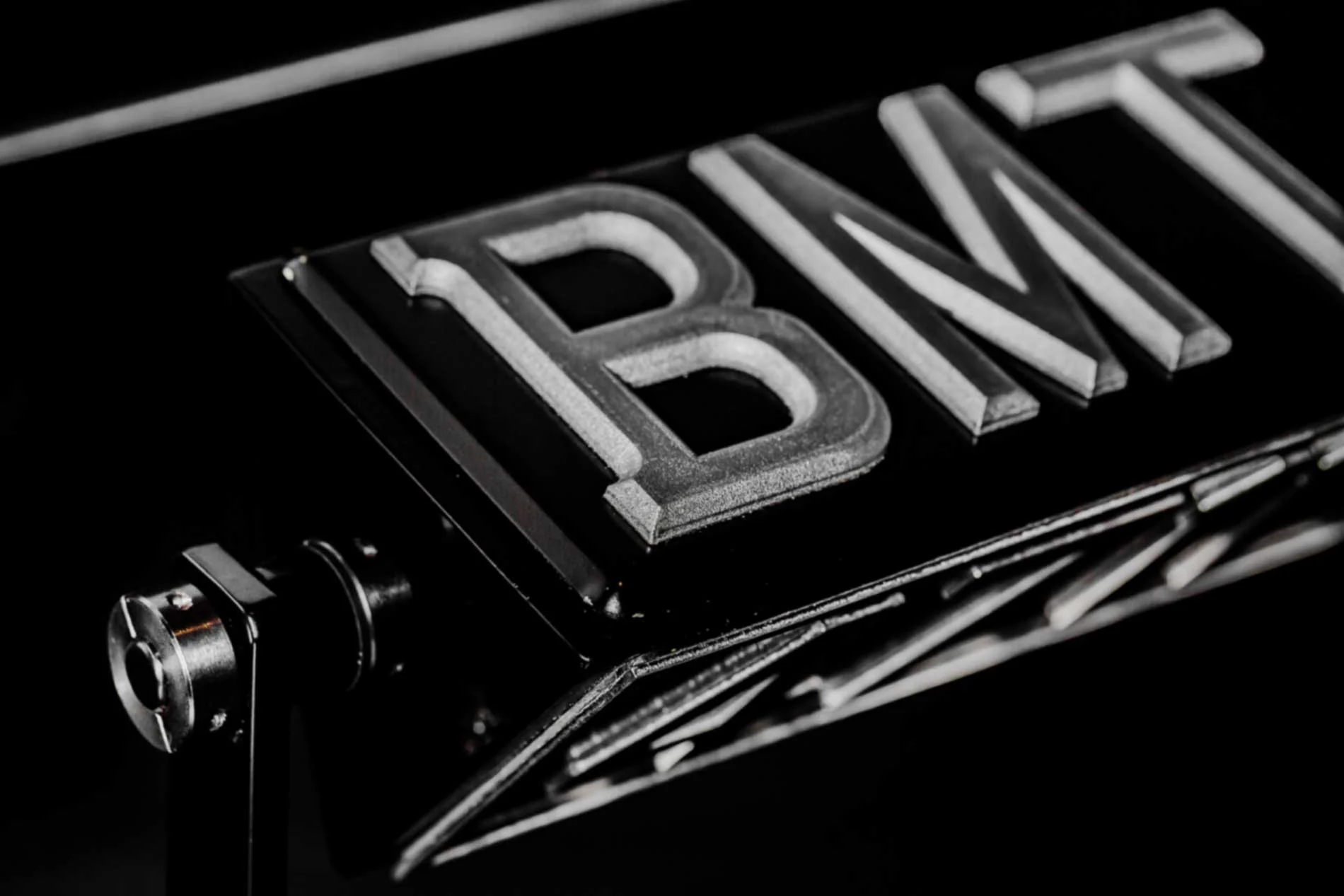
NUMBER PLATE
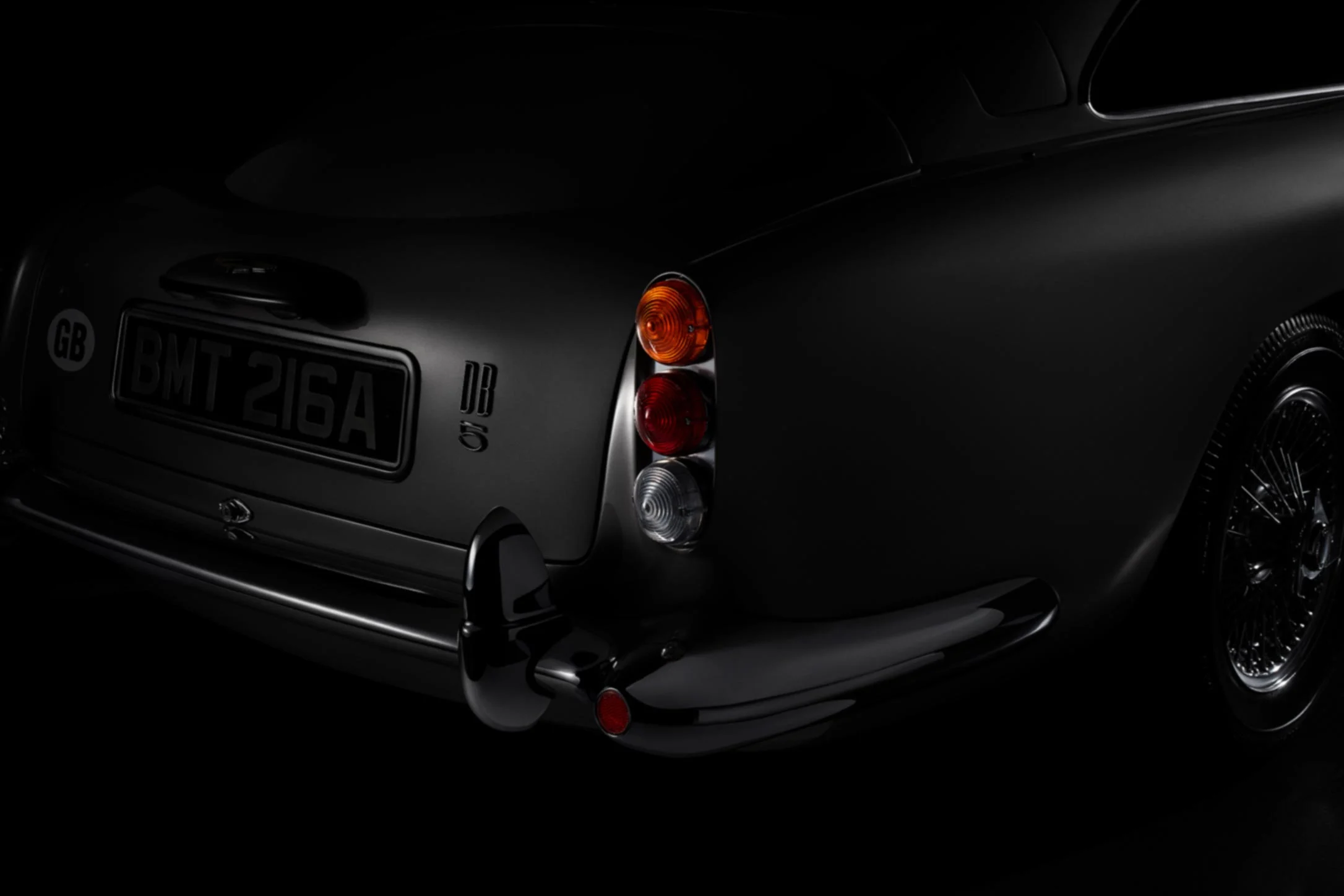
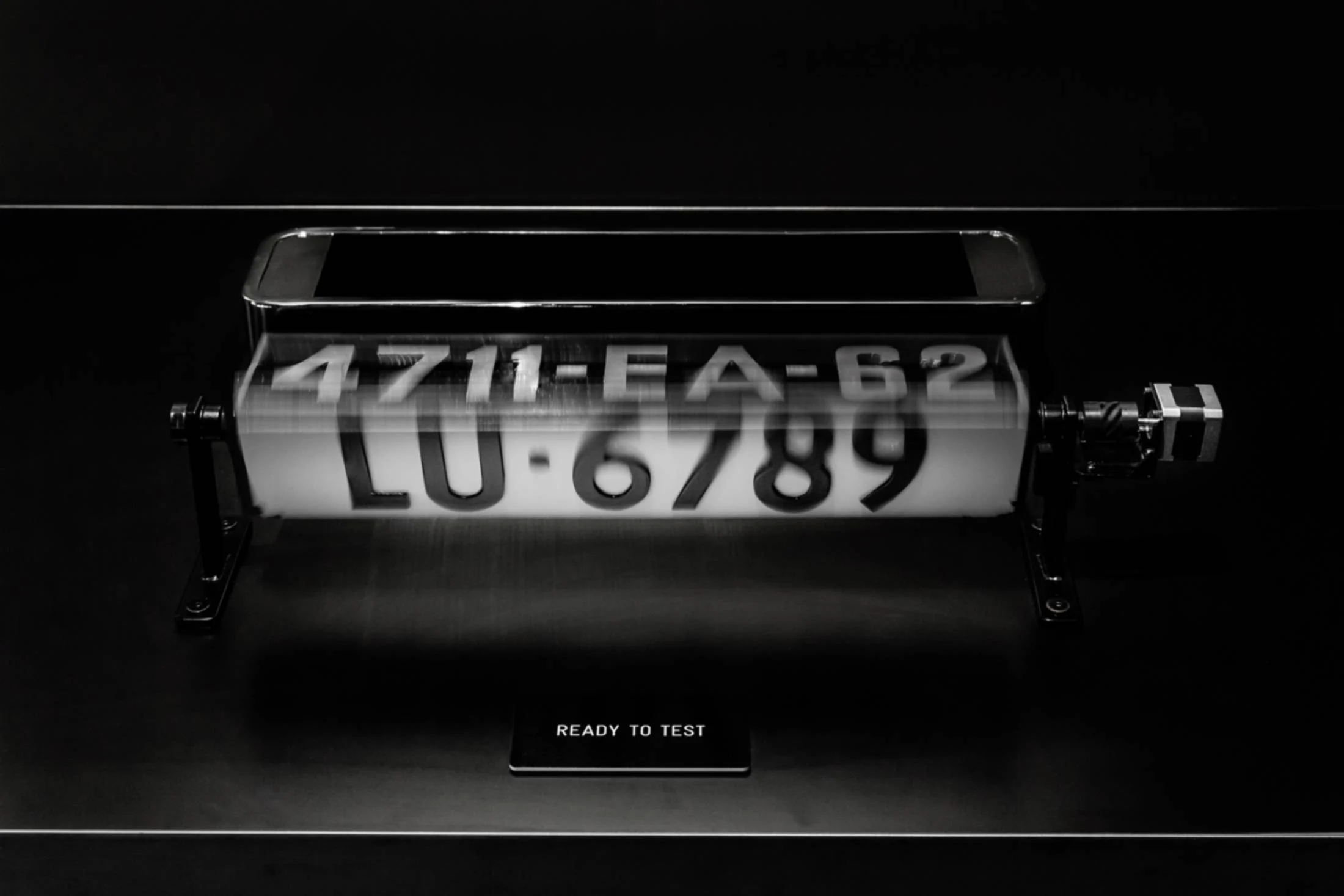
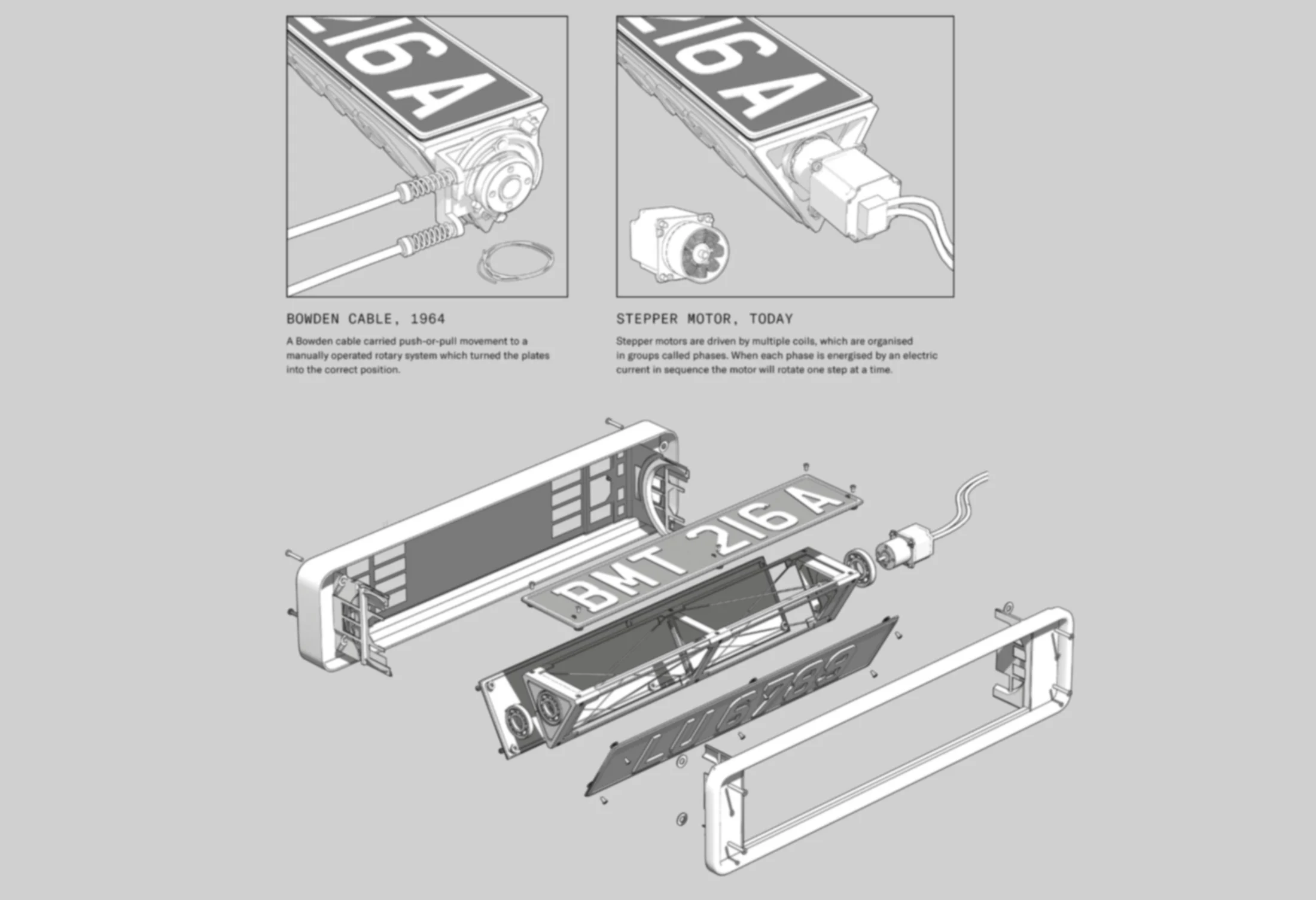
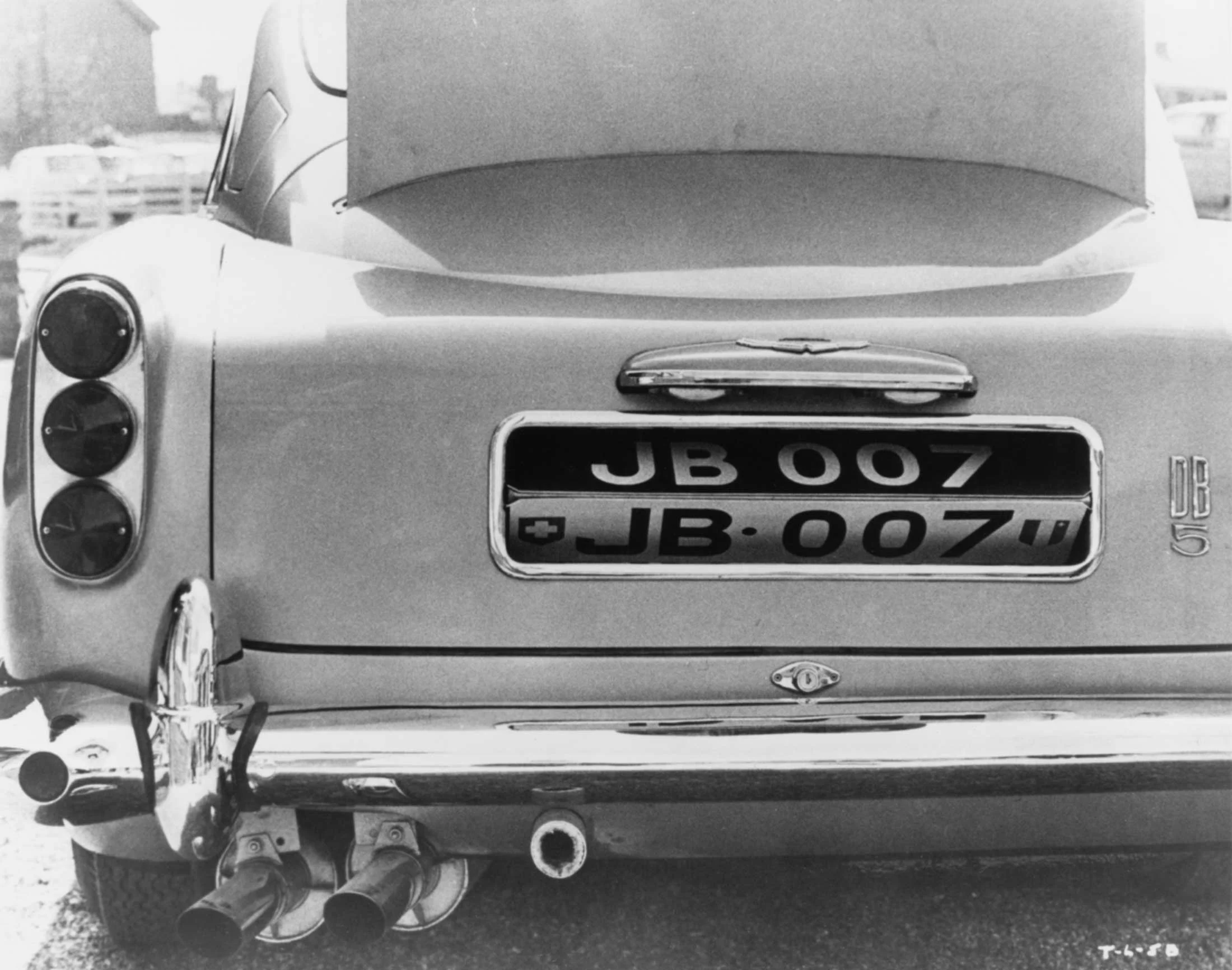
The DB5’s number plates revolved to reveal plates from different countries. The idea for this came from Guy Hamilton, director of Goldfinger (1964), who enjoyed the thought of using such a gadget to evade traffic wardens.
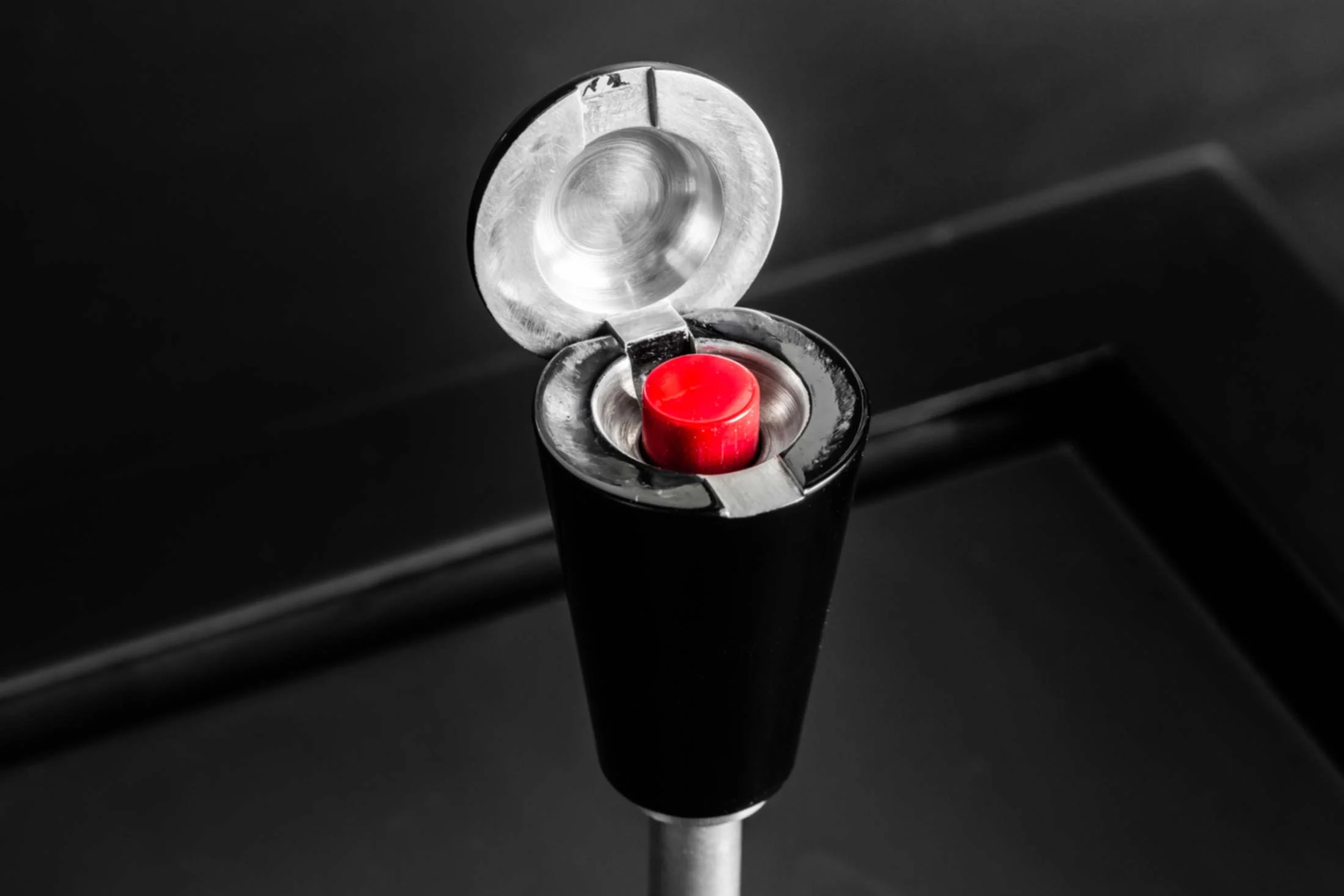
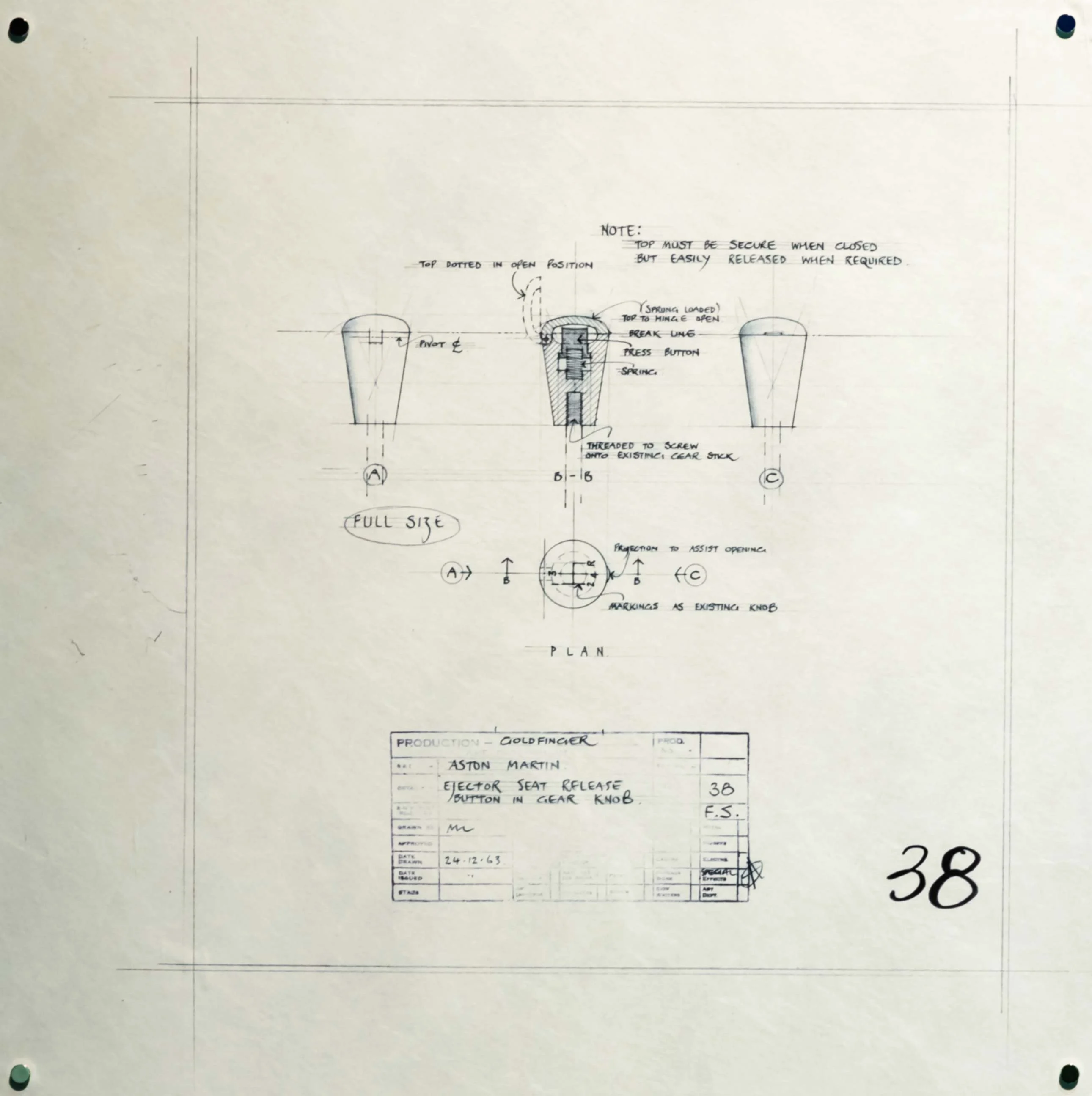
EJECTOR SEAT TRIGGER
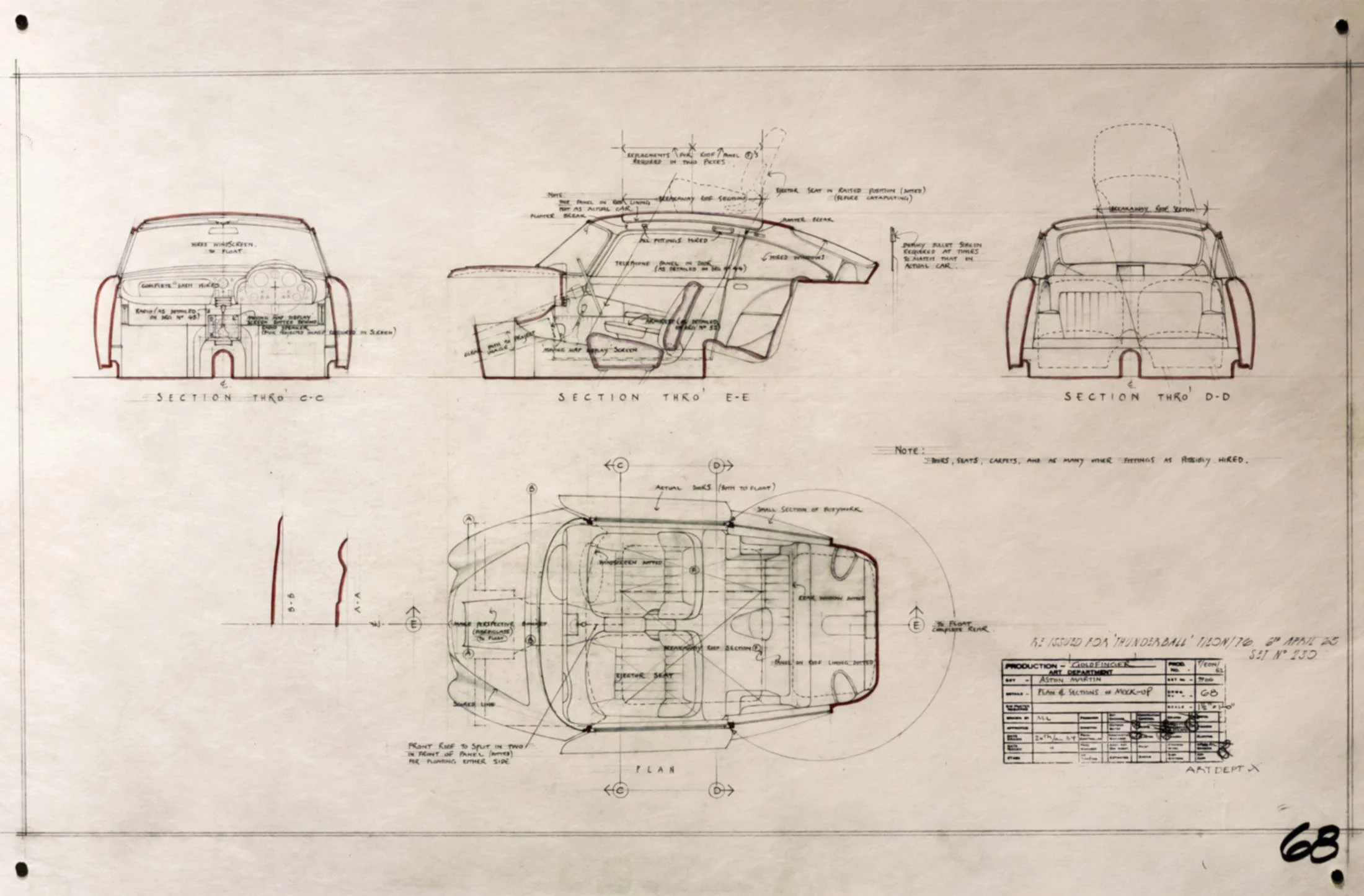
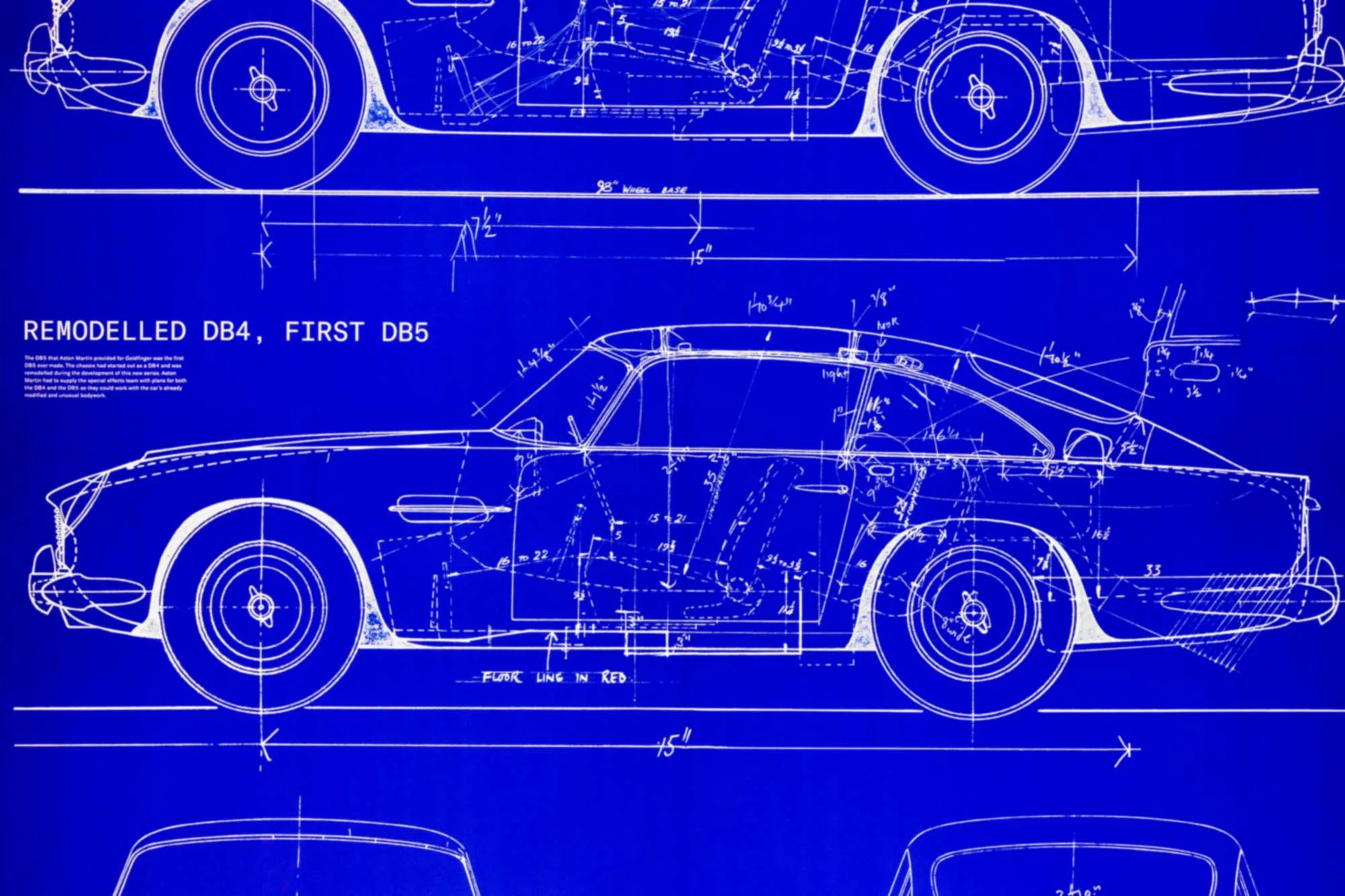
This ejector seat trigger button was used in the filming of Skyfall (2012). It was recreated using the technical drawings for the original trigger made for Goldfinger (1964) by Michael Lamont. A close look at these drawings reveals how this trigger button, hidden seamlessly inside the Aston Martin gear stick, opened with the flick of a thumb.
EJECTOR SEAT
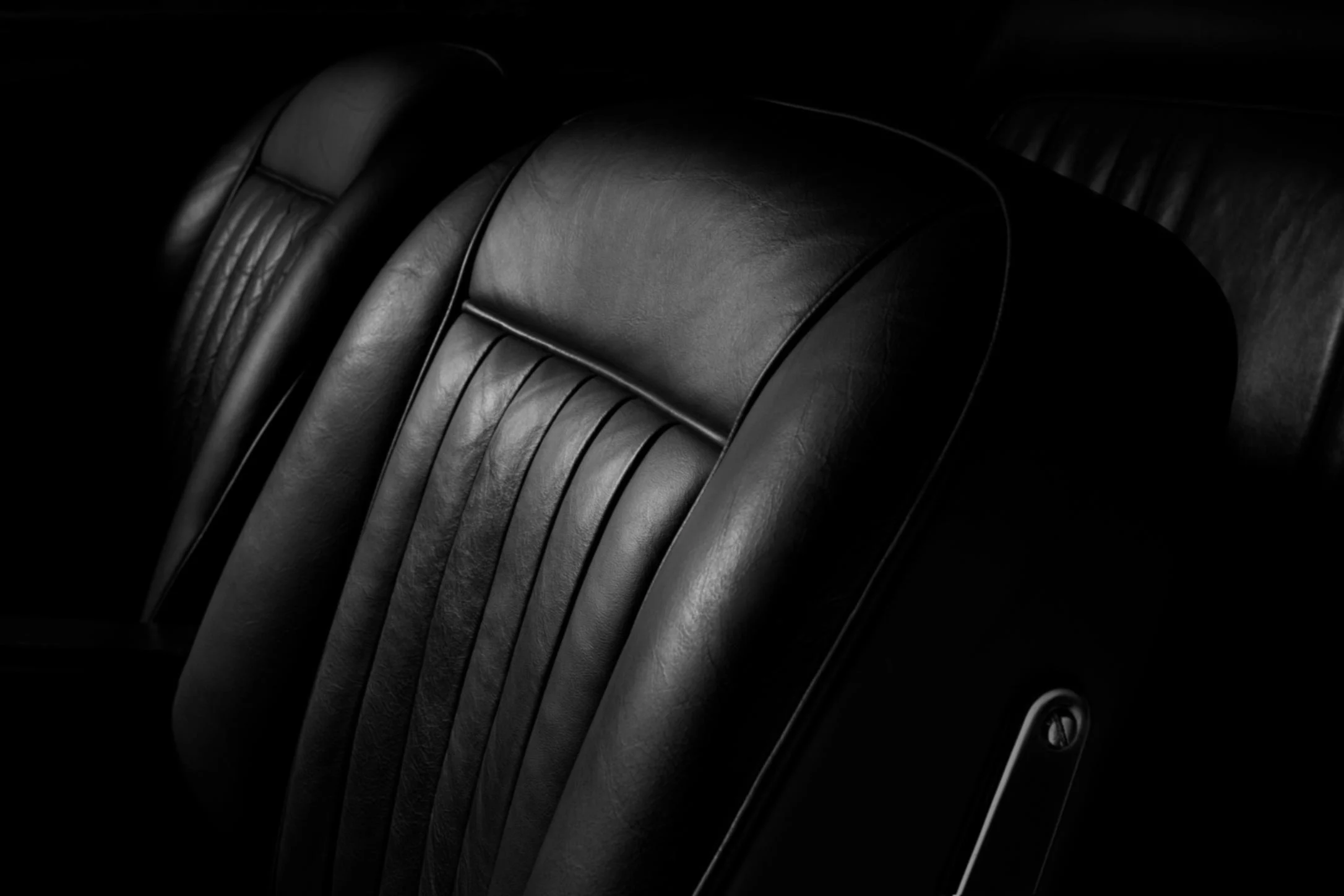
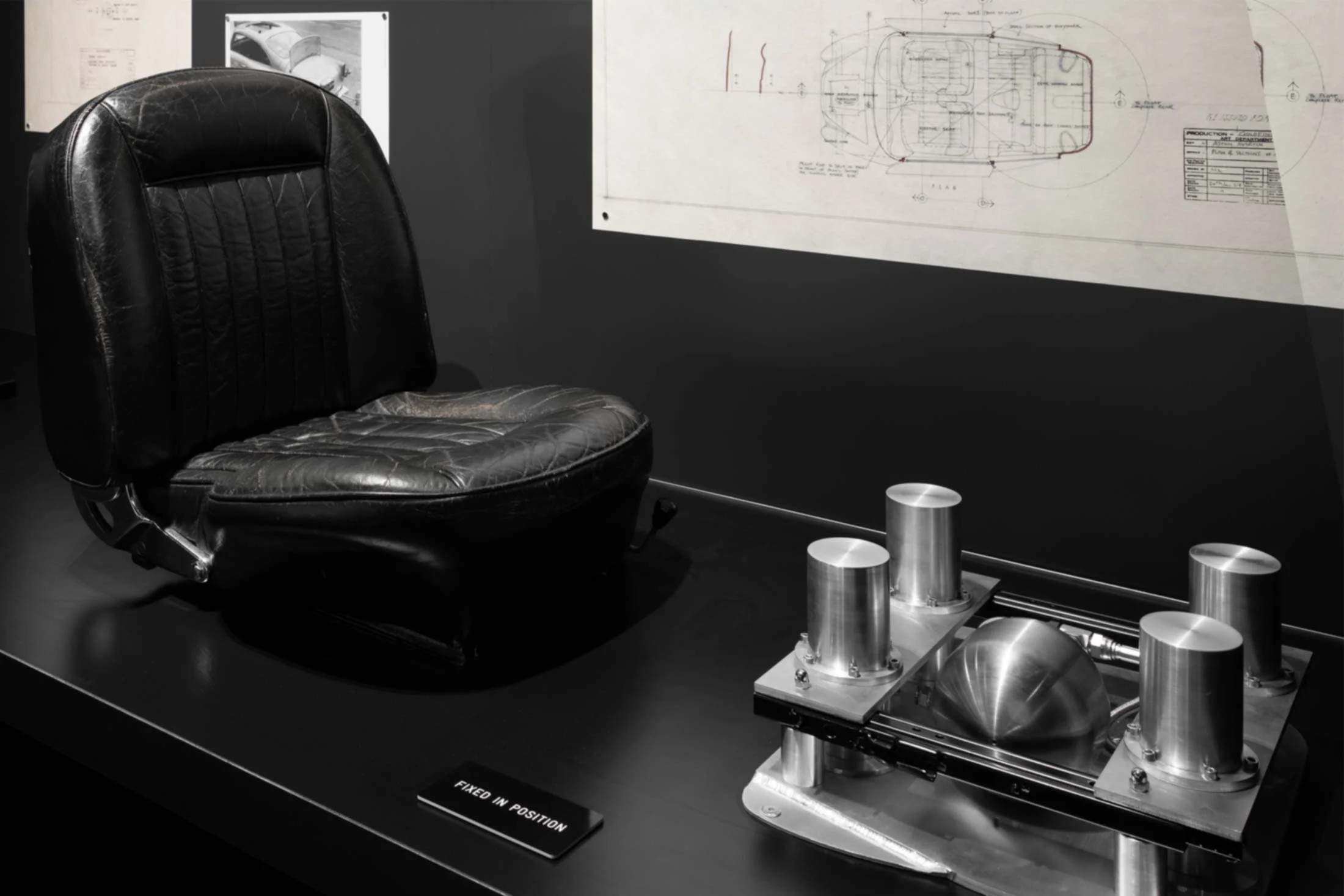
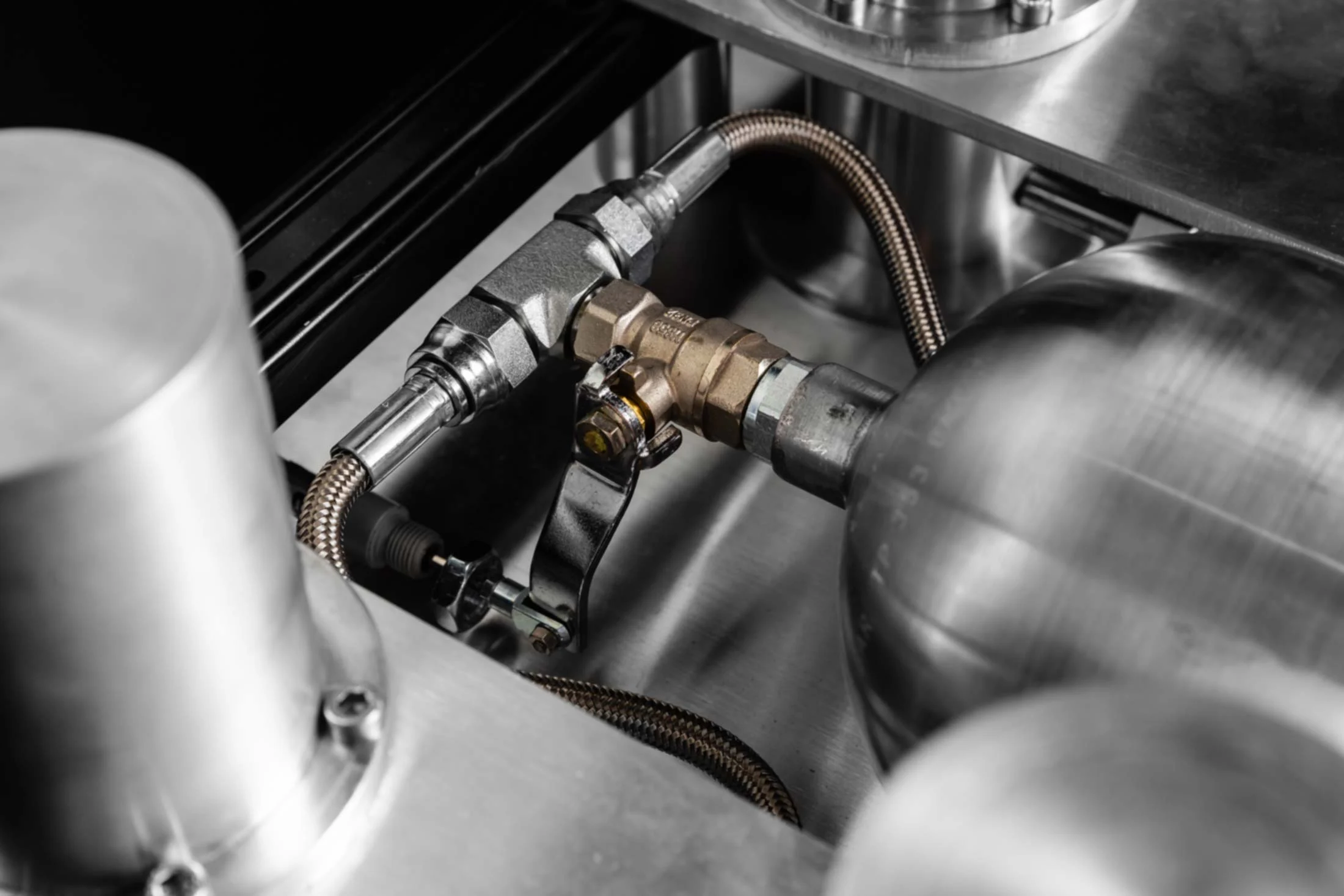
The DB5’s ejector seat is a firm favorite among fans. When filming Goldfinger (1964), the special effects team used pressurised air canisters hidden in the seat itself to propel the seat out of the car. The image to the left shows a recreated gadget which could achieve the necessary lift. This is shown next to the passenger seat from the GoldenEye DB5.
TYRE-SLASHER
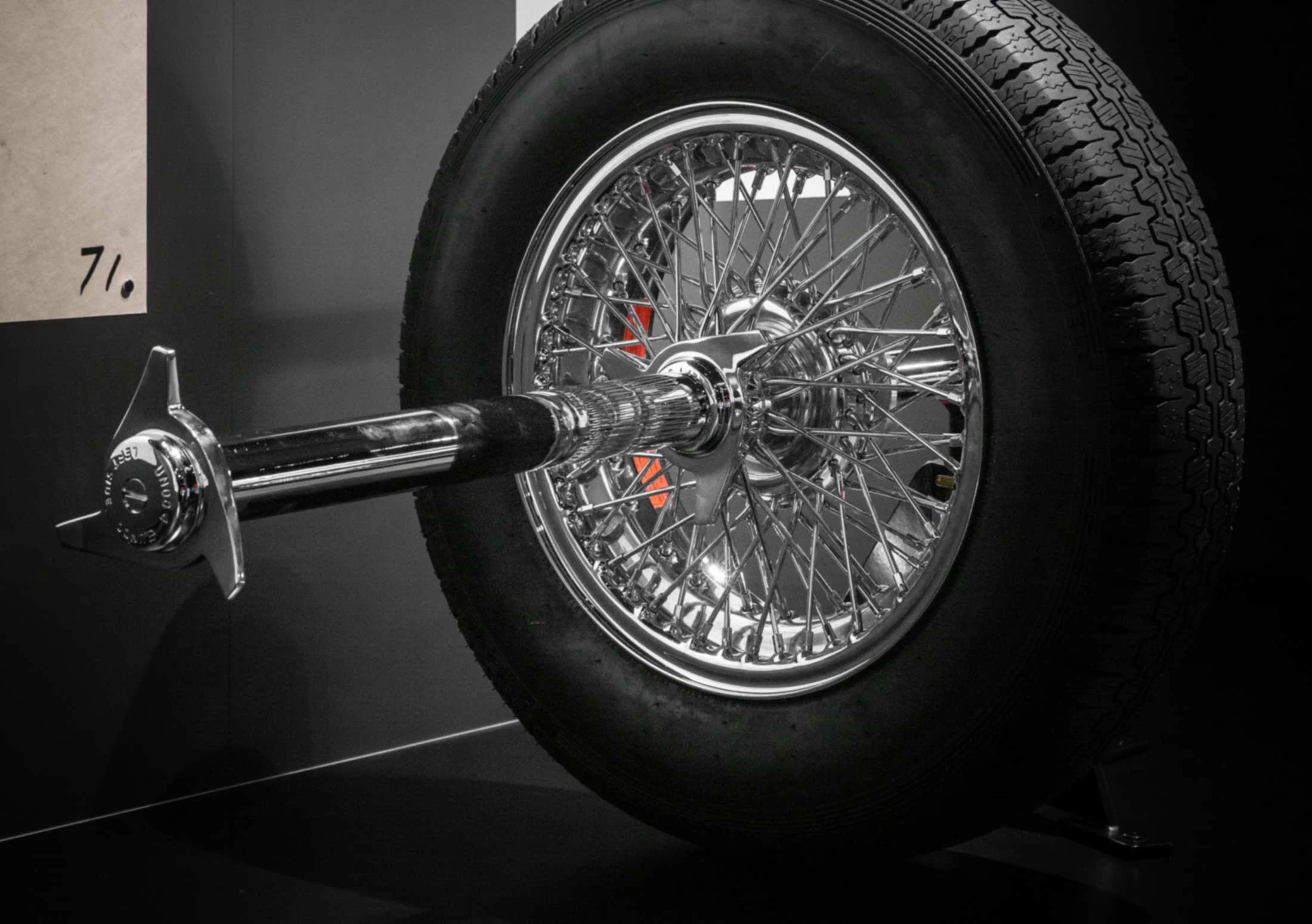
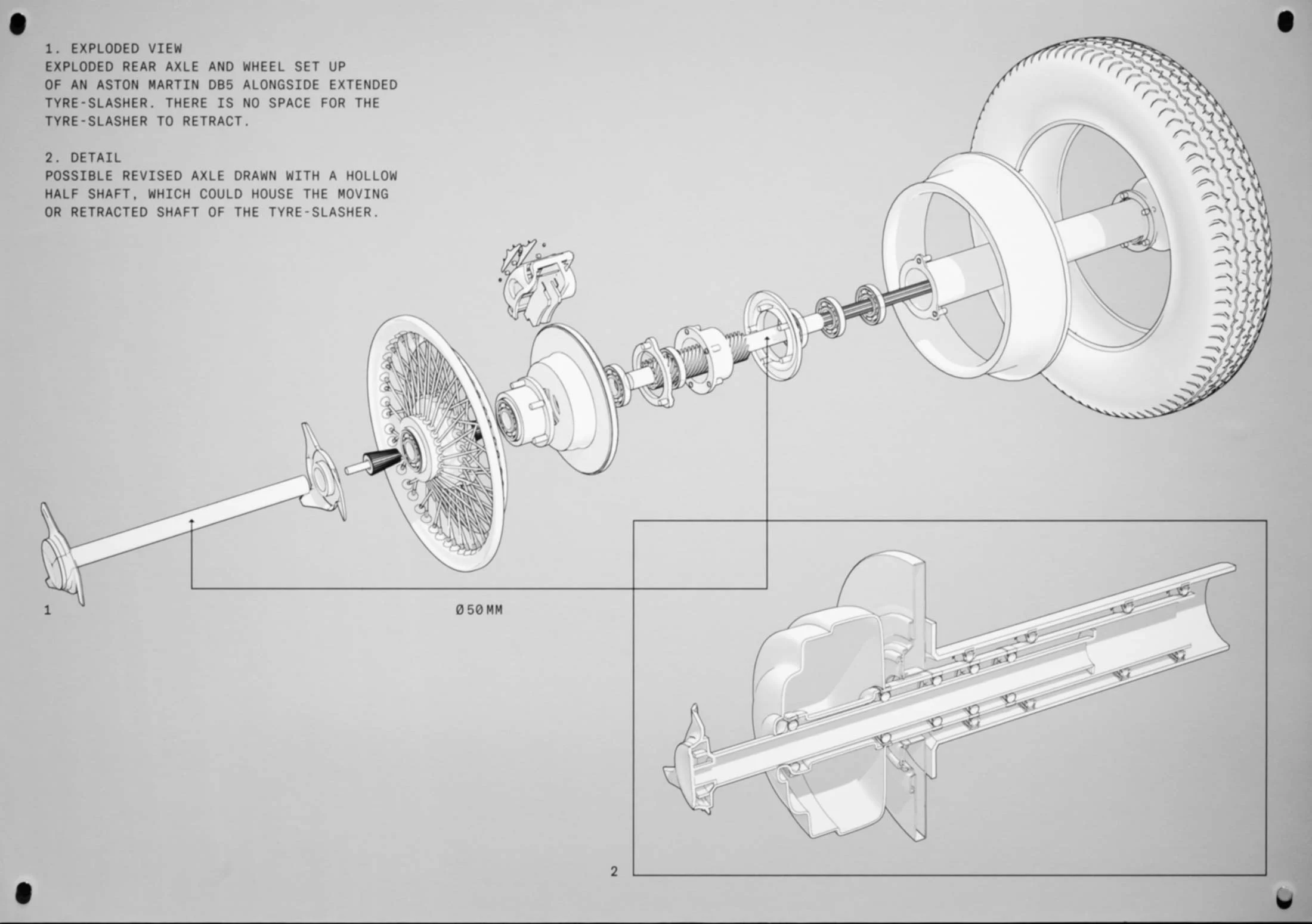
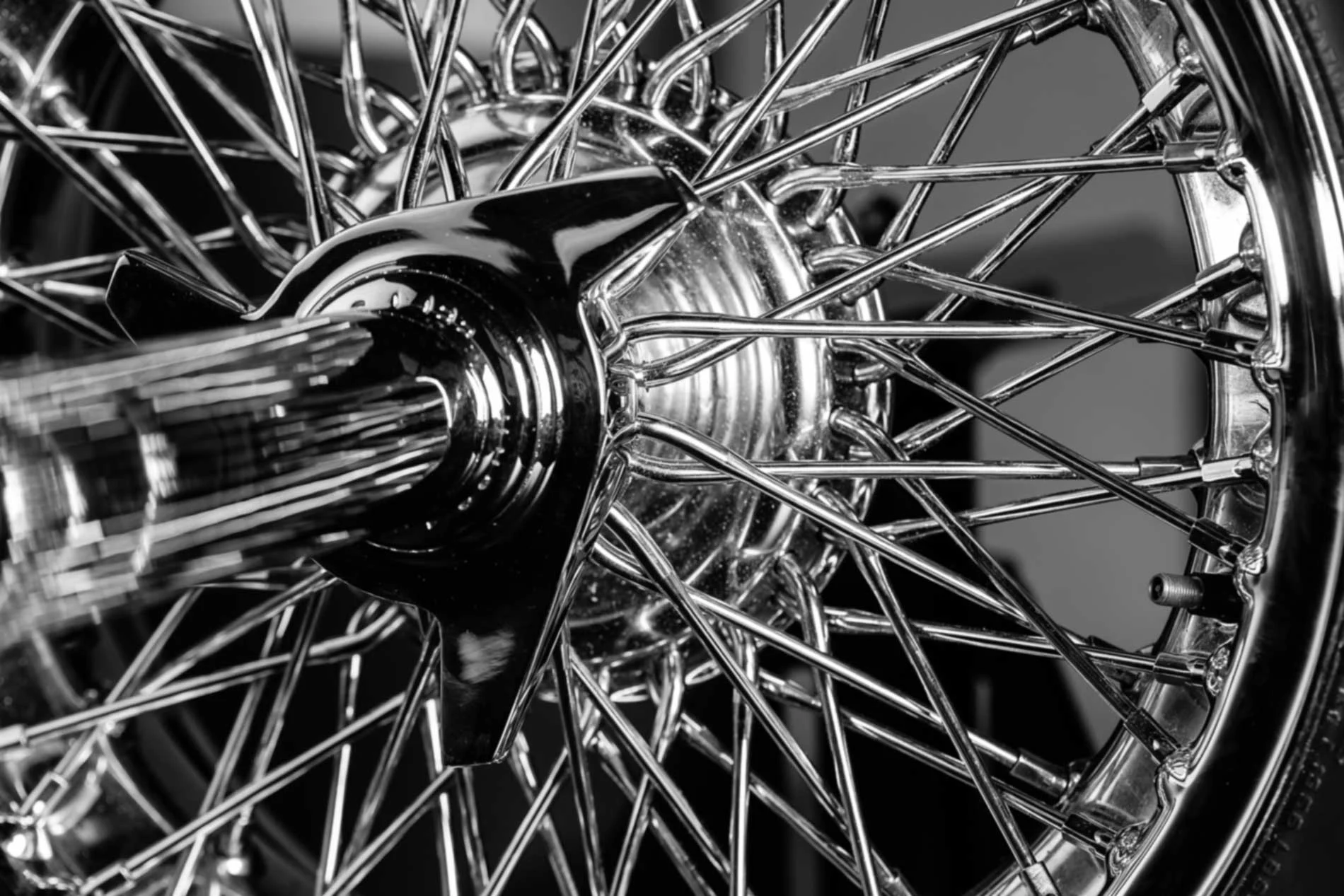
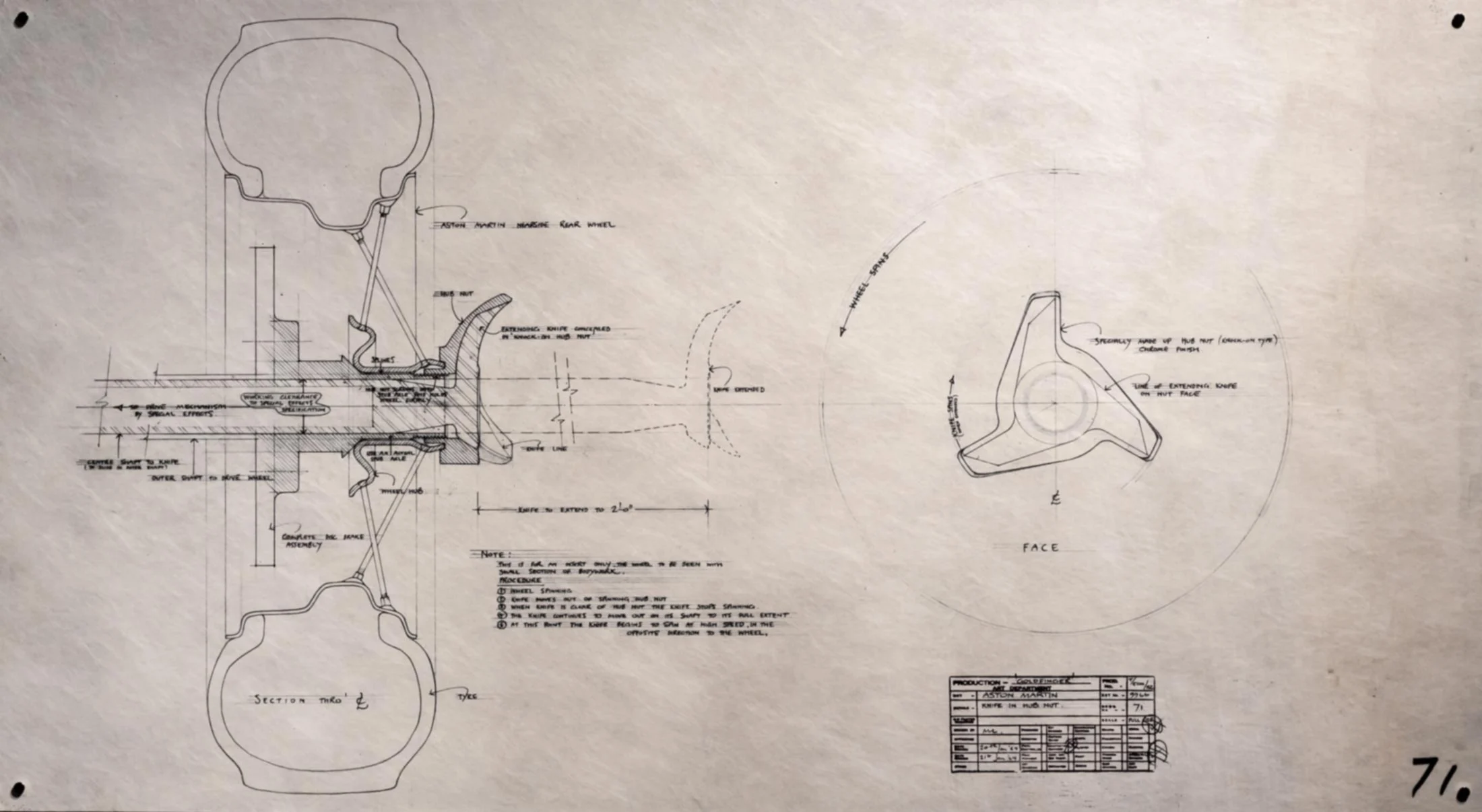
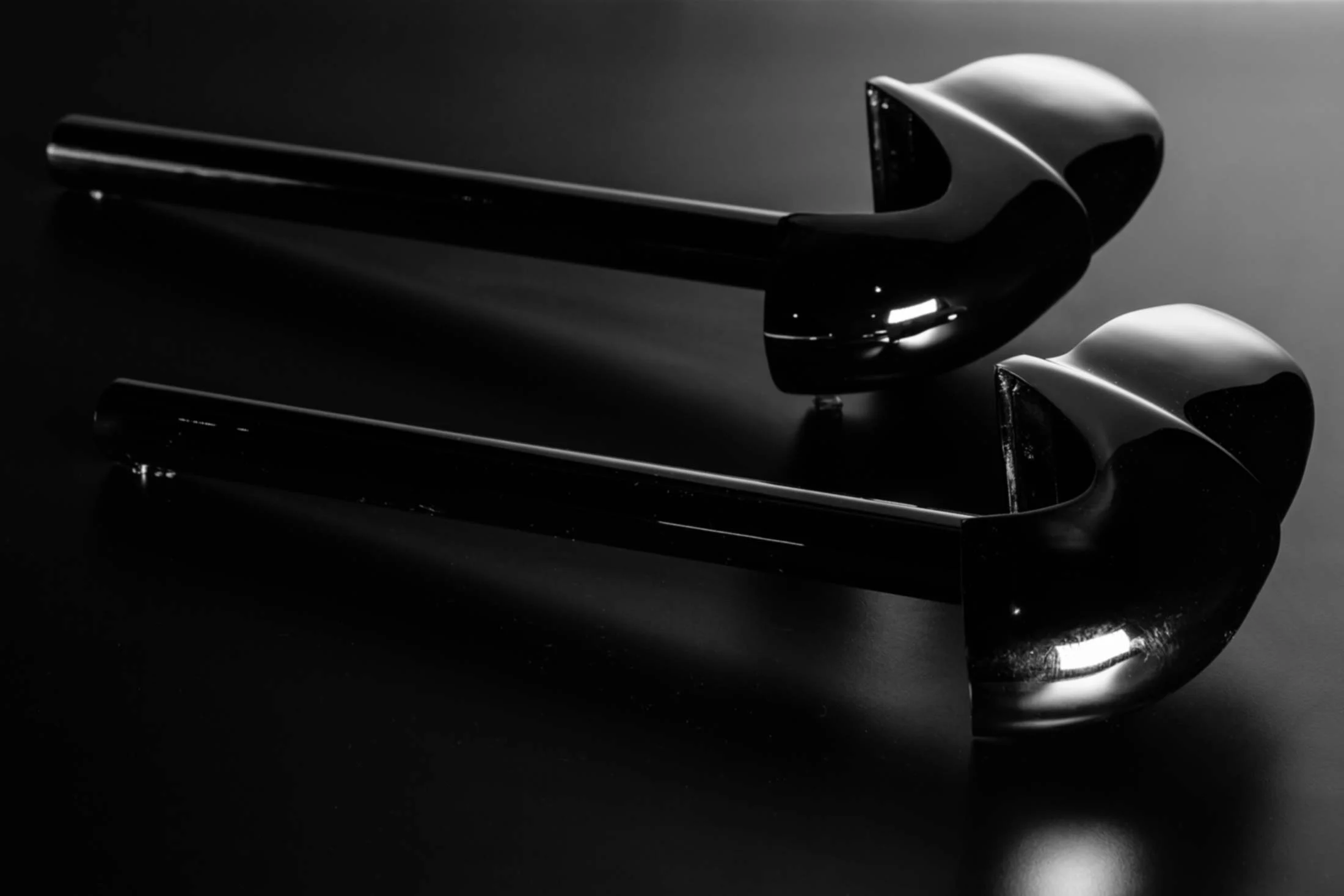
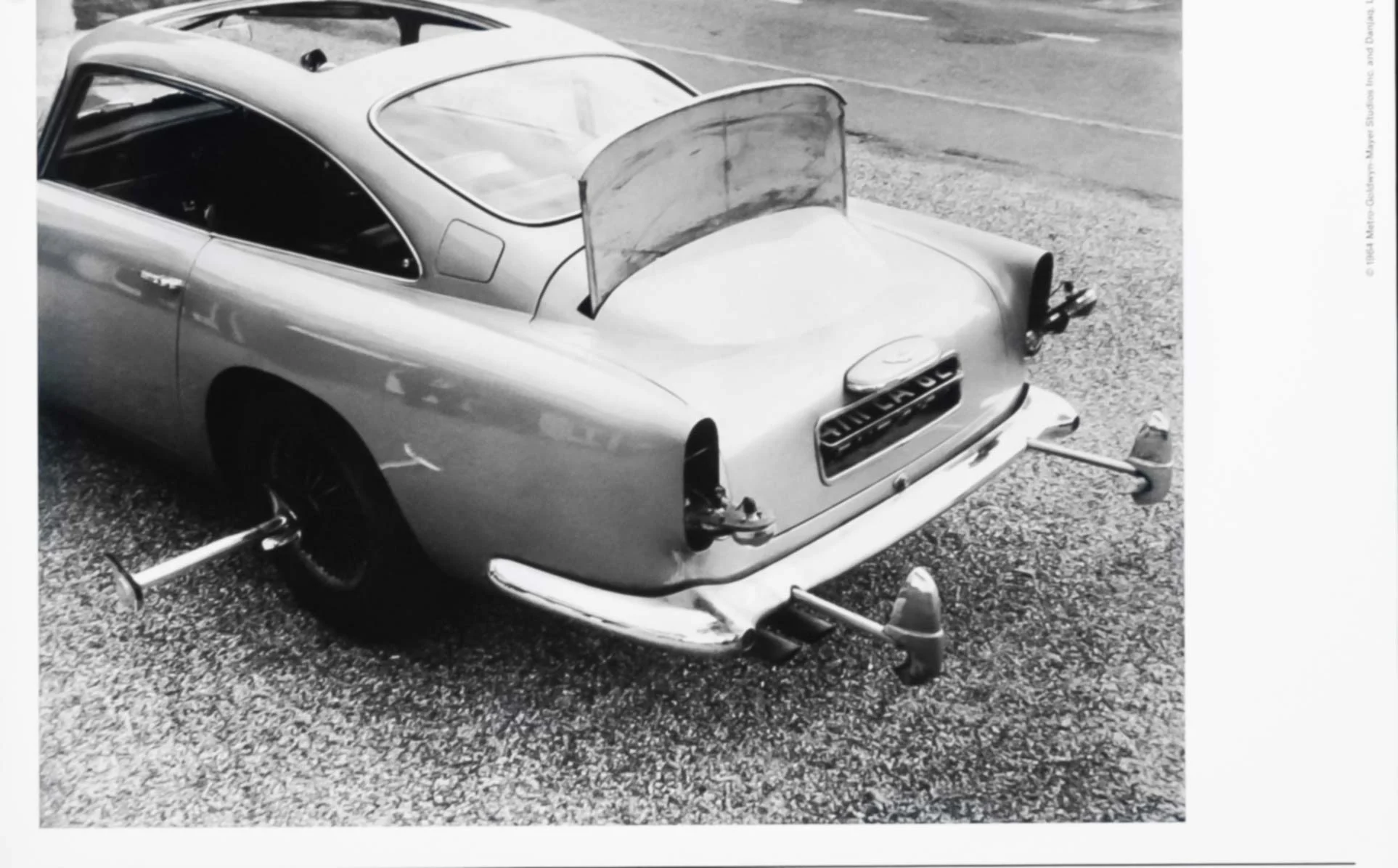
In Goldfinger (1964) Bond uses the extendable tyre-slashers to slice through the back of Tilly Masterson’s white Ford Mustang convertible. The original design, by Sir Ken Adam, was inspired by the blades used on the axles of racing chariots in ancient Greece and Rome.
OVERRIDERS
Production designer, Sir Ken Adam, described the overriders as two boxing gloves emerging from the front and rear bumpers to protect the car during any altercations.
See video animation below.
RADAR TRACKING
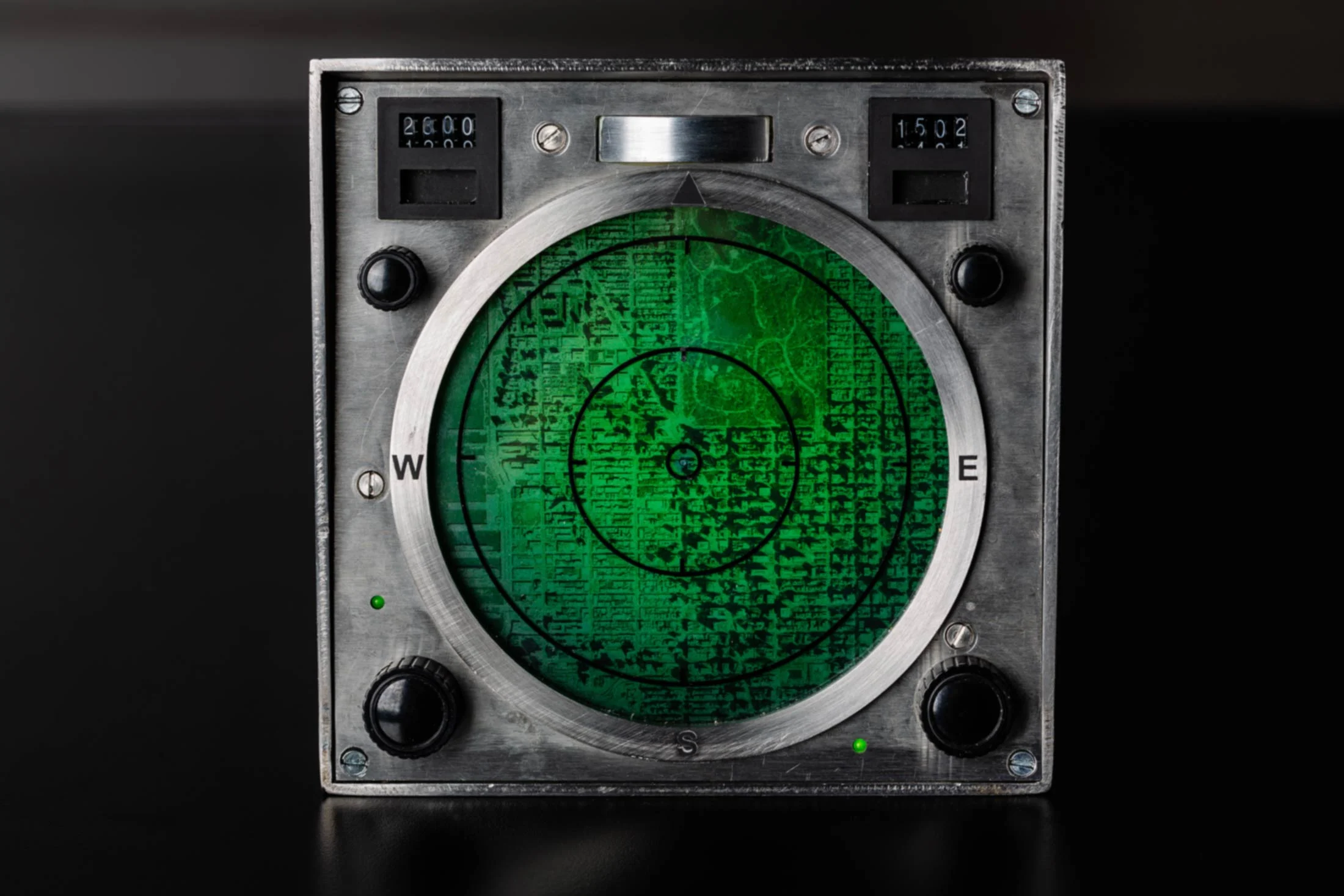
In Goldfinger (1964) Bond attaches a homing device to Goldfinger’s Rolls Royce and uses this and a radar screen concealed in his DB5 to follow him to Switzerland. This technology was ahead of its time. In the 1960s a radar receiver could not know where in the world it was (or where on a map the homing device it was tracking was) without first knowing where it started and calculating from there. For this, the world would have to wait for GPS technology.
See video animation below.
NAIL RELEASE
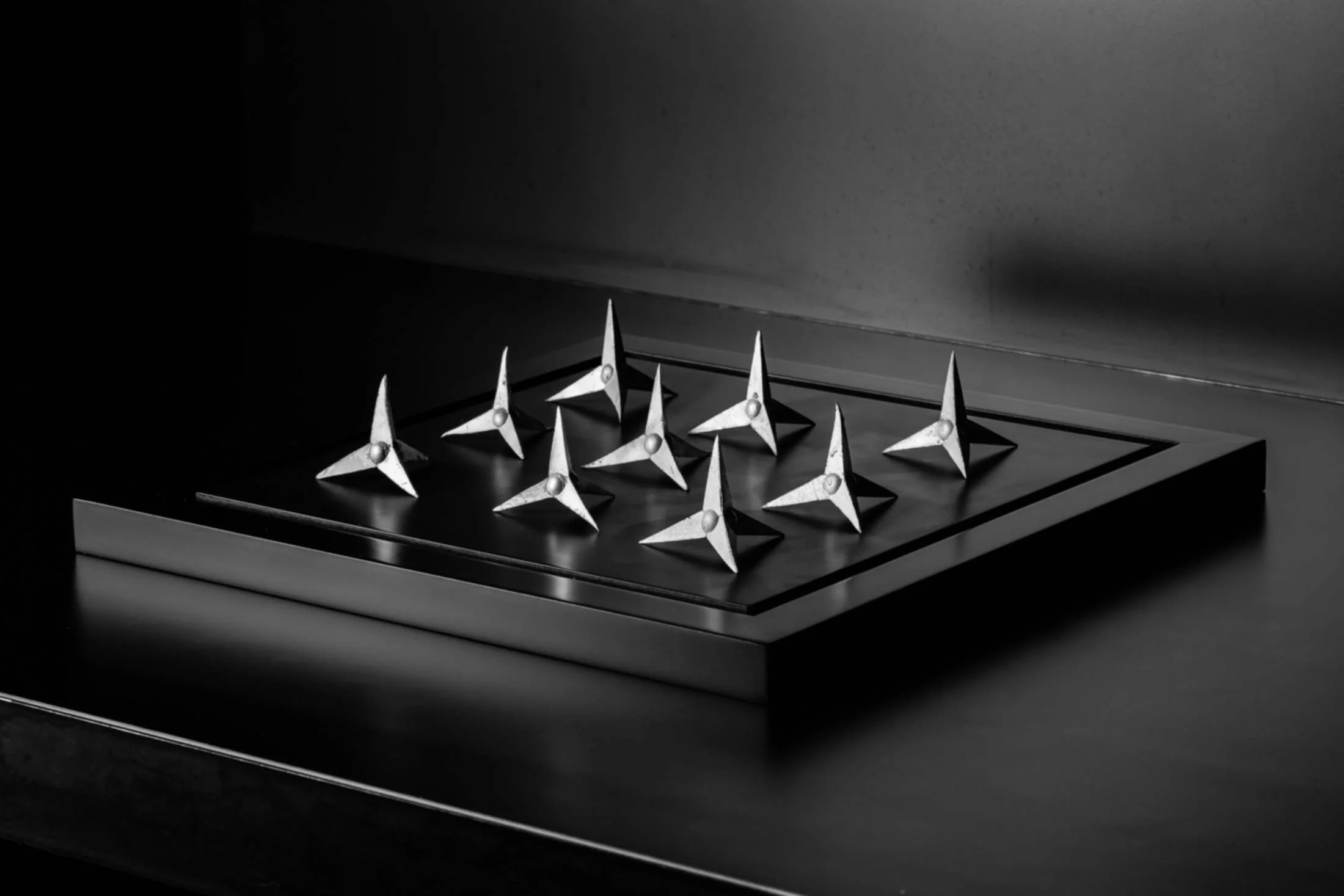
The Goldfinger (1964) DB5 included a nail release, which could expel four-sided nails, or caltrops, onto the road behind it. While the DB5’s nail release has never been seen on screen, a similar gadget appears as part of Bond’s BMW 750iL inTomorrow Never Dies (1997), and these caltrops were used in the making of that film.
See video animation below.
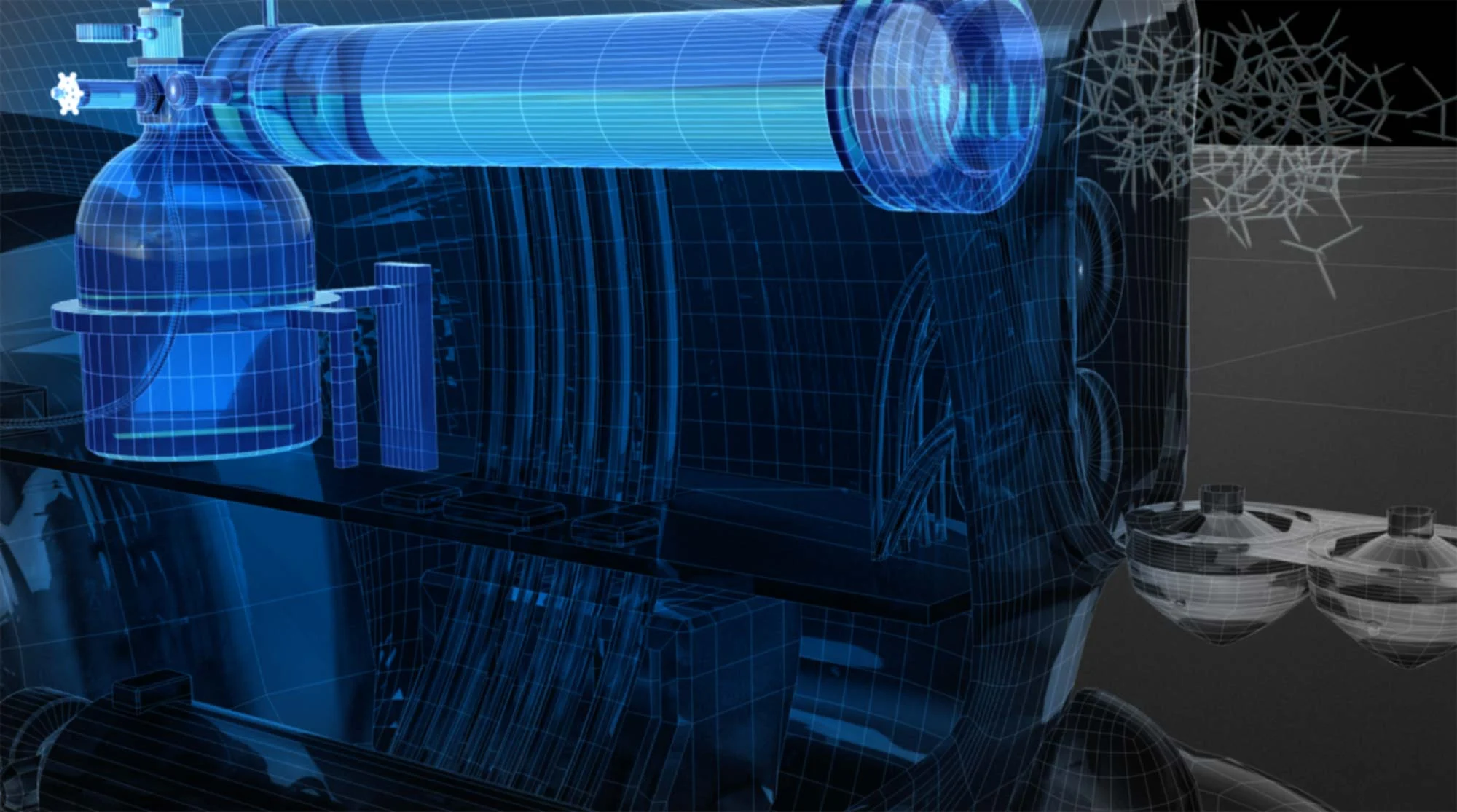
OIL SLICK RELEASE
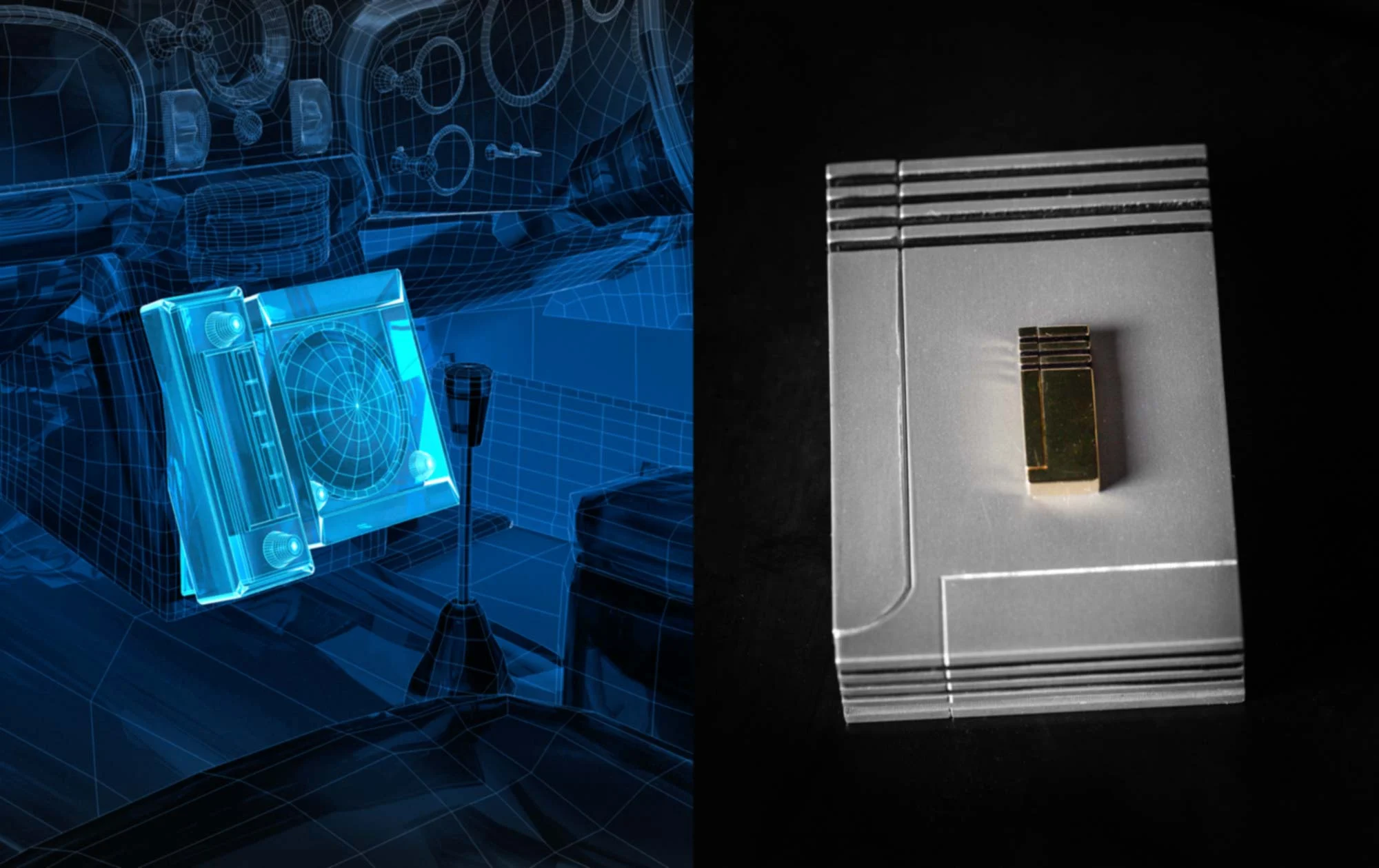
The oil slick release featured in Goldfinger (1964) worked along similar lines to the nail release, by using pressurised air to force the oil out of the car and onto the road. The photo on the right shows the positioning behind a DB5’s rear light casing.
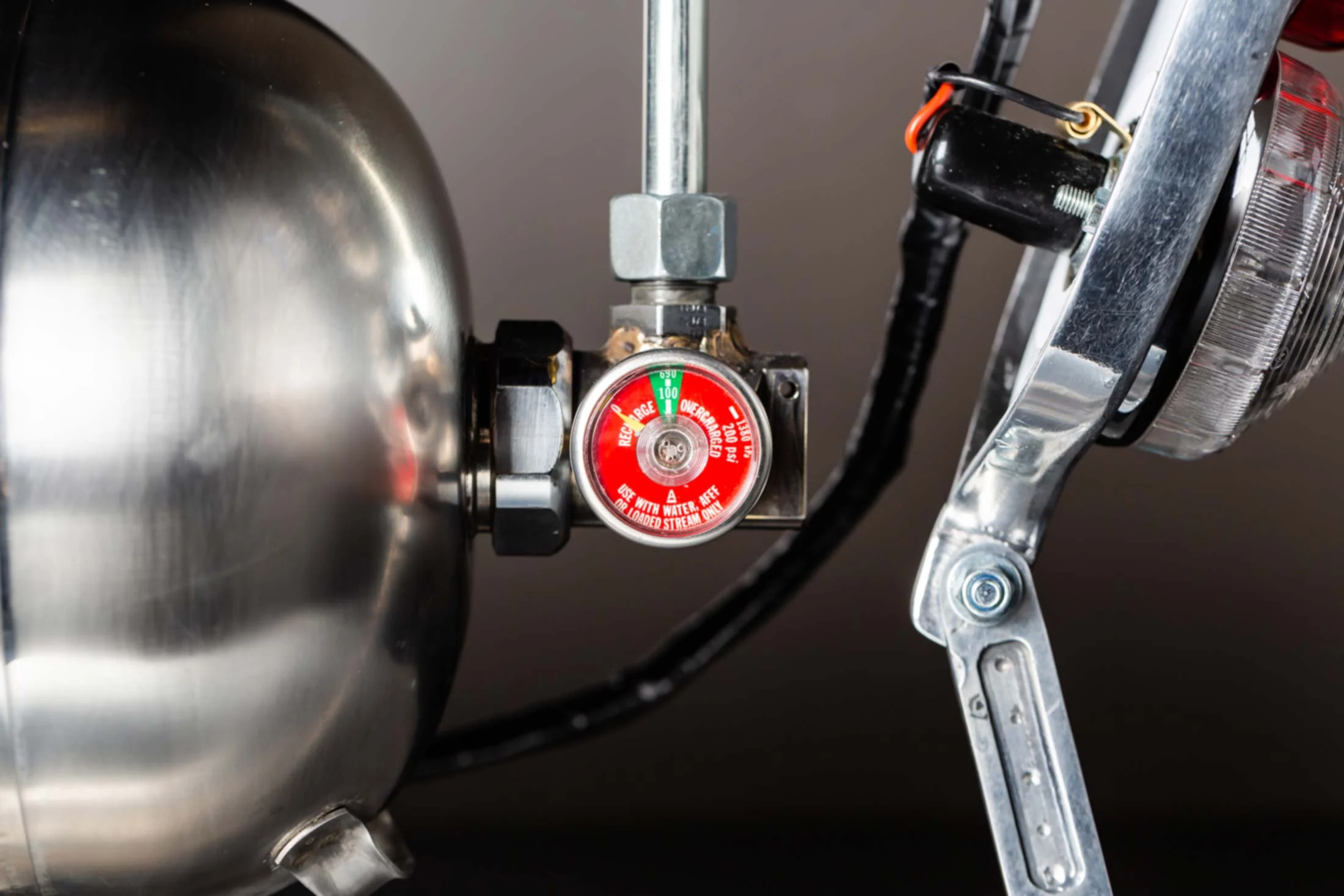
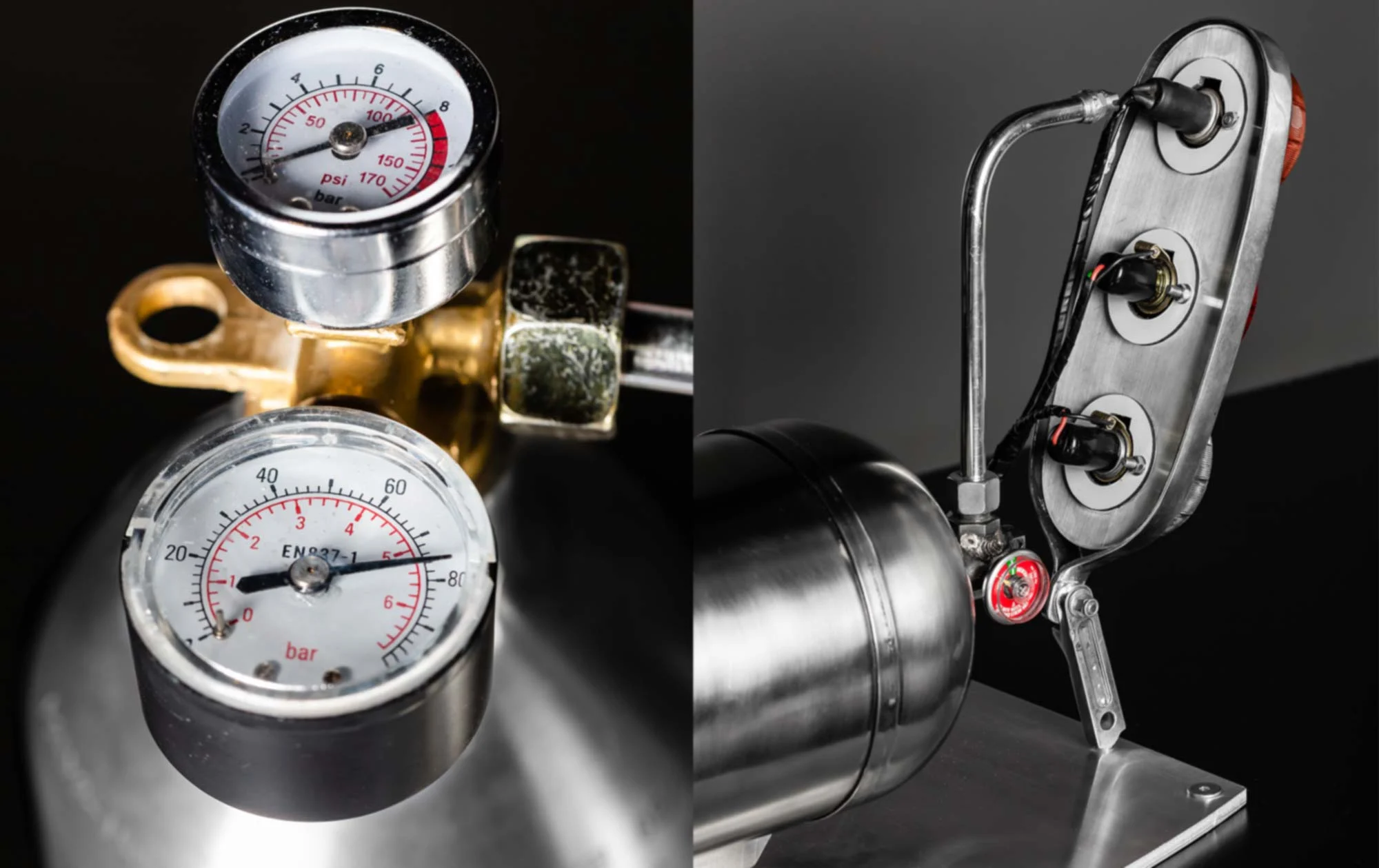
MACHINE GUN TECH
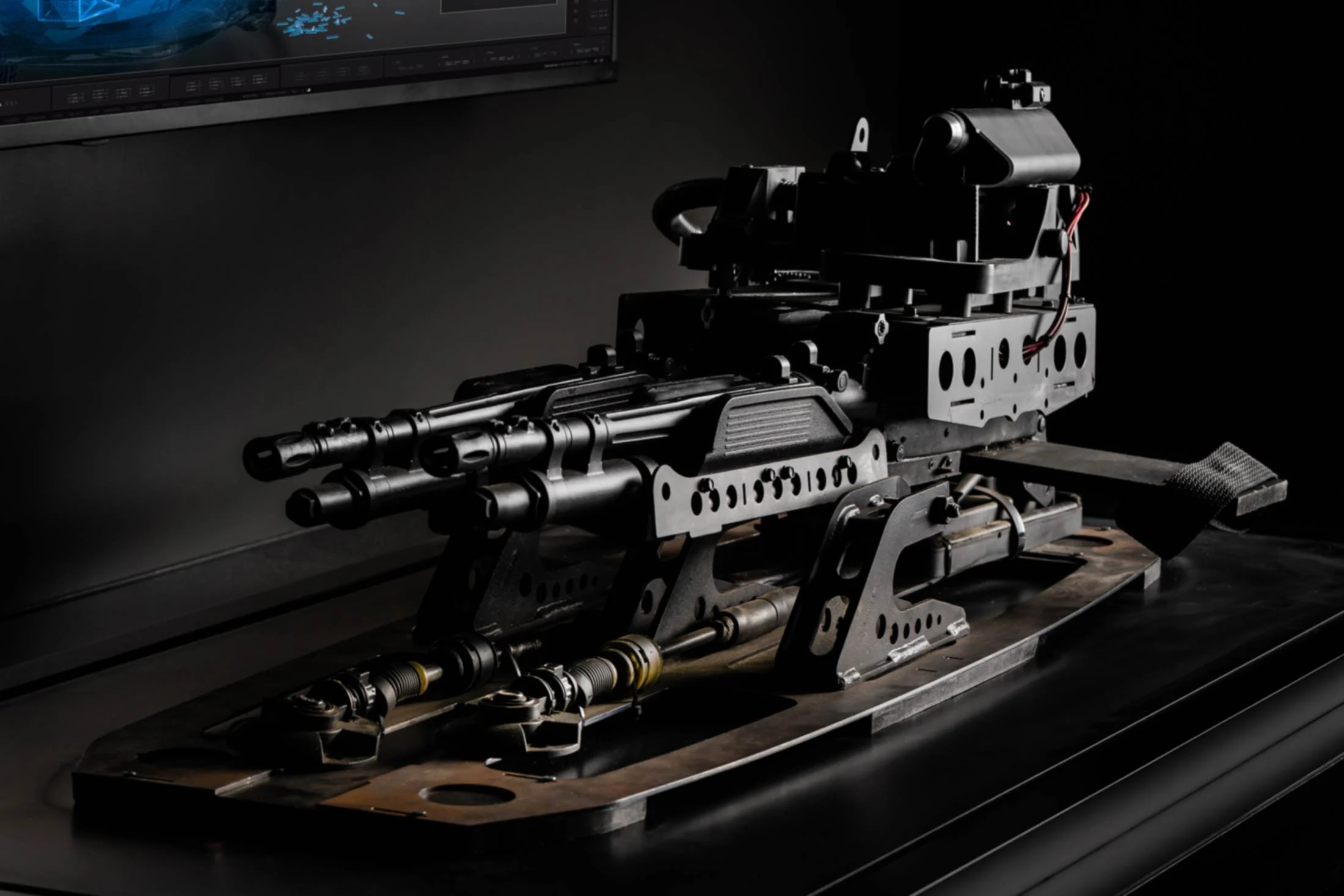
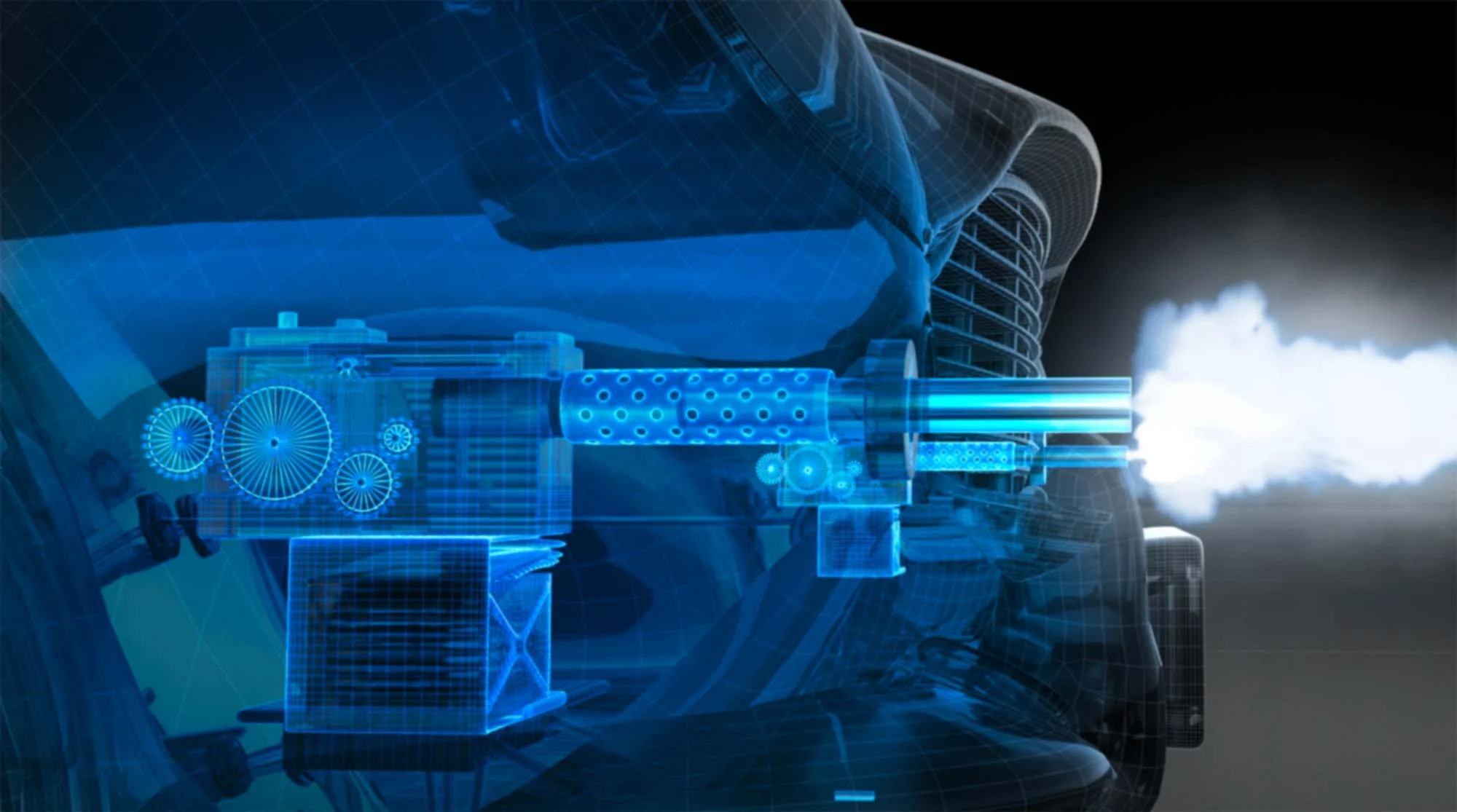
This double-barrelled machine gun prop made by the Spectre (2015) prop department is a prototype of the machine guns used in the Aston Martin DB10 which Bond borrows from Q’s workshop. It turned out that the gun was not loaded when Bond took the car, and he relies on a rear flamethrower to evade his enemy, in a nod to production designer Sir Ken Adam’s original vision for the DB5.
See video animation below.
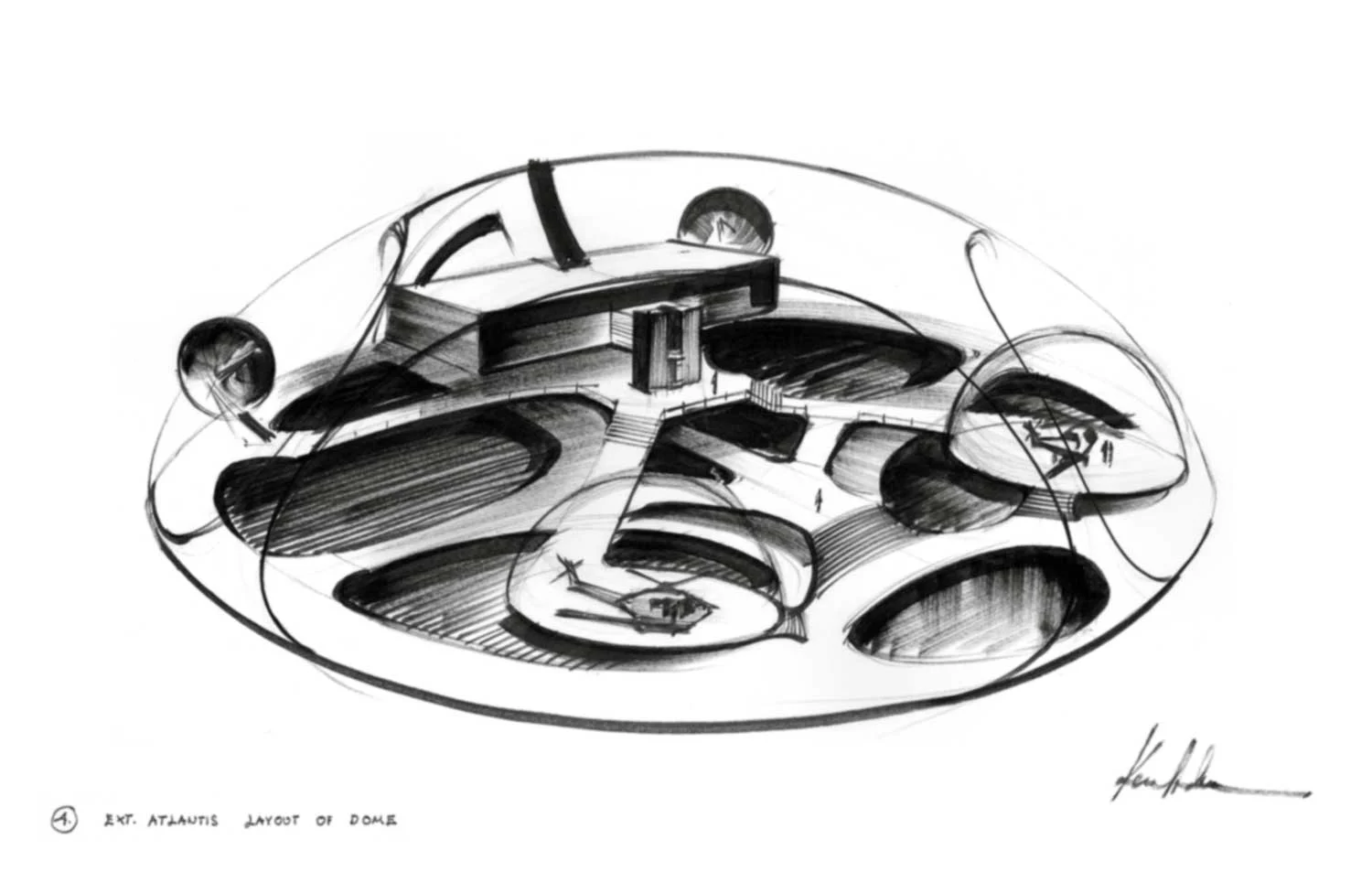
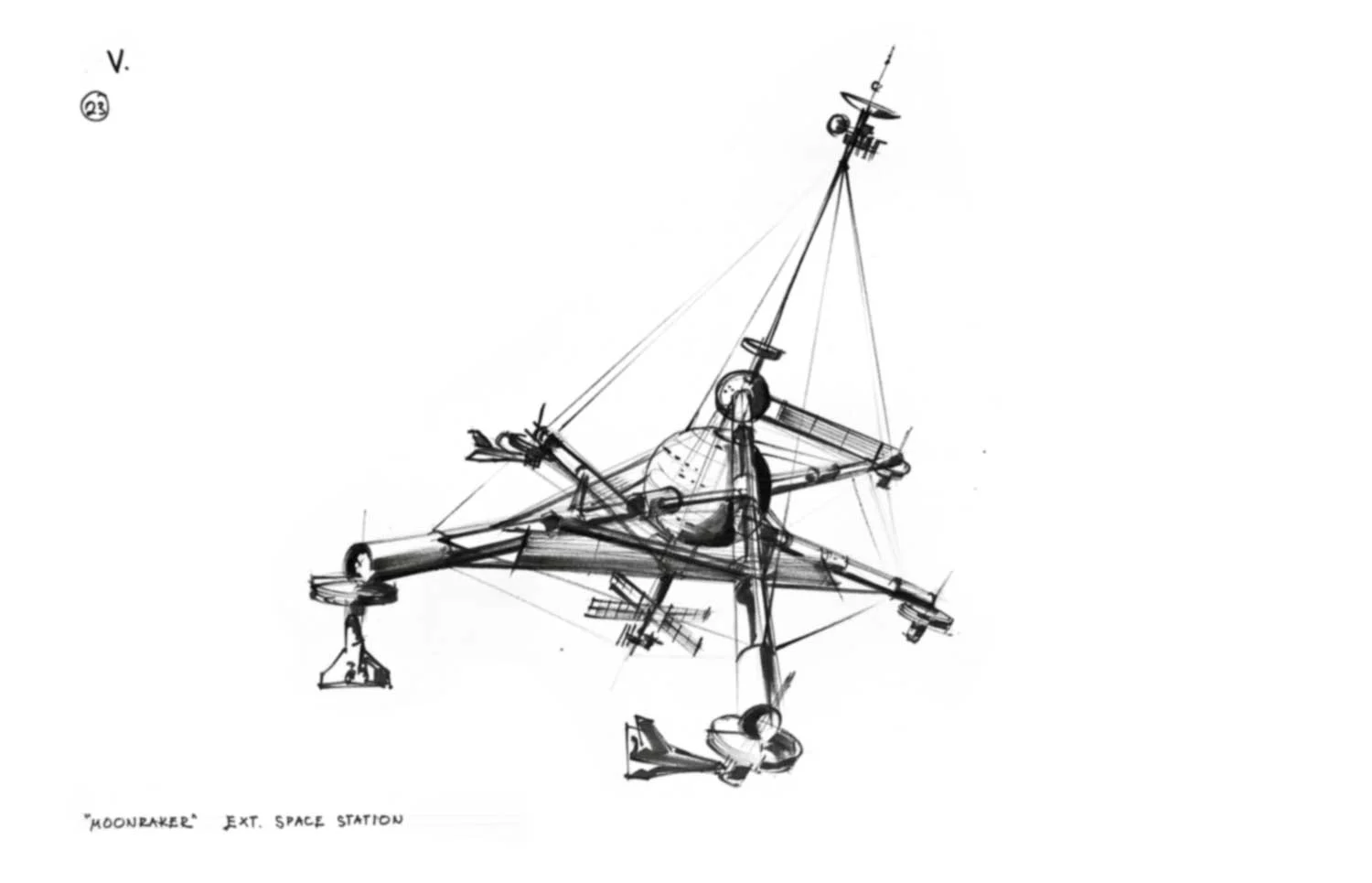
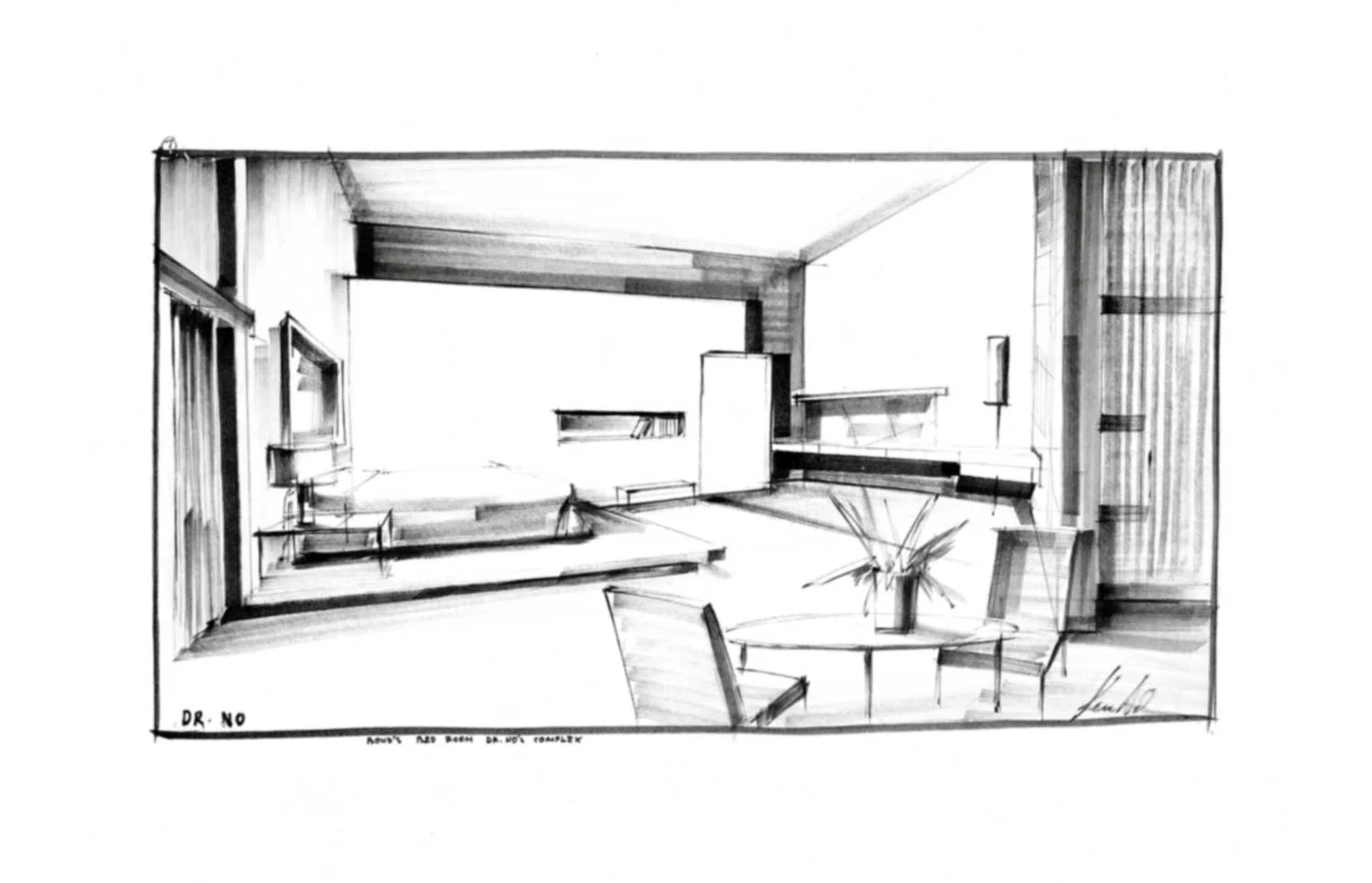
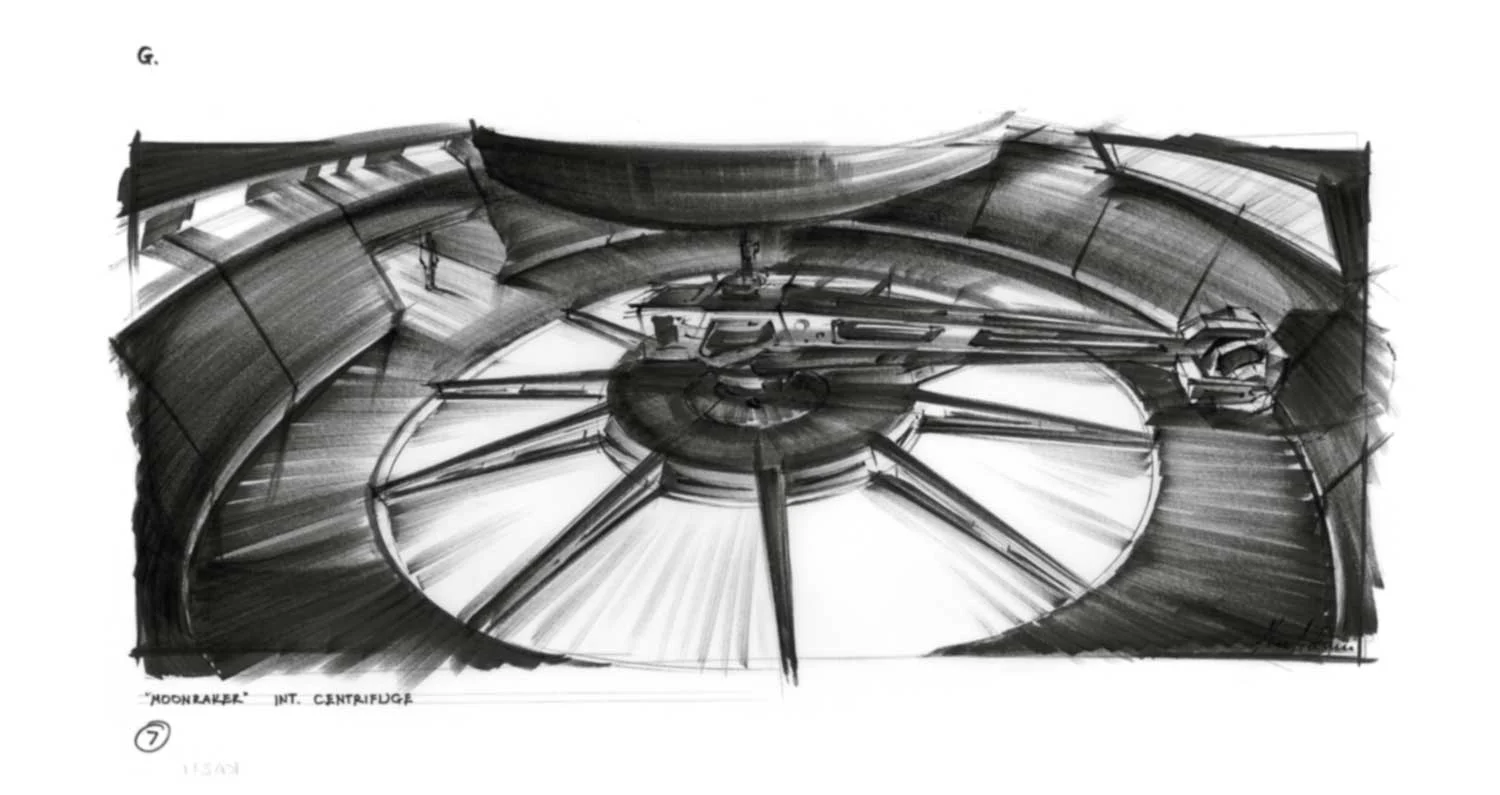
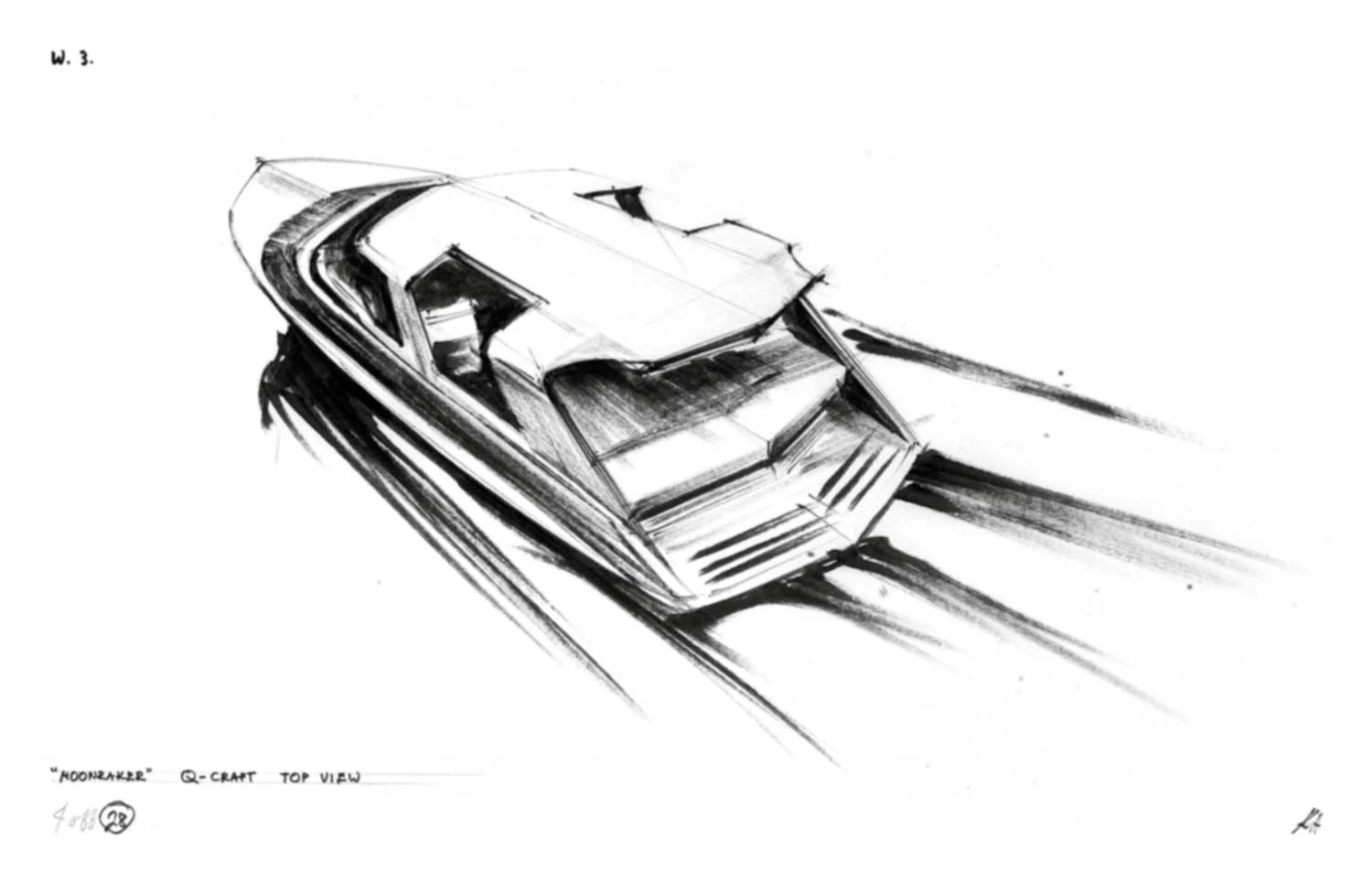
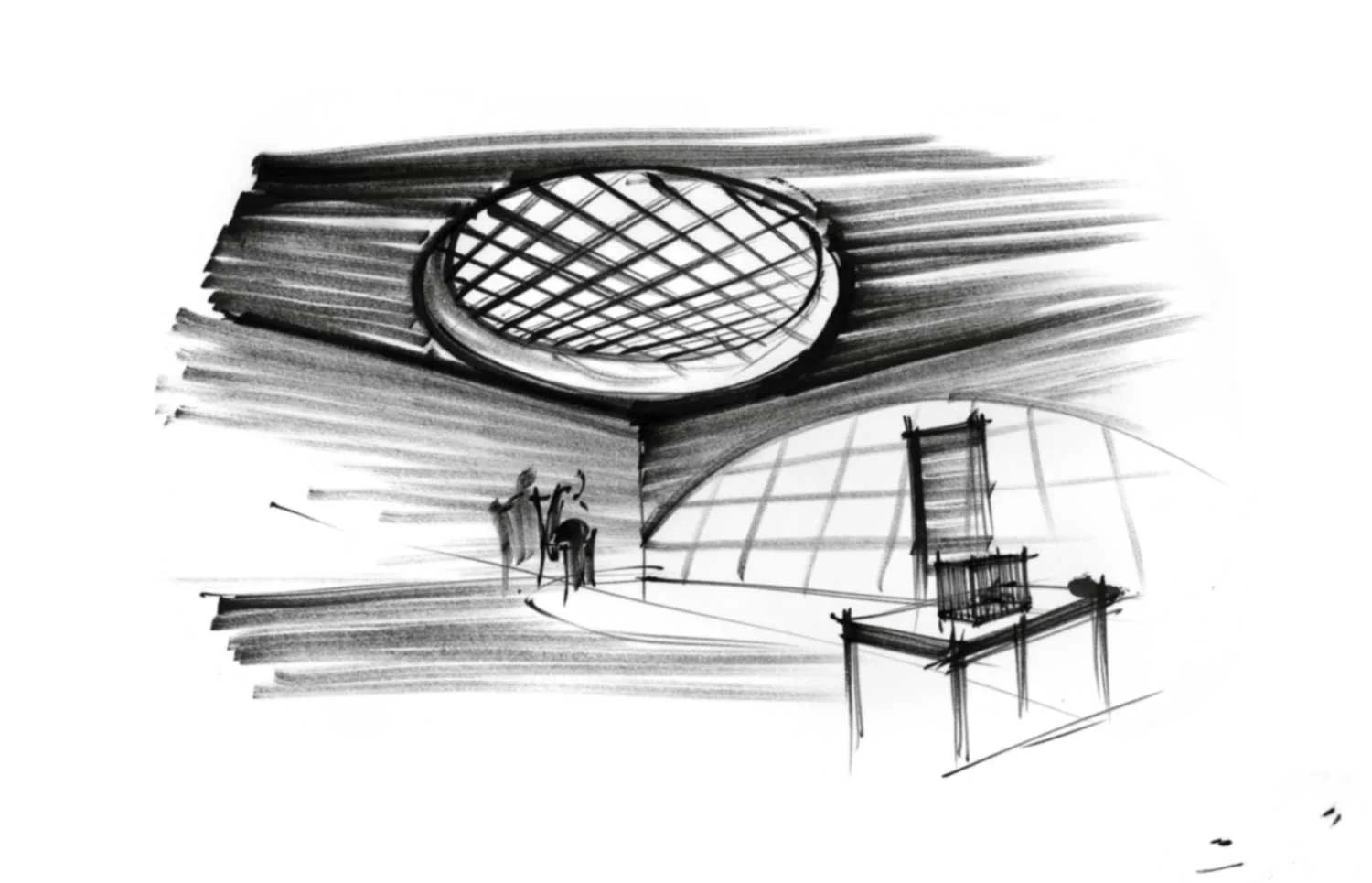
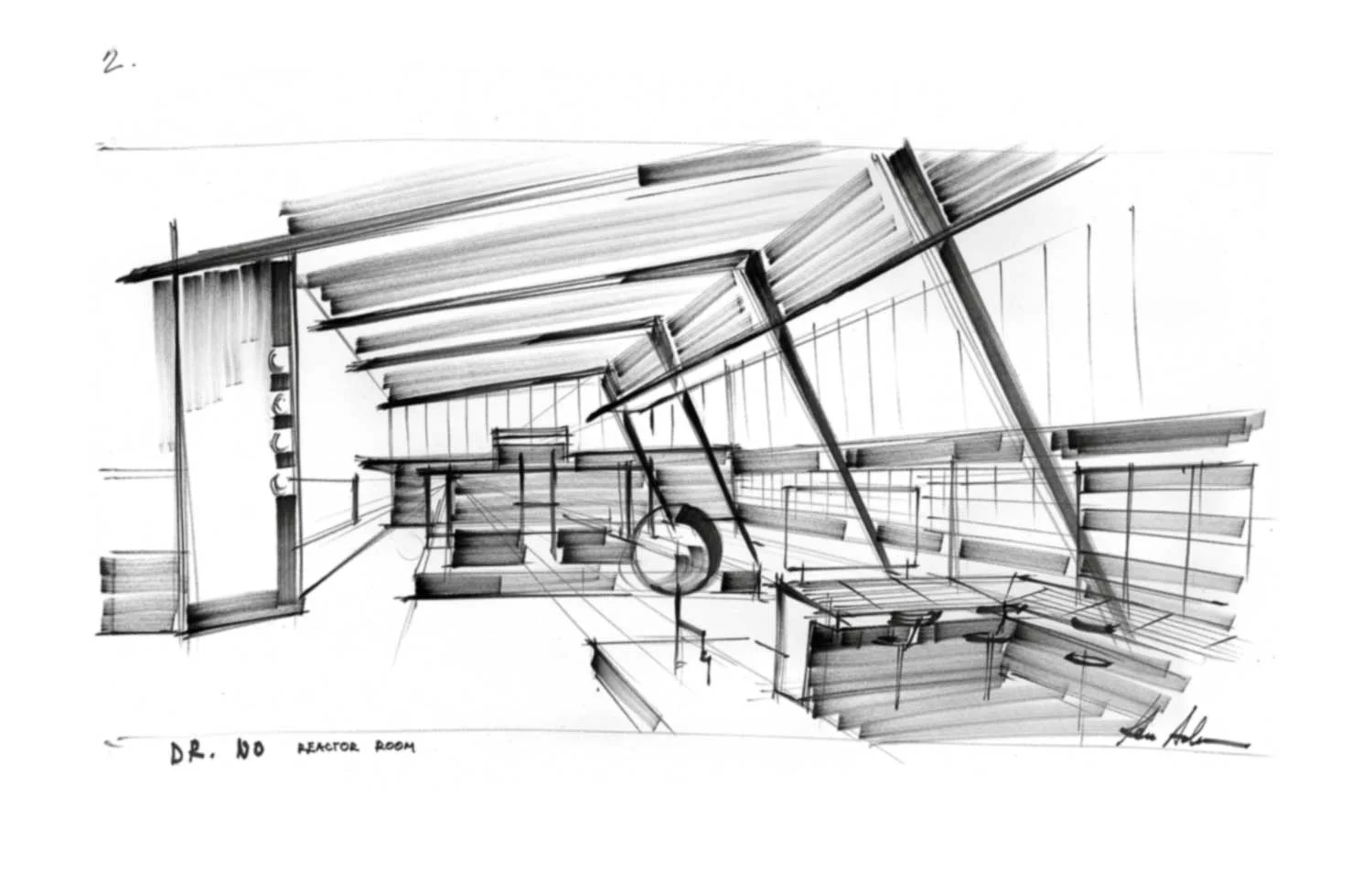
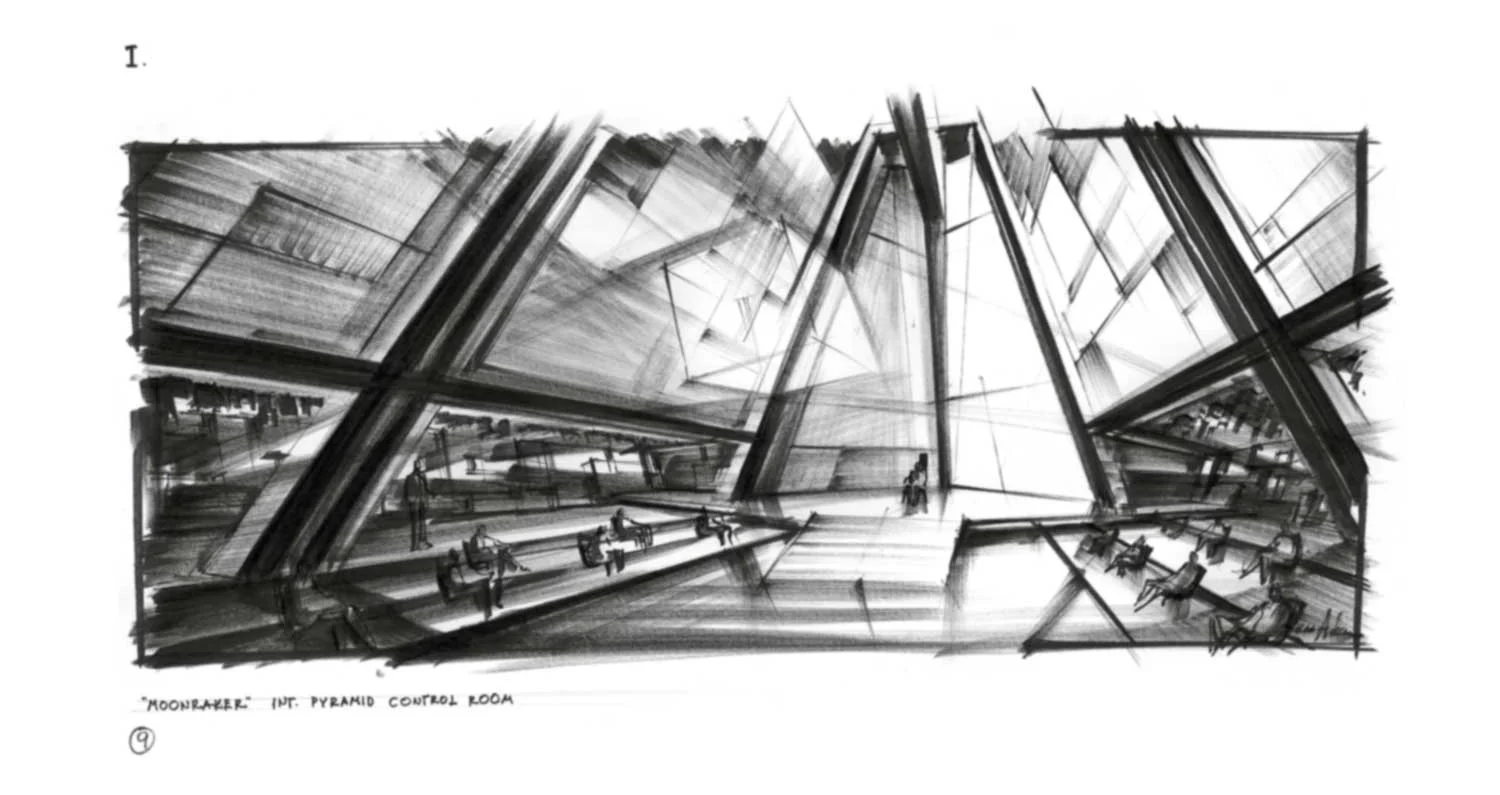
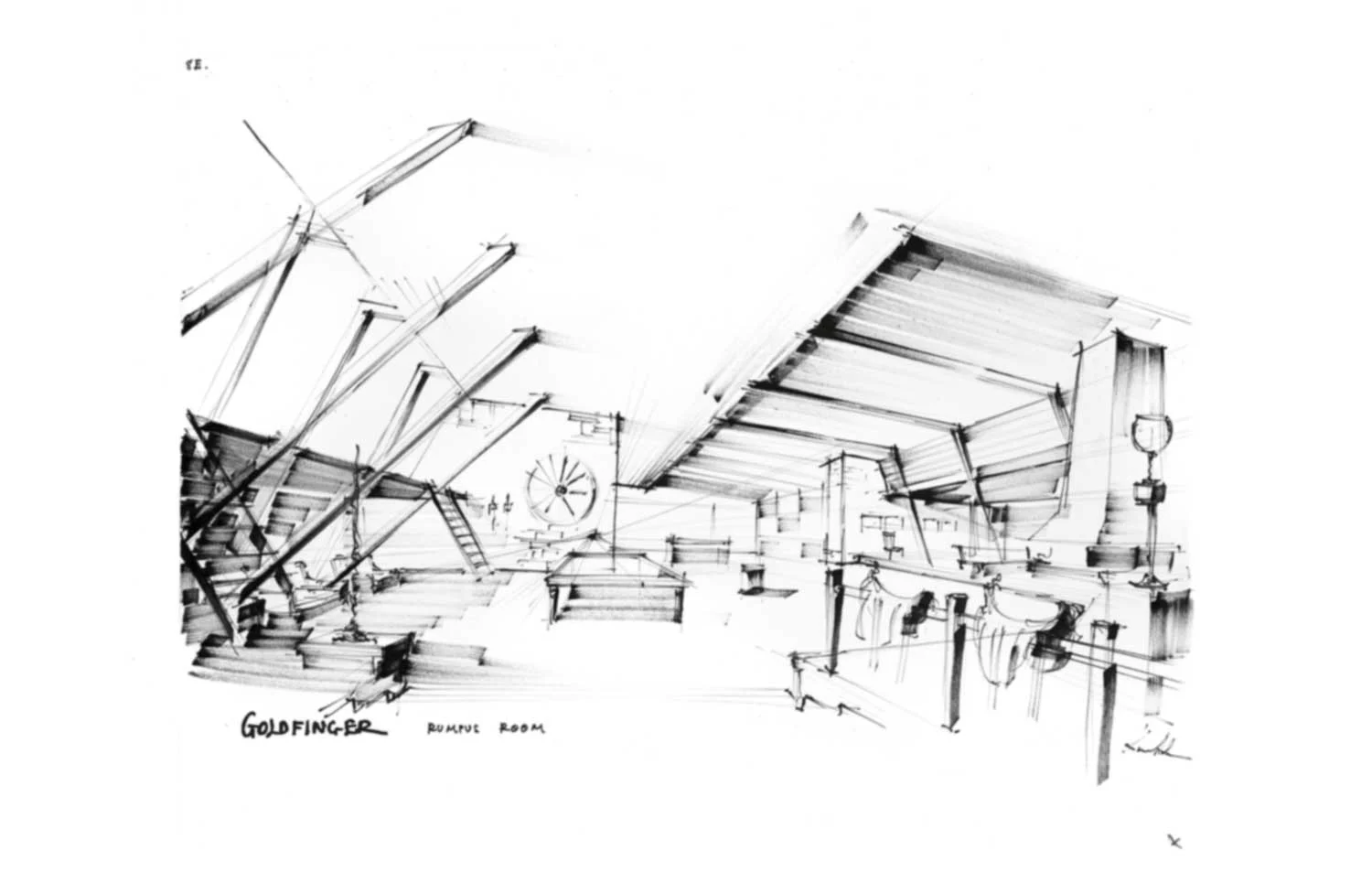
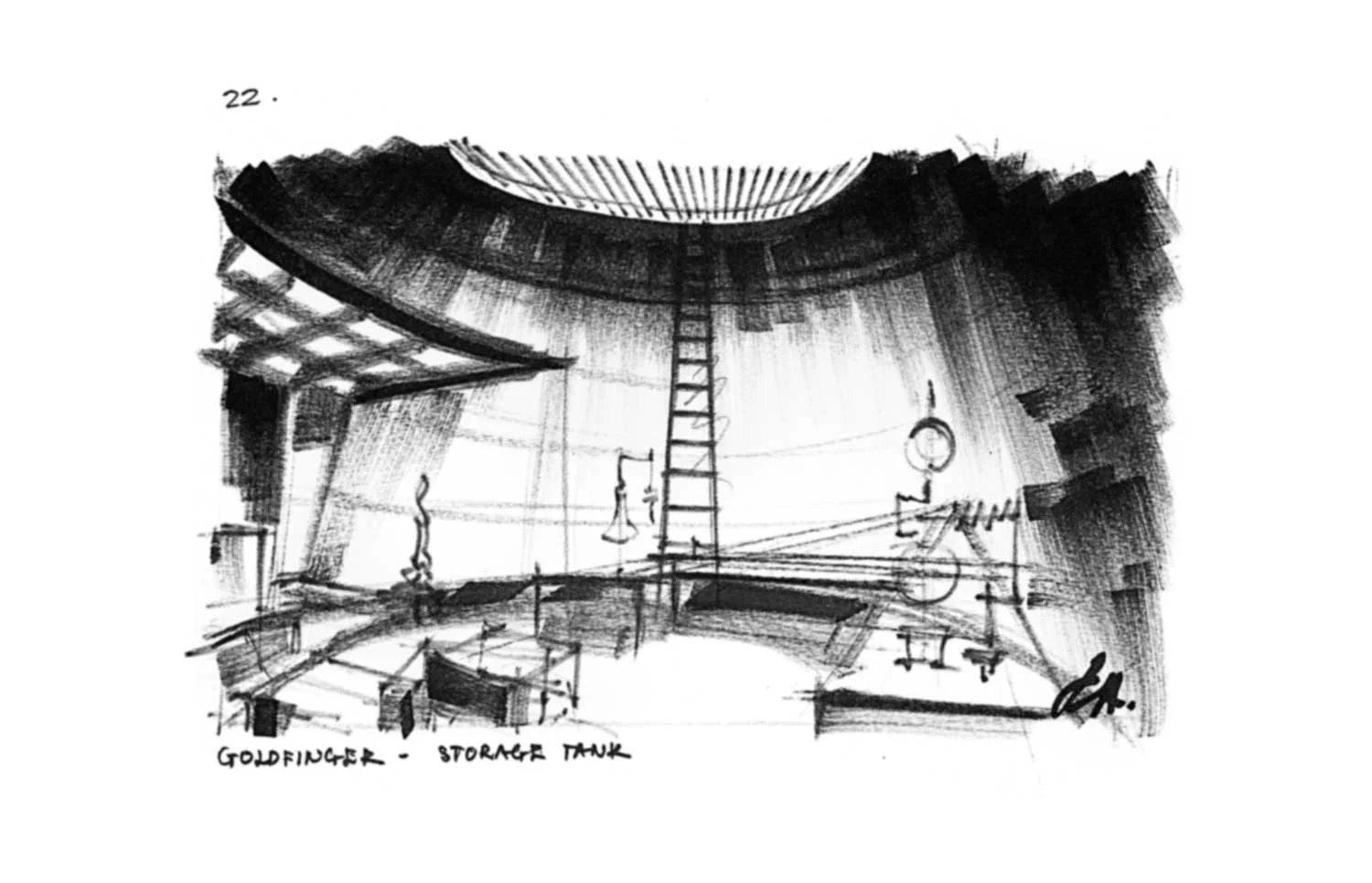
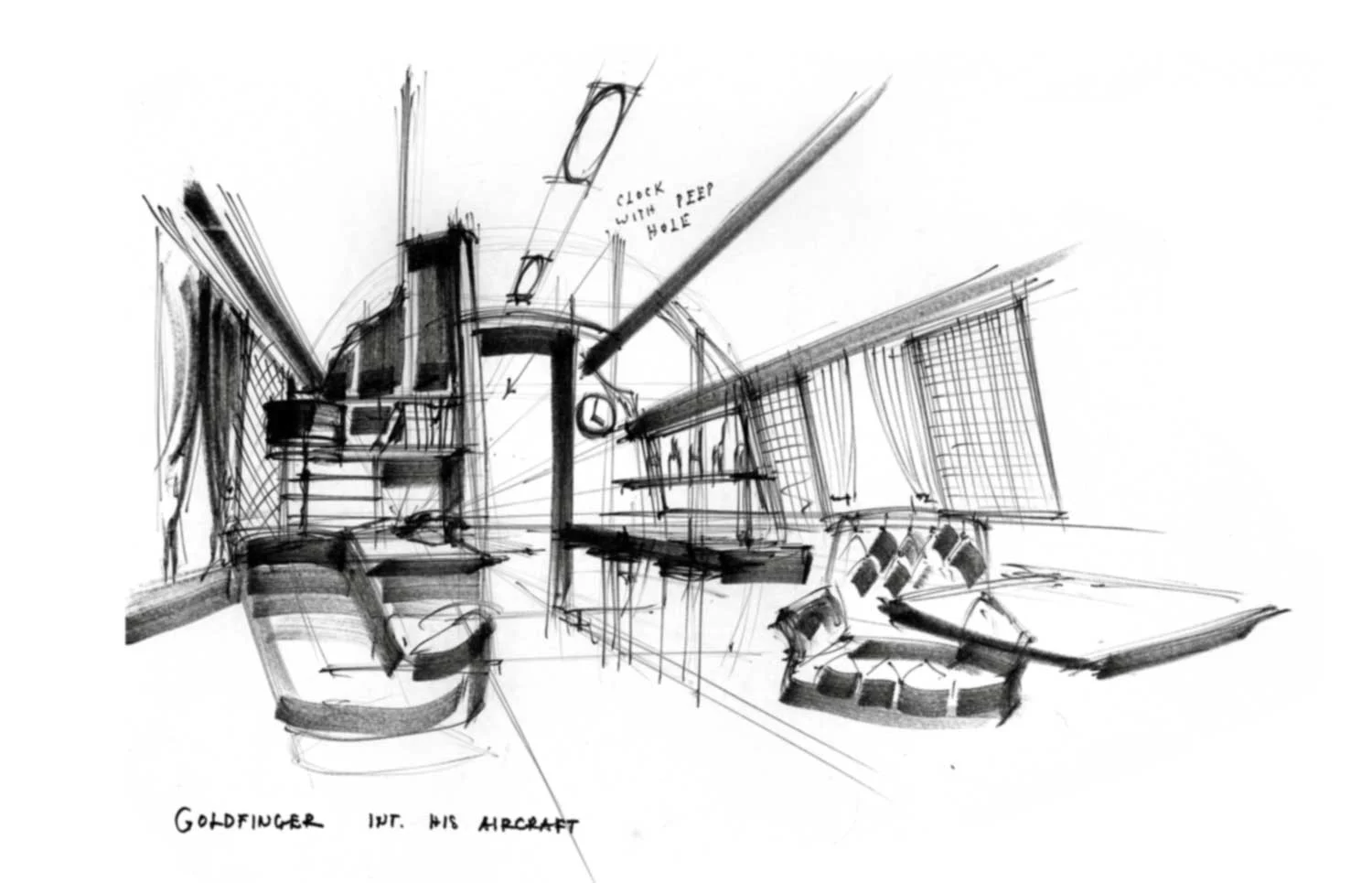
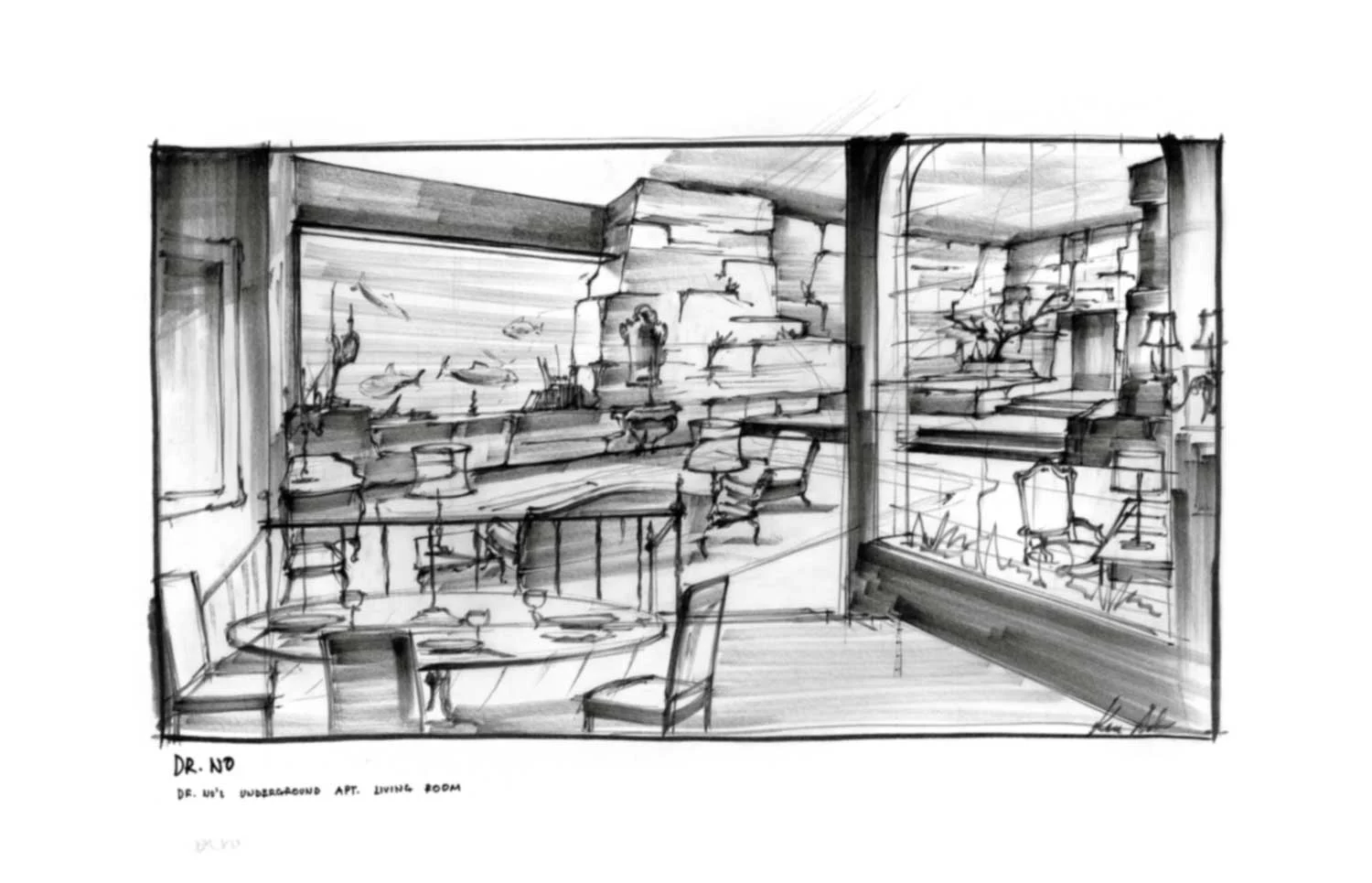
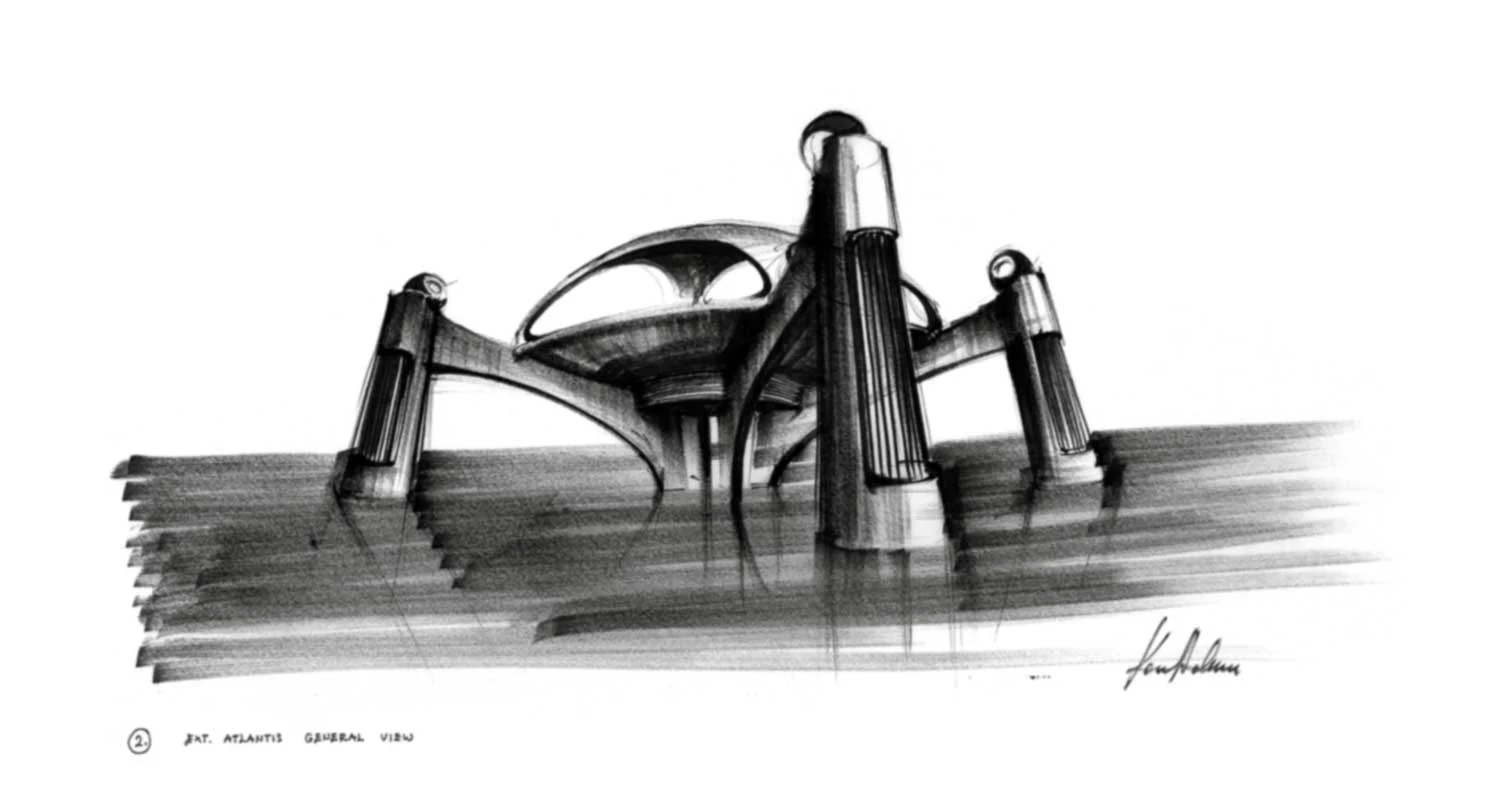
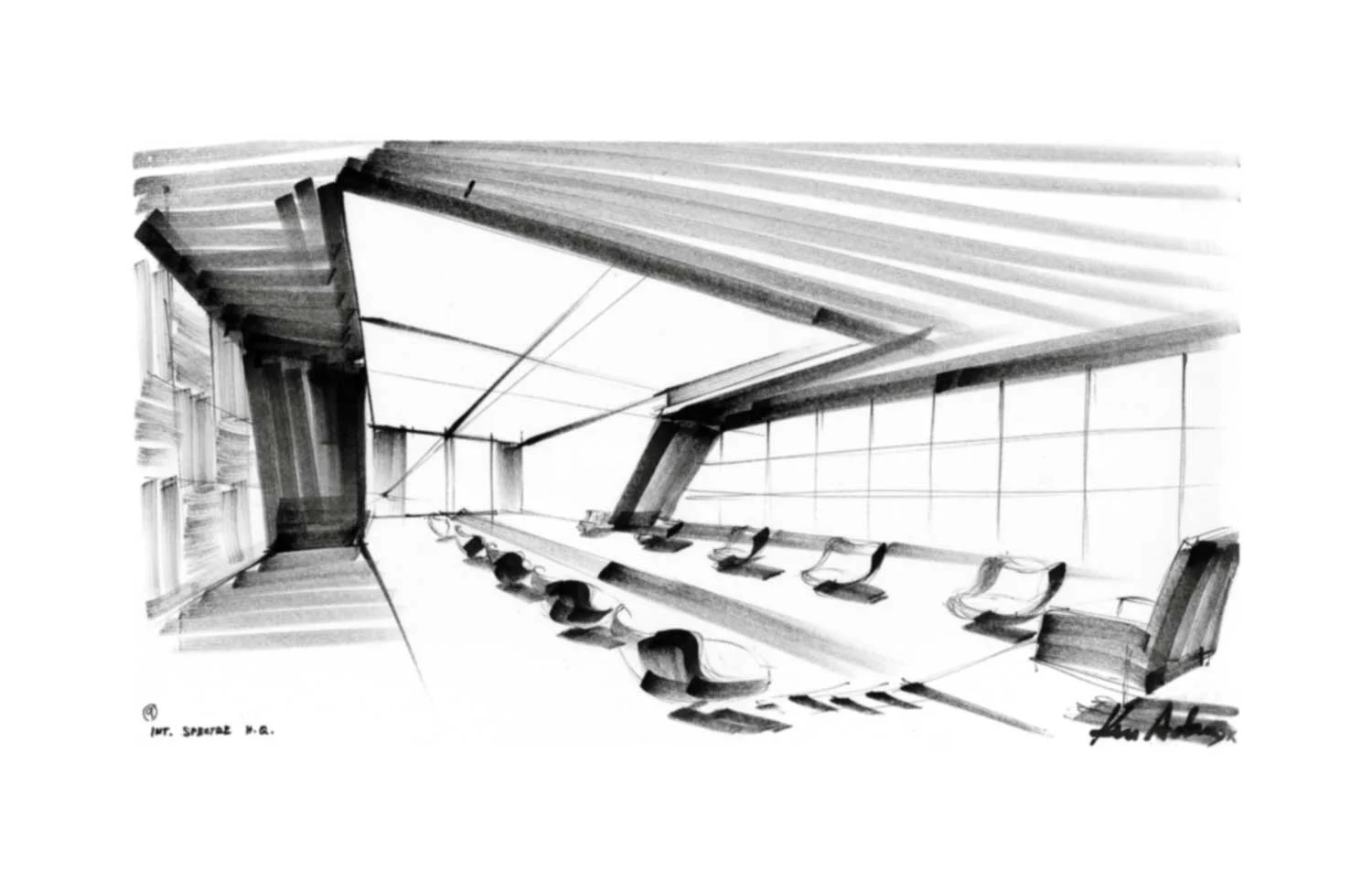
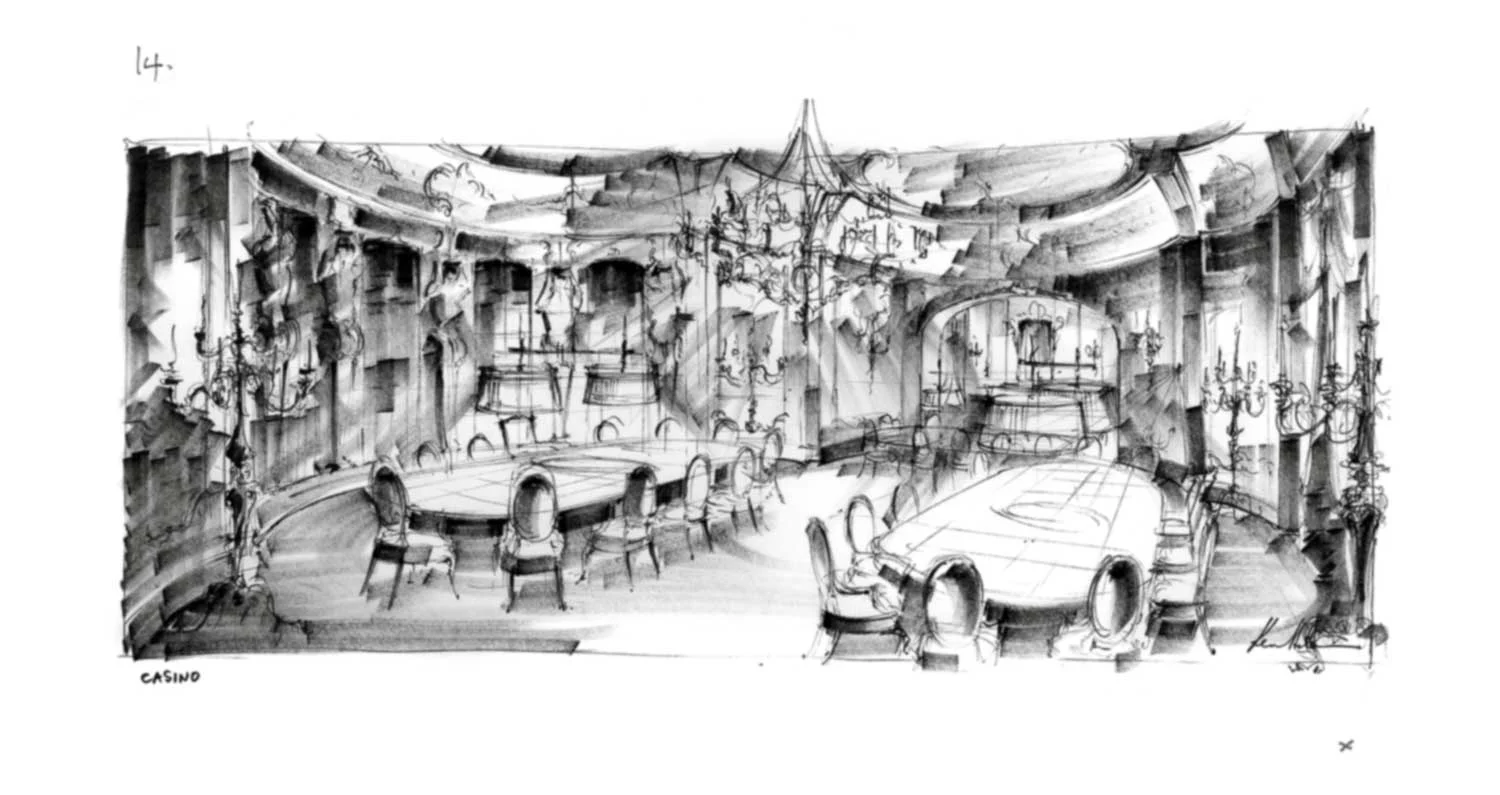
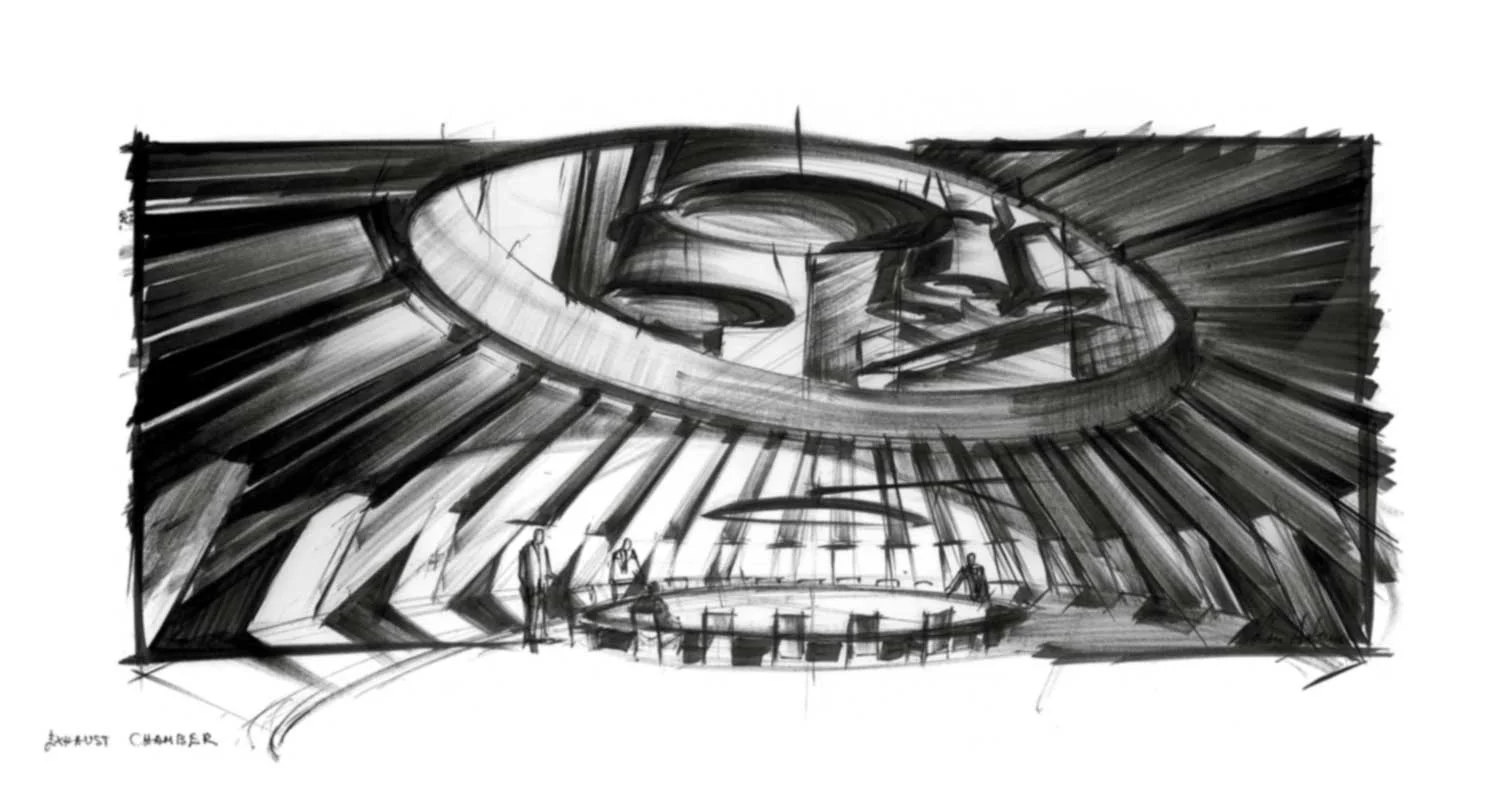
Sir
ken adam’s
studio
The multi Oscar® and BAFTA winning production designer Sir Ken Adam worked on seven of the early Bond films and was responsible for some of the most memorable and outlandish film sets and locations of the 20th century.
As production designer on Goldfinger (1964), it was Adam who first visualised the Aston Martin DB5 with gadgets, drawing on his experience as a World War II fighter pilot and his enduring love of sports cars.
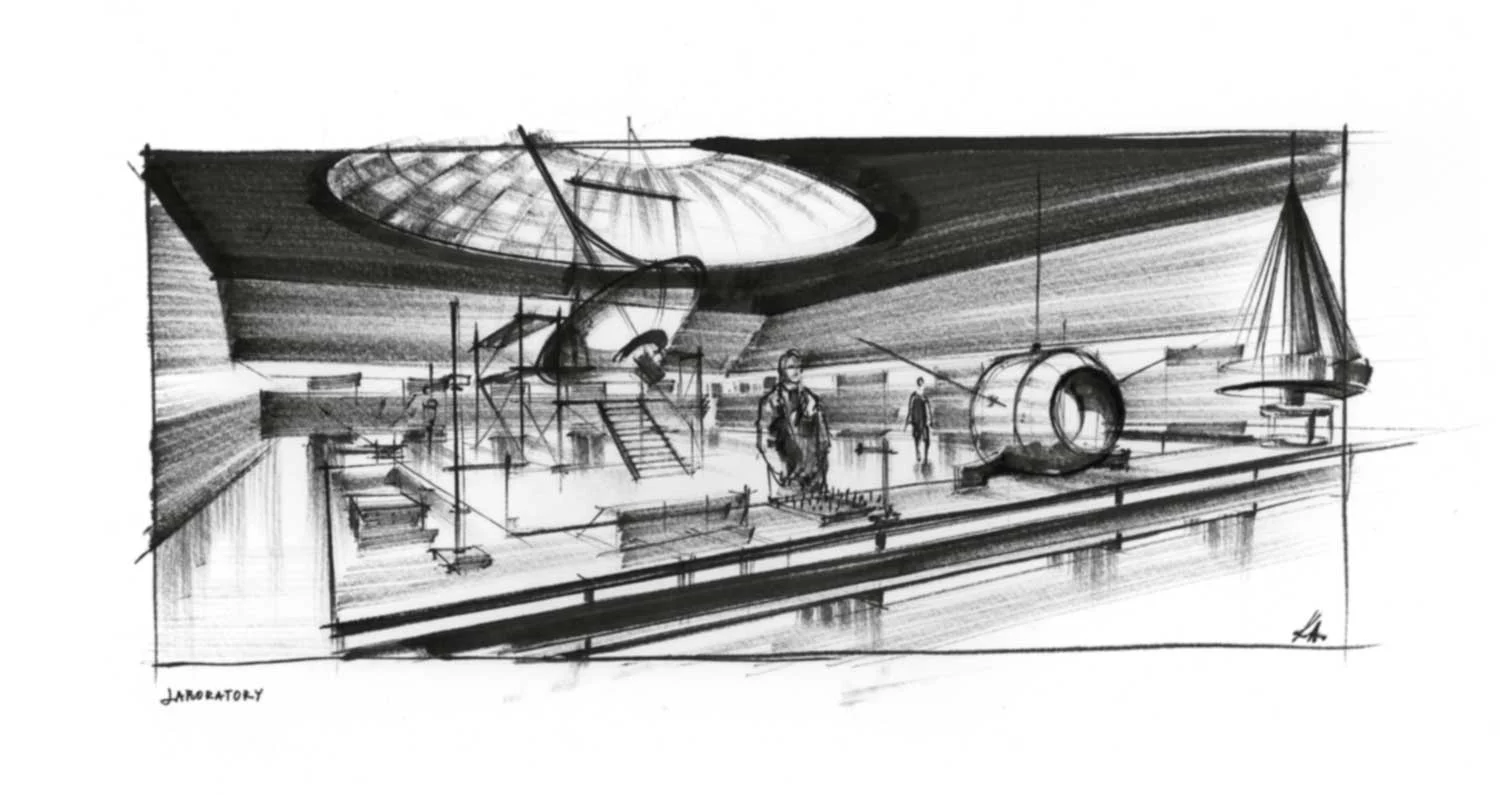
Fans of Adam and his work will have seen pictures of him, smoking endless cigars, working at his raked drawing table with lamps on either side to eliminate shadows. The photographs in this section show an environment which reflects this creative process alongside some of his most striking and original designs.
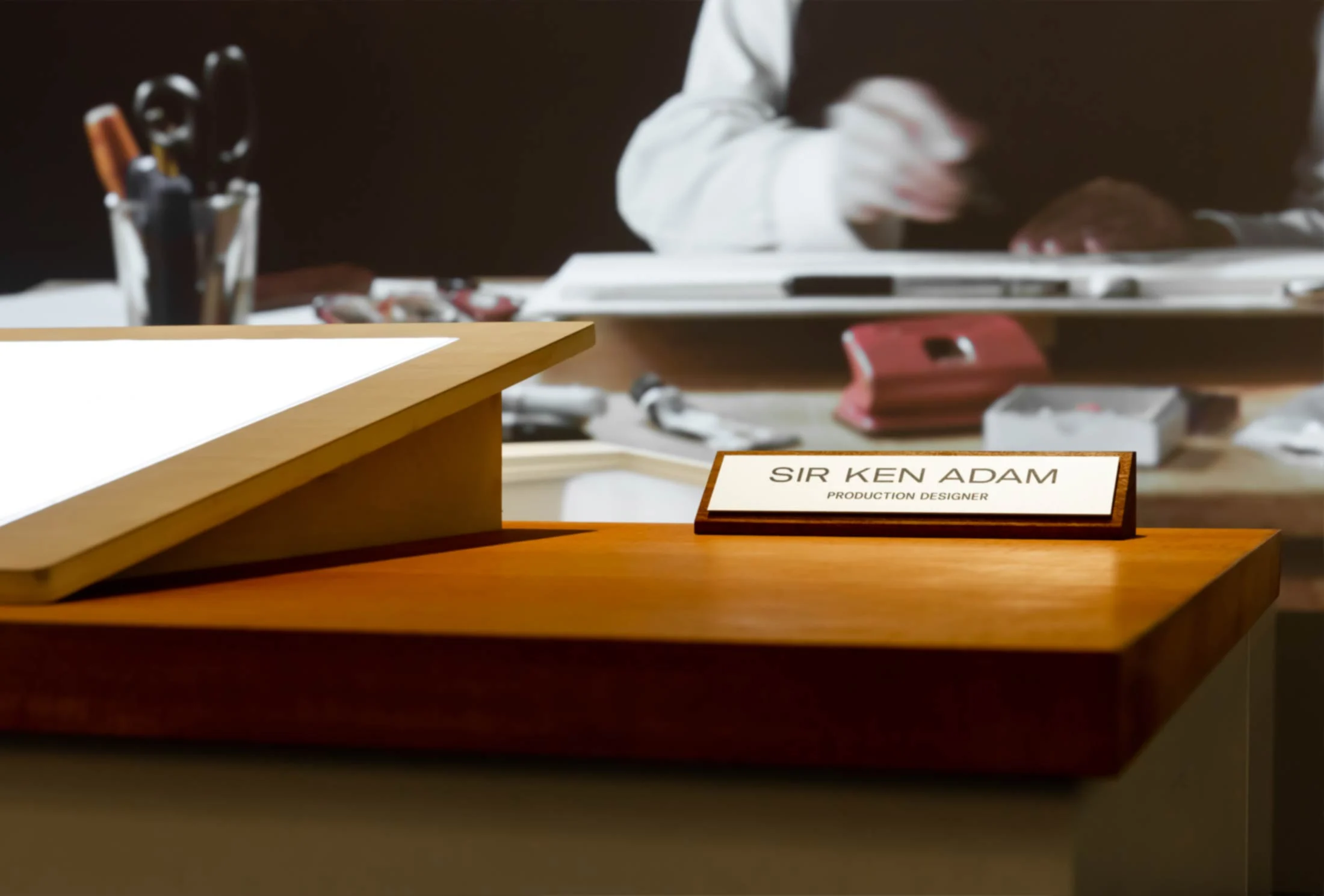
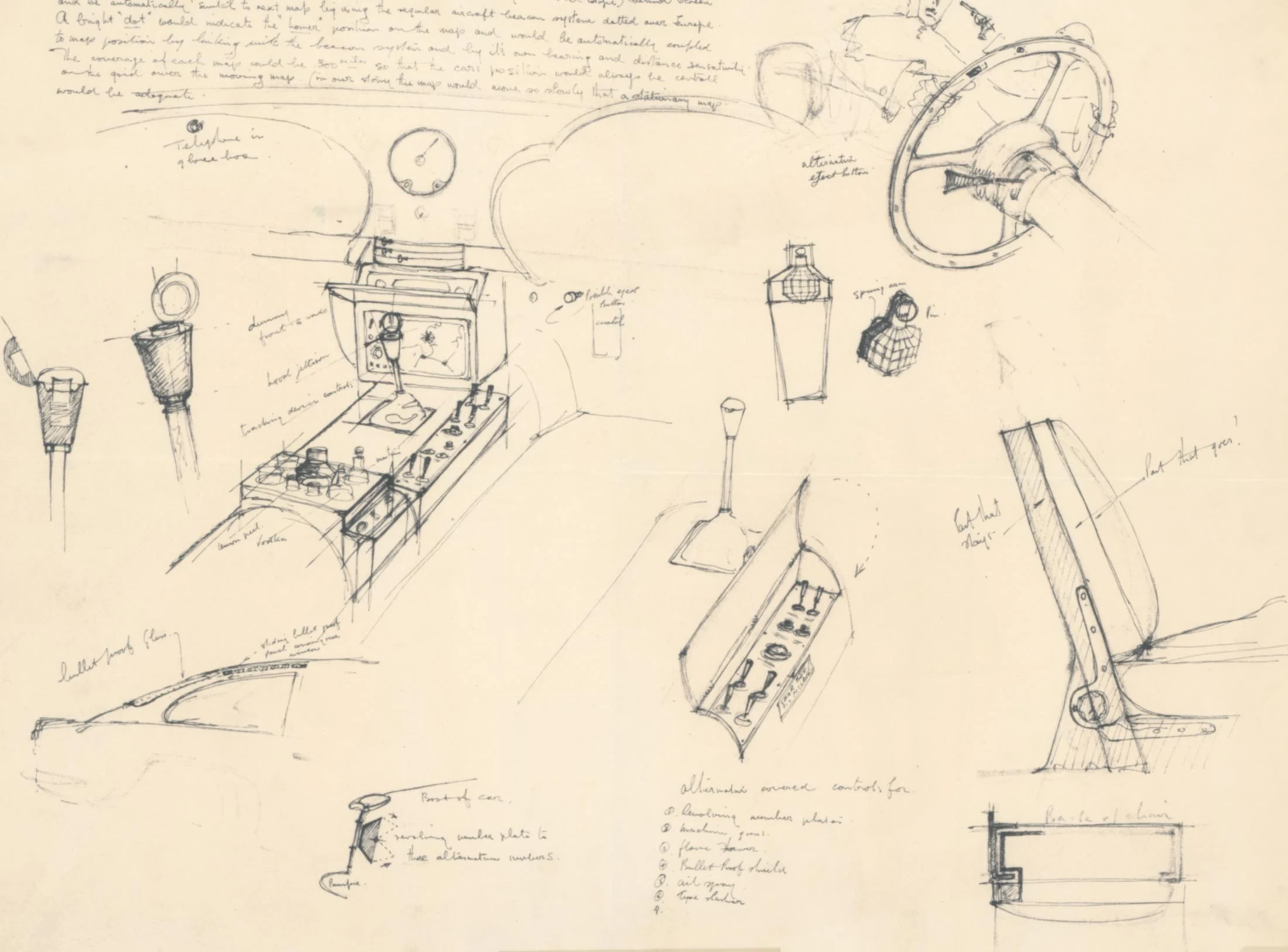
Sir Ken Adam became famous for his futuristic, modern and large-scale vision, transporting audiences into a world which was larger than life. His signature sets include the subterranean villain’s lair in Dr No (1962), Blofeld’s secret rocket complex inside a volcano in You Only Live Twice (1967), and the supertanker set including three full-size replica nuclear submarines in The Spy Who Loved Me (1977), for which a new sound stage was built as none at Pinewood Studios were big enough.
Born Klaus Adam in 1921 to a German Jewish family, Adam emigrated to the UK in 1931 with his family when anti-Semitism in Germany was on the rise. At the start of the second world war, he found an apprenticeship designing bomb shelters, before being accepted into the Royal Air Force Volunteers Reserve as a pilot.
Adam started in the film industry as a draughtsman, and worked uncredited on a number of high-profile films (including Ben-Hur) through the 1950s. In 1960 he was awarded for his work on The Trials of Oscar Wilde, which had been produced by Albert R ‘Cubby’ Broccoli and Irving Allen. Cubby Broccoli and his partner Harry Saltzman then asked Adam to design the first James Bond film, Dr No (1962).
Adam designed the ‘modifications’ for the Aston Martin DB5 first seen in Goldfinger (1964). Several of the gadgets he put into the car were inspired by World War II fighter planes, including front mounted machine guns and the ejector seat. Others, such as the front and rear overriders which extend from the car’s bumpers, were inspired by Adam’s love of luxury cars and frustration about dents and damage to the bodywork of his own car. His enthusiasm for pushing at the boundaries of possibility was such that not all of the gadgets included in his first drawings for the car made it into production.
Siege of Skyfall Lodge
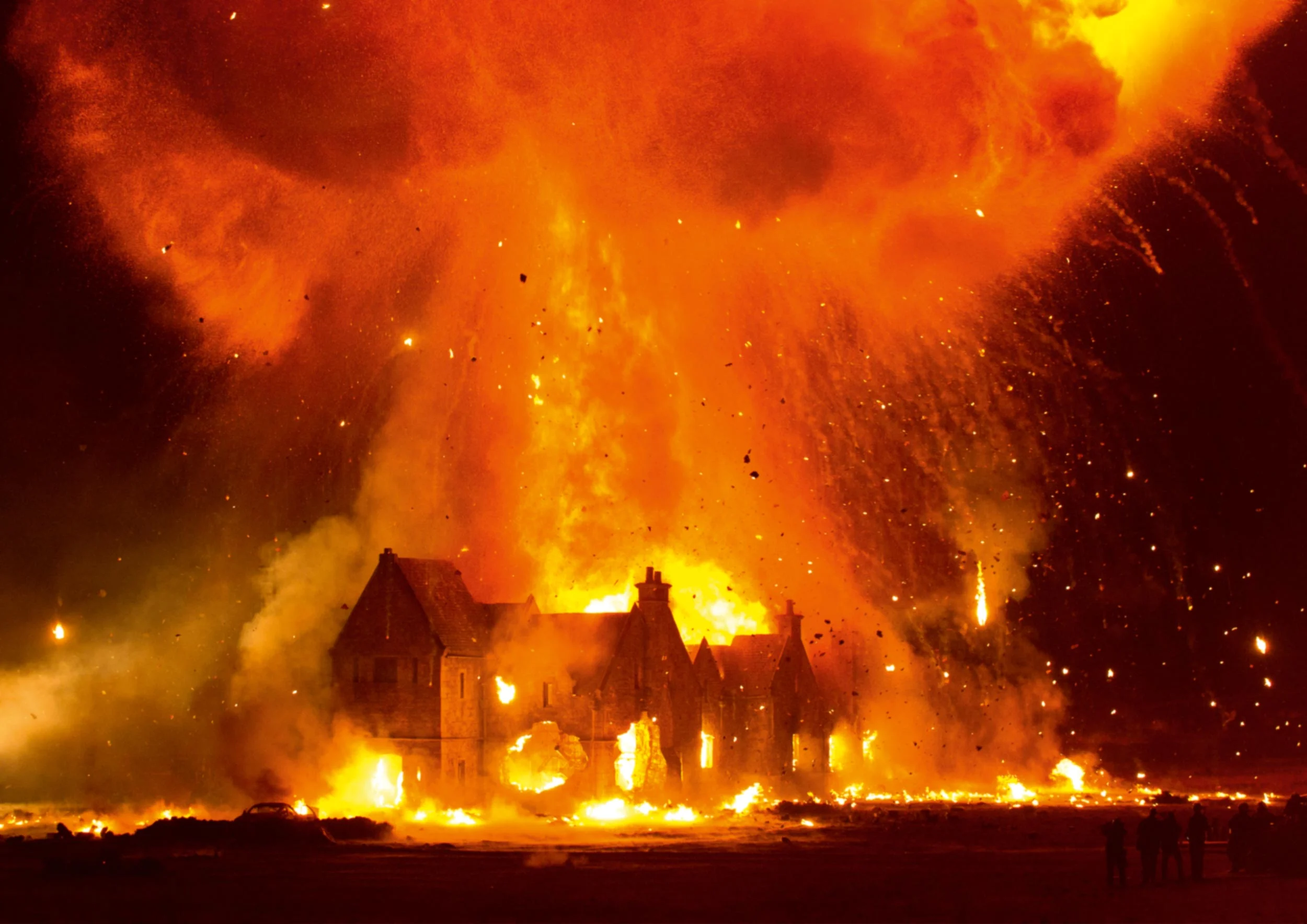
By 2012 the Aston Martin DB5 was fully established as a Bond character in its own right, making its destruction during the explosive Siege of Skyfall Lodge sequence all the more shocking. Bond films are famous for spectacular real, ‘in camera’ effects, and for this scene the filmmakers needed to find a way to blow up the car, the lodge and a helicopter as realistically and safely as possible. To achieve this they created a 1/3 scale model of each of these, filmed their carefully choreographed destruction, and intercut footage from this shoot with footage from the full-scale set.
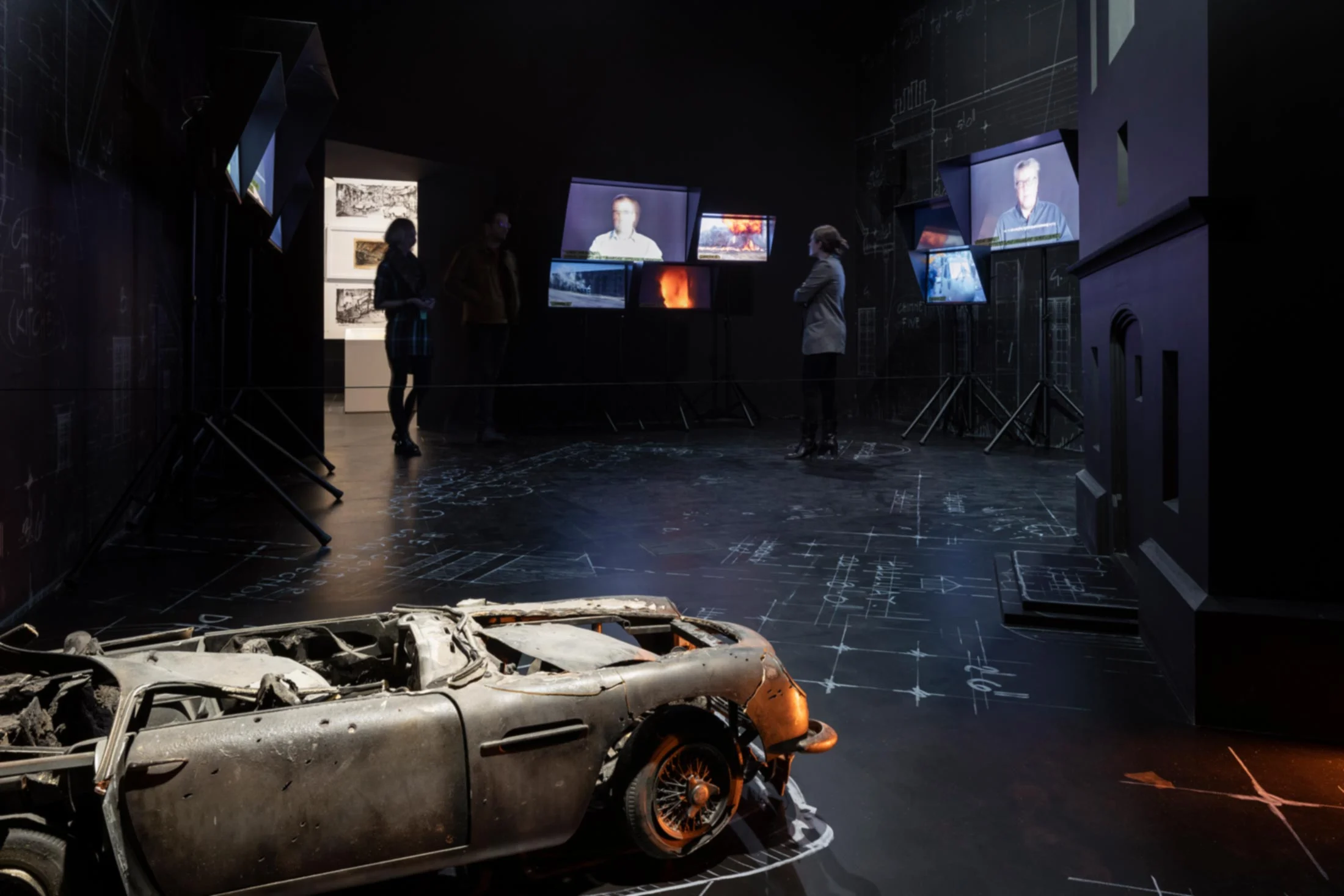
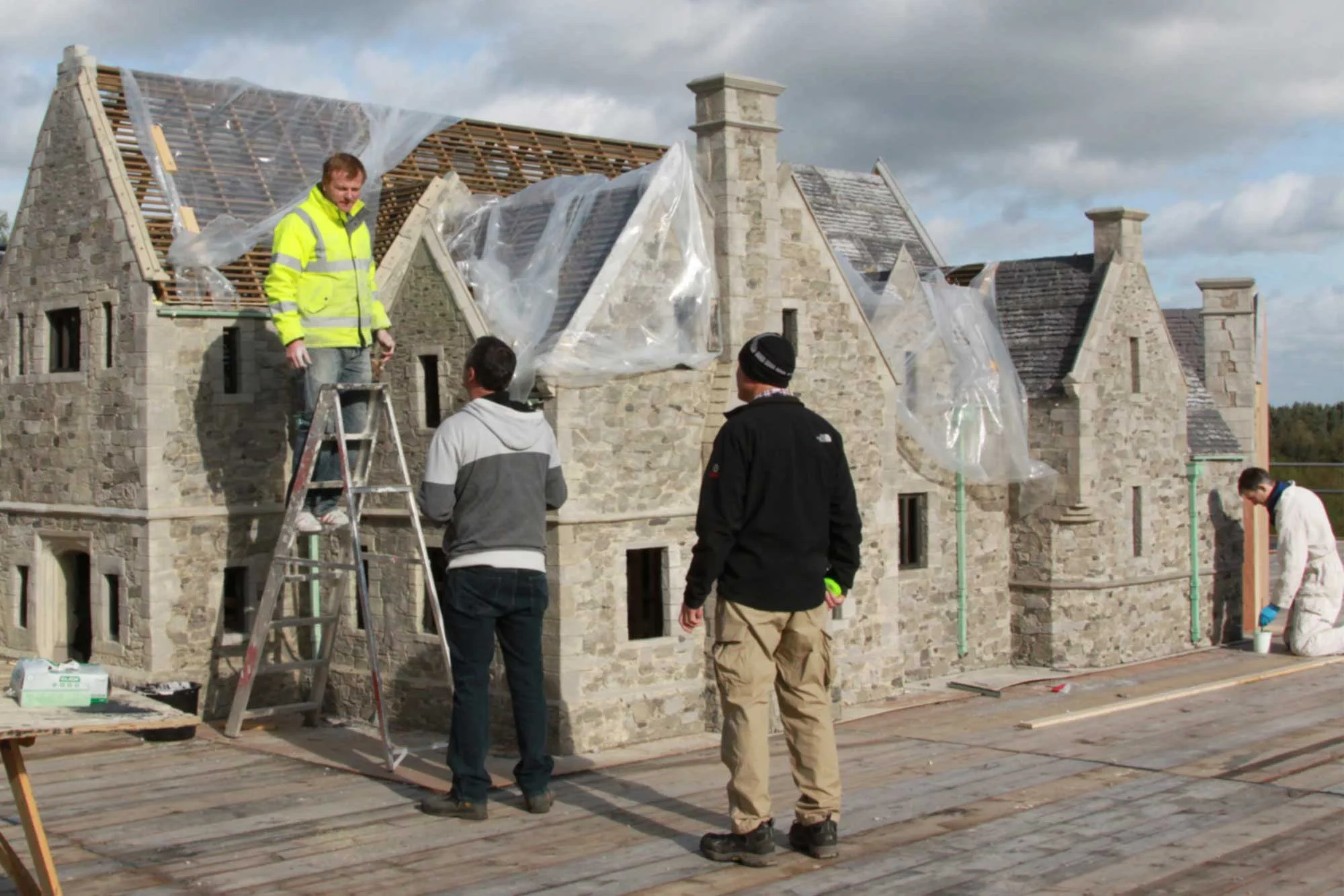
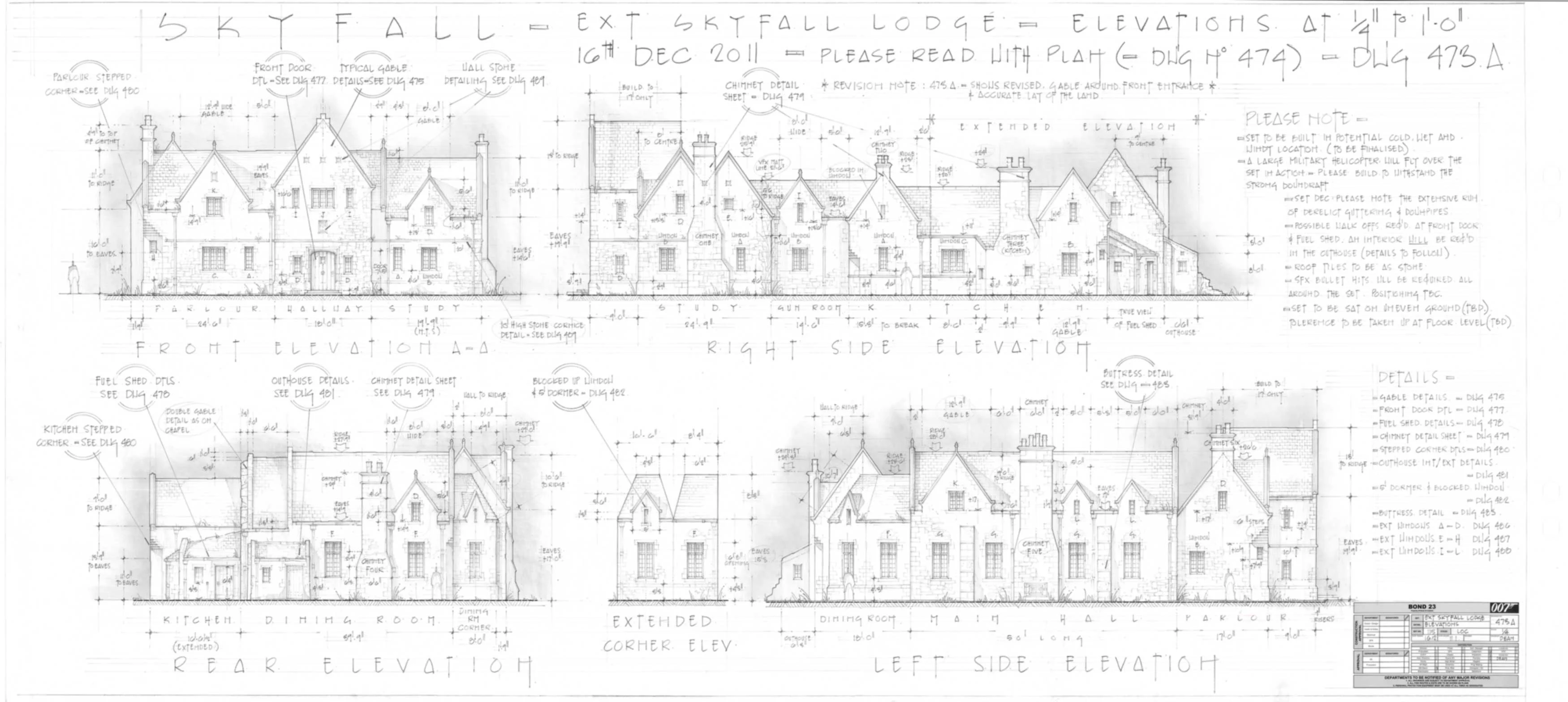
This section is centred around one of the 1/3 scale models of the DB5, which was made and then heavily distressed for the later stages of the lodge’s destruction. The following photograph shows the model DB5 in front of a recreated 1/3 scale model of the lodge itself. Around the lodge you can see oversized technical drawings, which Dean Clegg, the art director for the sequence in Skyfall (2012), re-drew from his originals, so it appears as if the lodge is protruding from these plans.
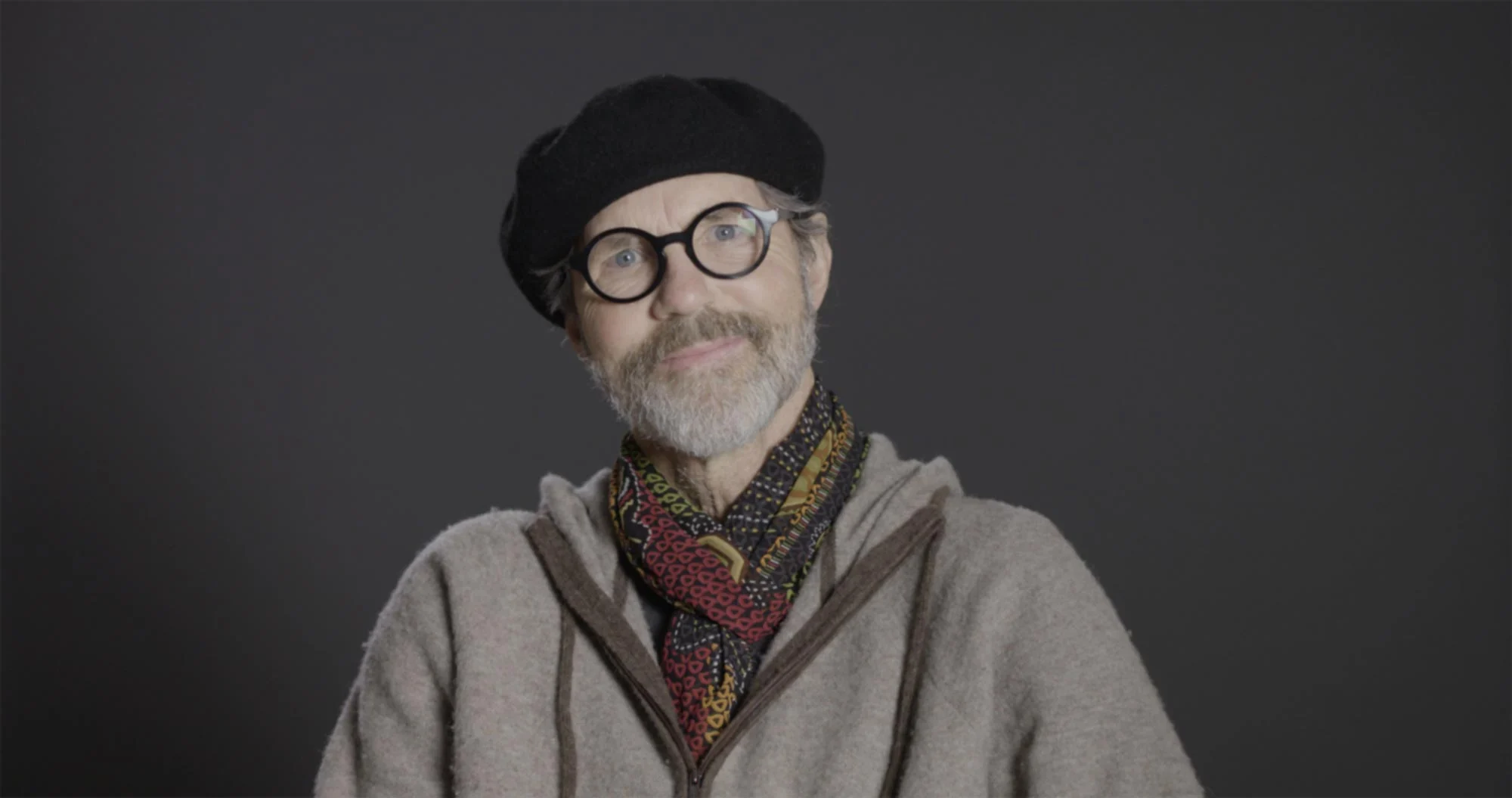
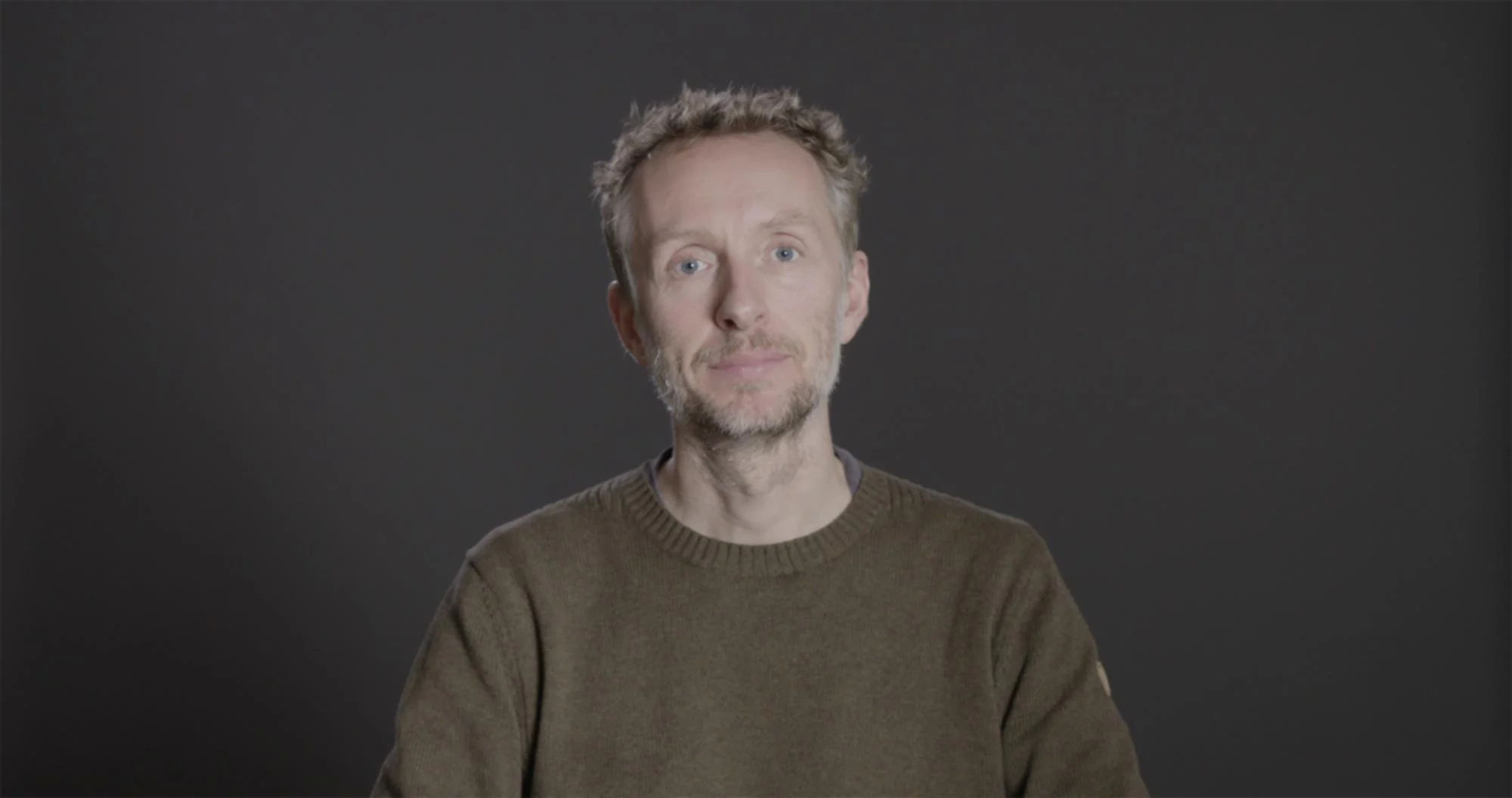
In this section, four of the key players in bringing this scene to life talk through the plans, models and concept artwork they designed and used to achieve this memorable sequence. They are Dennis Gassner (production designer), Dean Clegg (art director), Chris Corbould (special effects and miniature effects supervisor) and Steve Begg (visual effects and miniature supervisor).

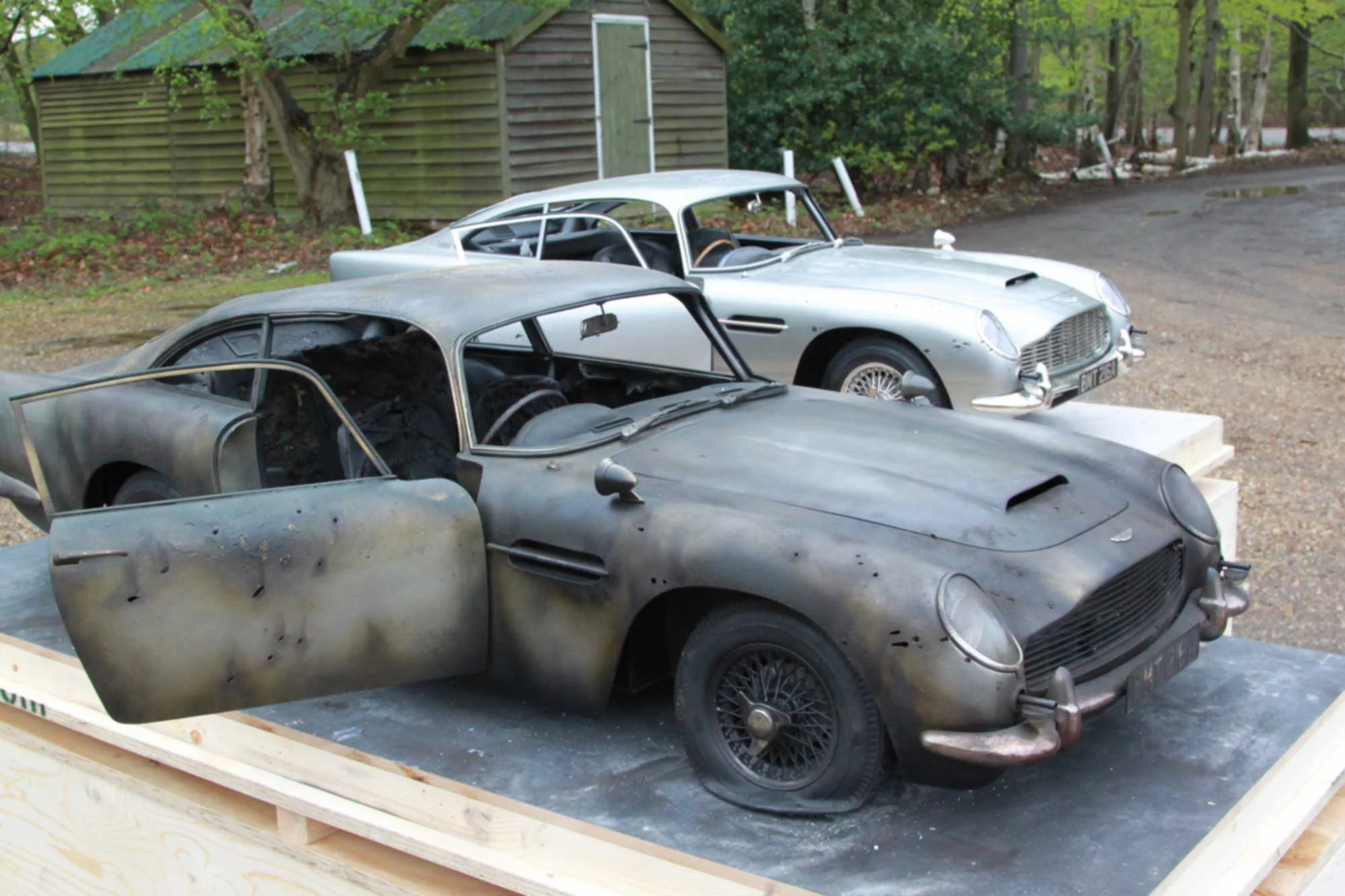
Two 1/3 scale model DB5s; one burned out and one in hero condition
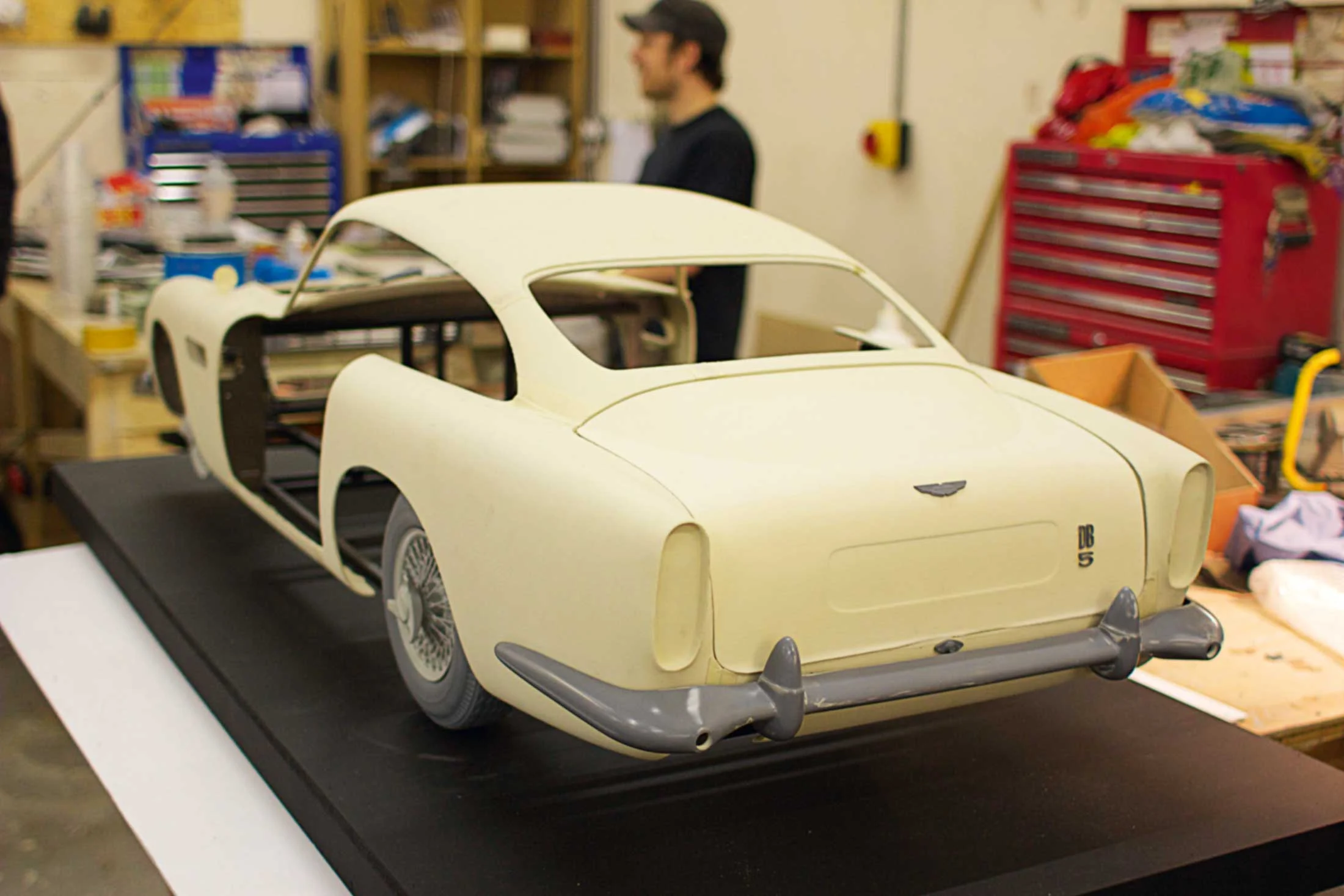
1/3 scale model DB5 being carefully crafted in the workshop
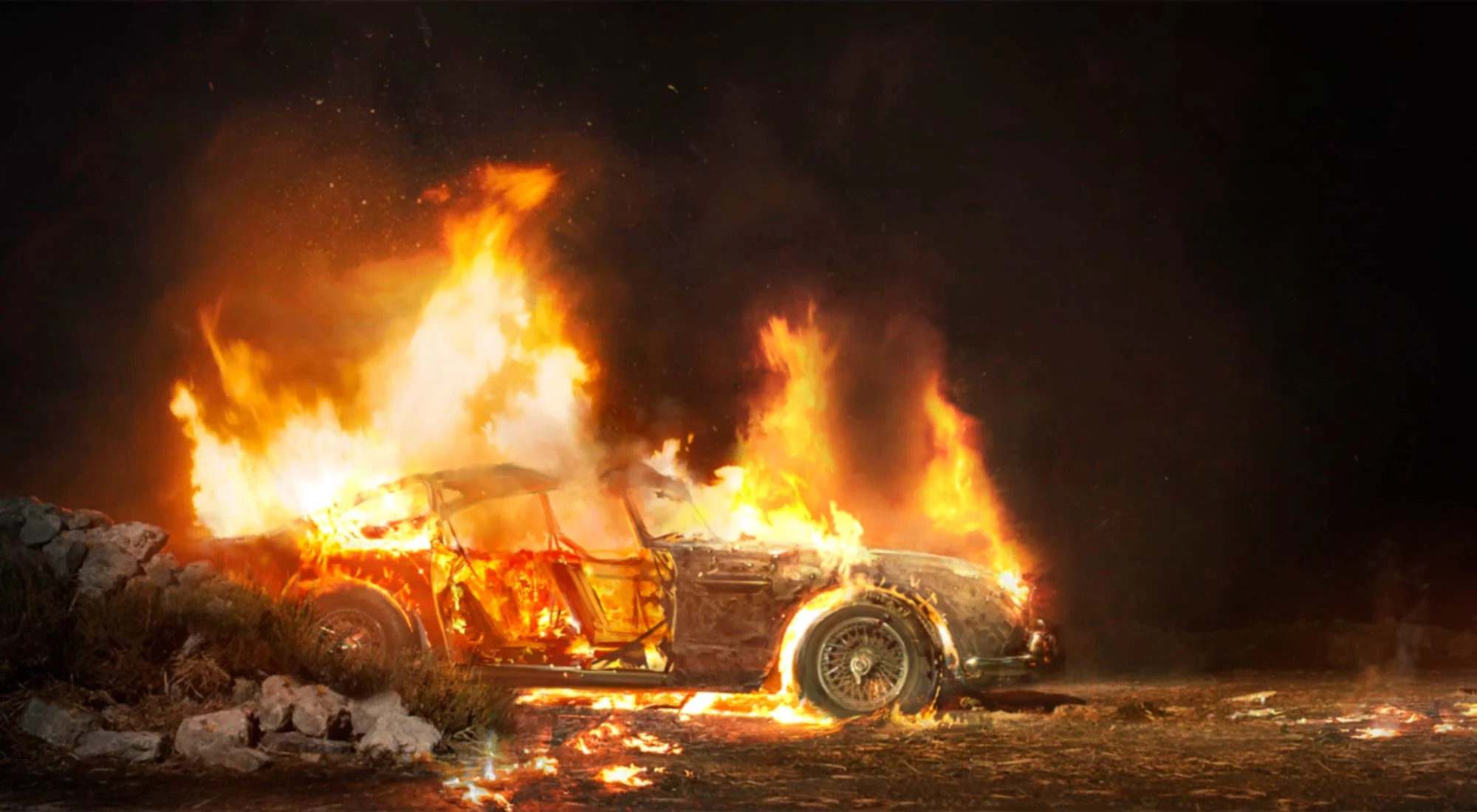
Concept drawing of the DB5 burning in front of Skyfall Lodge
SCREENING ROOM
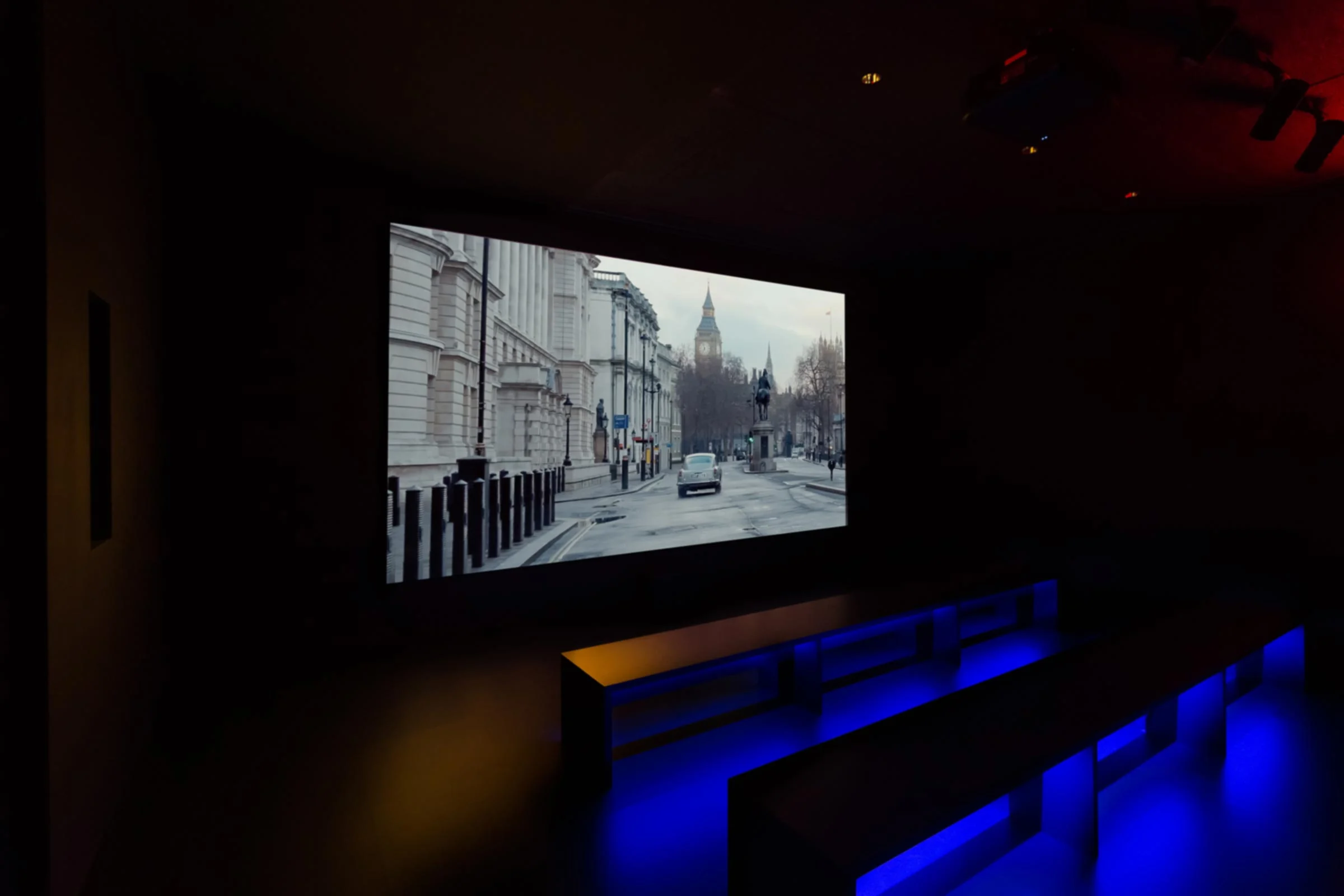


This final section marks a return to the cinematic experience – an opportunity to remember the Aston Martin DB5 in all its glory, full size and full volume.
Good work
Now follow this link to
equip yourself for your mission
